

Dermaplaning removes dead skin and peach fuzz, allowing brightening ingredients to penetrate deeper and work better. Key ingredients like Vitamin C, niacinamide, and licorice root extract can improve skin tone and reduce pigmentation when applied after this treatment. Stronger actives like hydroquinone and retinol should only be used 72 hours later to avoid irritation. Always pair treatments with SPF 30+ to protect sensitive skin.
Top Brightening Ingredients for Post-Dermaplaning Care:
- Vitamin C: Reduces melanin and protects against free radicals.
- Niacinamide: Prevents melanin transfer; gentle for sensitive skin.
- Licorice Root Extract: Calms skin and disperses pigmentation.
- Bearberry Extract (Arbutin): A natural alternative to hydroquinone.
- Hydroquinone: Effective but requires professional guidance.
- Retinol: Speeds up cell turnover but should be used cautiously.
For the best results, choose gentle ingredients immediately after dermaplaning and introduce stronger actives later. Always prioritize sun protection to maintain brightened skin.
Dermaplaning + Brightening Facial Treatment | LiaLeigh
sbb-itb-c911f39
Best Brightening Ingredients After Dermaplaning
After dermaplaning, your skin is primed to absorb brightening ingredients more effectively. With the top layer of dead skin cells removed, active compounds can penetrate deeper, targeting pigmentation issues from multiple angles. Below are some of the most effective brightening agents to consider post-dermaplaning.
Vitamin C
Vitamin C works by slowing down melanin production at the enzyme level. It reduces oxidized dopaquinone and interacts with copper ions, limiting melanin formation. Plus, it acts as a powerful antioxidant, protecting the skin from free radical damage that can lead to pigmentation. Dermaplaning enhances its absorption, making it even more effective. For best results, opt for formulations with Vitamin C concentrations between 8% and 20% - higher levels can irritate the skin. Because ascorbic acid (the active form of Vitamin C) oxidizes quickly, look for high-quality formulations, often combined with other brightening agents, to maximize results.
Niacinamide
Niacinamide improves skin tone by preventing melanin from transferring to skin cells, rather than directly stopping its production. Clinical studies have shown that a 4% concentration of niacinamide can work as effectively as 4% hydroquinone in treating melasma, but with fewer side effects. It’s gentle on the skin, making it ideal for post-dermaplaning care. Using niacinamide at 4–5% once or twice daily can yield visible results, especially since dermaplaning boosts its absorption.
Licorice Root Extract
This natural ingredient is packed with compounds like glabridin, which inhibits melanin-producing enzymes, and liquiritin, which helps disperse existing melanin. Glabridin also has anti-inflammatory properties, reducing oxidative stress and calming the skin. Clinical studies have shown that liquiritin can significantly reduce pigmentation, with around 80% of participants reporting excellent results. Its gentle yet effective nature makes it a great choice for sensitive skin after dermaplaning. To further soothe the area, consider applying a calming jelly mask to lock in moisture.
Bearberry Extract (Arbutin)
Arbutin, derived from bearberry plants, prevents melanin production by inhibiting tyrosinase activity. The alpha-arbutin form is especially potent, reportedly up to 10 times more effective than beta-arbutin. Research has shown that alpha-arbutin can cut melanin content in skin models by 60%, without causing cell damage. Synthetic derivatives like 2% deoxyarbutin have also shown results comparable to 4% hydroquinone over 12 weeks, while 3% deoxyarbutin has been particularly effective for darker skin tones. However, arbutin’s stability can be an issue, as it may break down into hydroquinone, so proper formulation is key.
Hydroquinone
Hydroquinone is often considered the gold standard for tackling pigmentation. It works by blocking the conversion of L-DOPA to melanin and can even cause melanocyte necrosis and destroy melanosomes.
"Hydroquinone cream is the standard depigmentation or skin lightening agent. Clinically it is used to treat areas of dyschromia, such as in melasma, chloasma, solar lentigines, freckles, and post-inflammatory hyperpigmentation."
Because dermaplaning enhances absorption, approximately 35–45% of hydroquinone can be absorbed systemically. This makes professional supervision essential. Apply a thin layer once or twice daily for up to six months, followed by a break to avoid rare side effects like exogenous ochronosis. Hydroquinone is often combined with a retinoid and corticosteroid in triple-combination creams for even better results.
Additional Ingredients for Skin Brightening
Retinol and botanical extracts can amplify the benefits of dermaplaning by encouraging cell renewal and offering gentle exfoliation. However, timing their use is crucial to avoid irritation. These ingredients work synergistically with the effects of dermaplaning, enhancing results when used correctly.
Retinol
Retinol, a derivative of vitamin A, converts into retinoic acid within the skin, speeding up cell turnover. This helps replace damaged or pigmented cells with fresh ones, improving skin texture and reducing signs of photo-damage. Since dermaplaning removes the outermost skin layer, it allows retinol to penetrate more deeply - but this also increases the risk of irritation. To prevent adverse effects like burning, redness, or even scarring, it’s best to wait at least 72 hours after dermaplaning before reintroducing retinol.
When resuming use, apply a pea-sized amount over a moisturizer or a soothing jelly mask to buffer its strength. As Dr. Heather Rogers, M.D., a Board-certified Dermatologist at Modern Dermatology, advises:
"Once your skin is irritated, the raw skin will take even longer to recover".
Retinol should always be applied at night, and during the day, pair it with a broad-spectrum SPF 30+ sunscreen. Both dermaplaning and retinol can make your skin more sensitive to the sun, so proper protection is a must.
Botanical Extracts: White Birch Bark and Pumpkin Enzymes
Botanical extracts can further refine and brighten the skin, complementing retinol’s effects.
White birch bark contains betulinic acid, which works to reduce discolouration by inhibiting melanogenesis (the process that produces pigment) without harming melanocytes. Post-dermaplaning, this ingredient can penetrate more effectively, helping to even out skin tone.
Pumpkin enzymes, on the other hand, act as natural proteolytic agents. They gently dissolve excess keratin and loosen dead skin cells. Unlike alpha hydroxy acids (AHAs), these enzymes are water-activated rather than pH-dependent, making them a milder option for sensitive skin, especially right after dermaplaning. Celeste Porter from Dermalogica PRO highlights how these enzymes work to break down dead skin without causing irritation. This secondary exfoliation helps clear out leftover debris and prevents the buildup of keratin, which can lead to dullness.
To ensure your skin tolerates these botanical extracts, patch test them on your jawline 24 hours before applying them to your entire face. This precaution is especially important post-dermaplaning, as the skin is more sensitive and prone to reactions.
Brightening Ingredients Comparison Table
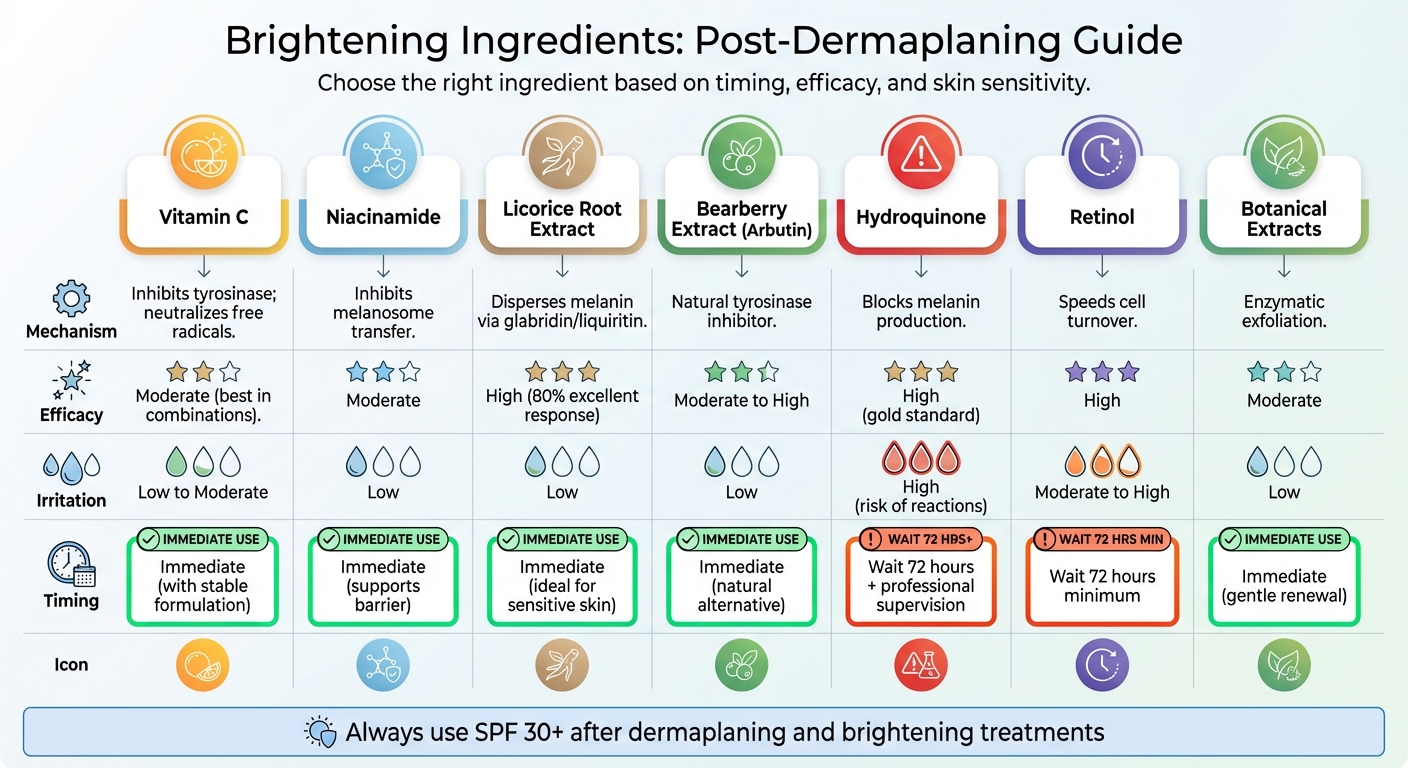
Brightening Ingredients Comparison Chart for Post-Dermaplaning Care
The table below provides a clear side-by-side comparison of common brightening ingredients to help you choose the best facial supplies for post-dermaplaning care. The choice depends on factors like your skin's sensitivity, the level of discolouration you're addressing, and how soon you want to see results. These ingredients work through different mechanisms, such as blocking pigment production, preventing pigment transfer, or boosting cell turnover. Understanding these differences can help you create a routine that’s both effective and gentle on freshly exfoliated skin.
Shawna Rocha, Director of Education at Hale & Hush, highlights the benefits of natural alternatives, stating:
"Arbutin is a natural derivative of hydroquinone, providing similar effects without the risks or skin reactions".
This makes options like bearberry extract particularly appealing for those with sensitive or compromised skin.
| Ingredient | Mechanism of Action | Efficacy | Irritation Potential | Application Timing After Dermaplaning |
|---|---|---|---|---|
| Vitamin C | Inhibits tyrosinase; neutralizes free radicals | Moderate (best in combinations) | Low to Moderate | Can be applied immediately with a stable, buffered formulation |
| Niacinamide | Inhibits melanosome transfer to keratinocytes | Moderate | Low | Immediate (supports barrier restoration) |
| Licorice Root Extract | Disperses melanin via glabridin/liquiritin | High (80% excellent response in clinical trials) | Low | Immediate (ideal for sensitive skin) |
| Bearberry Extract (Arbutin) | Natural tyrosinase inhibitor | Moderate to High | Low | Immediate (a natural hydroquinone alternative) |
| Hydroquinone | Inhibits tyrosinase (blocks melanin production) | High (gold standard) | High (risk of erythema, ochronosis) | Delay application until 72 hours post-treatment; use under professional supervision |
| Retinol | Speeds up cell turnover; inhibits pigment transfer | High | Moderate to High (dryness, peeling) | Wait at least 72 hours post-dermaplaning |
| Botanical Extracts | Enzymatic exfoliation; reduces cell cohesion | Moderate | Low | Immediate (supports gentle renewal) |
For immediate post-dermaplaning care, gentler ingredients like niacinamide and licorice root extract are ideal because they soothe the skin and minimize irritation. On the other hand, more intense actives like hydroquinone and retinol should be introduced only after the skin has had time to recover - typically about 72 hours later - to reduce the risk of adverse reactions.
Conclusion
Dermaplaning effectively removes dead skin cells and vellus hair, creating the perfect foundation for brightening treatments. Studies indicate that combining dermaplaning with carefully chosen brightening ingredients can improve skin tone and enhance radiance.
The secret to achieving the best results lies in selecting brightening ingredients that suit your client’s skin type and sensitivity. Immediately after treatment, opt for gentle actives like niacinamide, licorice root, or bearberry extract. Stronger ingredients, such as hydroquinone or retinol, should only be introduced 72 hours later. As Dr. Bertha Baum advises:
"For darker skin tones, it's important to be cautious as some ingredients can be too harsh and lead to post-inflammatory hyperpigmentation (PIH)".
This thoughtful approach minimizes risks while maximizing results.
To maintain these brightening effects, ensure clients use high-quality, professional-grade skincare products alongside strict sun protection. Look for products with anhydrous (waterless) formulations to keep ingredients stable, synergistic antioxidants, and barrier-repair components like ceramides and hyaluronic acid. Products should also be fragrance-free, pH-balanced, and supported by clinical research.
Canadian professionals can source premium dermaplaning blades, starter kits, and certification programs through Dermaplaning Supplies Canada. Always confirm that dermaplaning is within your provincial scope of practice and ensure proper certification before offering the service.
Finally, emphasize the importance of consistent sun protection. Recommend a mineral-based sunscreen with at least SPF 30, applied every two hours, to shield newly exposed skin from UV damage and preserve the brightening results clients desire.
FAQs
What should I apply right after dermaplaning to brighten safely?
After dermaplaning, use a brightening serum containing vitamin C. This helps boost skin radiance and supports the prevention of excess melanin production, leaving your skin with a healthy, luminous glow.
How long should I wait before using retinol or hydroquinone after dermaplaning?
After dermaplaning, it’s recommended to wait 2–3 days before using products like retinol or hydroquinone. This gives your skin time to recover and reduces the chance of irritation. Be sure to follow any post-treatment care guidelines to maintain your skin’s health and achieve the best results.
Which brightening ingredients are safest for darker skin tones after dermaplaning?
The safest skin-brightening ingredients for darker skin tones after dermaplaning include tranexamic acid, niacinamide, arbutin, and retinol. Dermatologists recommend these ingredients to address hyperpigmentation effectively while being gentle on the skin.