

Dermaplaning clears away dead skin cells and peach fuzz, creating the perfect surface for chemical peels to work more effectively. After dermaplaning, chemical peels penetrate deeper, addressing skin concerns like acne, fine lines, hyperpigmentation, and dullness. Here's a quick breakdown of five popular peel options:
- AHA Peels (Glycolic/Lactic Acid): Gentle exfoliation for fine lines, dark spots, and hydration. Minimal downtime.
- Salicylic Acid Peels: Ideal for acne-prone and oily skin. Clears pores and reduces oil production. Recovery ranges from minimal to a week.
- TCA Peels: Medium-depth treatment for wrinkles, scars, and sun damage. Recovery takes 1–2 weeks.
- Jessner's Peels: Combines salicylic acid, lactic acid, and resorcinol for pigmentation, acne scars, and uneven tone. Recovery lasts 1–2 weeks.
- Perfect Derma Peel: Includes glutathione to brighten and rejuvenate skin. Medium-depth with 1–2 weeks of recovery.
Each peel offers unique benefits and requires proper aftercare, such as sunscreen and avoiding harsh products. Choose based on your skin type, concerns, and downtime tolerance.
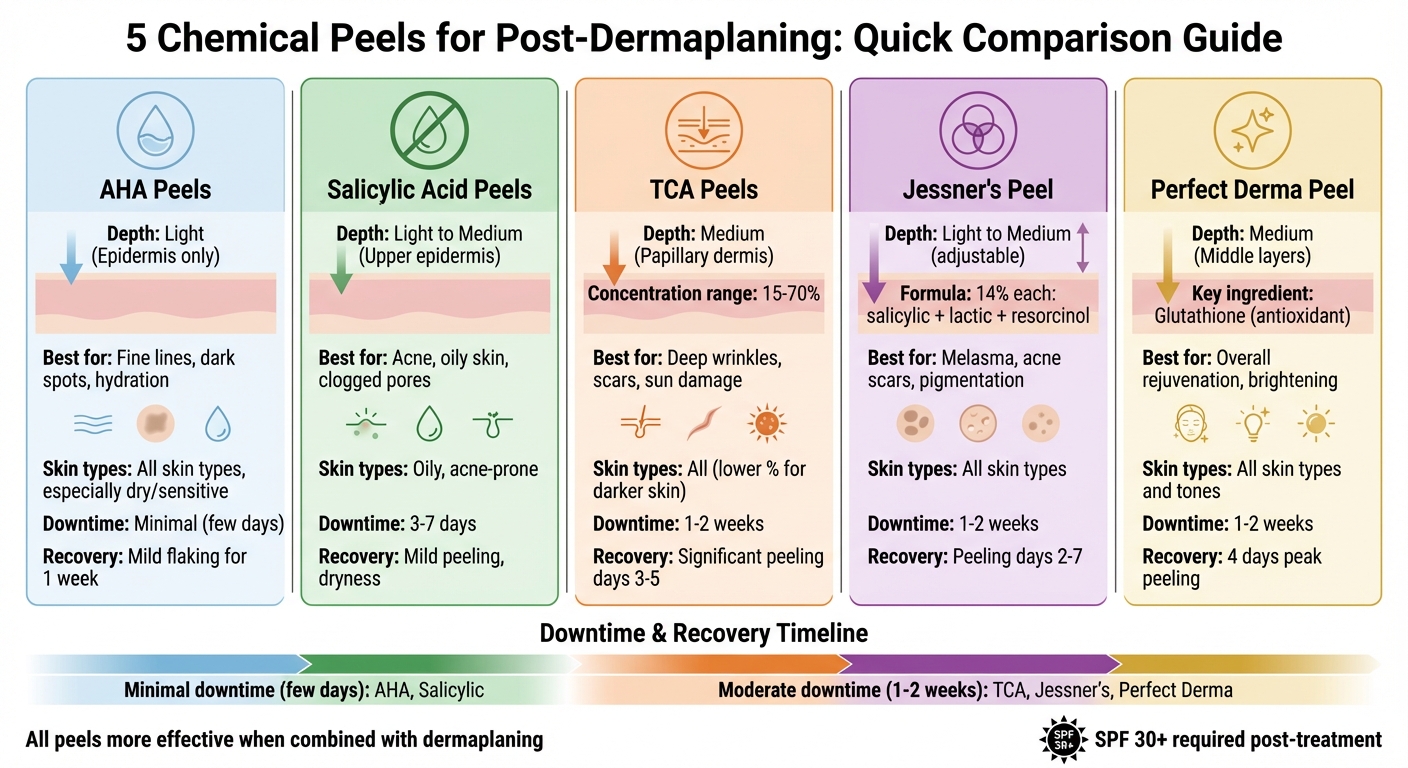
Chemical Peels Comparison Chart: Types, Benefits, and Recovery Times
Dermaplaning with Chemical Peels – Should You Combine Them?
sbb-itb-c911f39
1. AHA Peels (Glycolic and Lactic Acid)
AHA peels harness the power of glycolic and lactic acids to gently break down the bonds holding dead skin cells together. Glycolic acid works to smooth out texture and soften fine lines, while lactic acid provides hydration and exfoliation.
Skin Concerns Addressed
These peels tackle a wide range of skin concerns, from fine lines and wrinkles (especially around the eyes and mouth) to hyperpigmentation, dark spots, and sun damage. They’re also effective for superficial scars, active acne, rough texture, dullness, and enlarged pores. Even conditions like Keratosis Pilaris can benefit. When paired with dermaplaning, AHA peels become even more effective. The physical exfoliation clears the surface, allowing the chemical components to work deeper, creating a "one-two punch" for a radiant finish.
Penetration Depth
AHA peels are considered light chemical peels, focusing on the epidermis - the skin’s outermost layer. After dermaplaning, the peel penetrates more evenly and effectively into this layer, enhancing its overall impact.
Downtime
One of the best parts? Minimal downtime. You may notice mild redness, stinging, or tightness for a few hours, followed by subtle flaking during the first week. Full recovery only takes a few days, and you can schedule these peels every four to six weeks to maintain results.
Glow Enhancement
By removing damaged layers, AHA peels reveal smoother, brighter skin. In one study, 90% of participants reported brighter skin after four treatments, while 93% noticed softer skin after just one. This increased cell turnover not only leaves your skin with a fresh, light-reflective glow but also improves how well it absorbs serums and moisturisers - amplifying the benefits of your skincare routine.
2. Salicylic Acid Peels
Taking the benefits of AHA peels a step further, salicylic acid peels are designed to tackle deeper pore issues and help manage oil production.
Salicylic acid, a beta-hydroxy acid (BHA), is oil-soluble, allowing it to penetrate deep into the pores. It works to unclog them, regulate sebum levels, and combat acne-causing bacteria. This makes it a go-to option for oily and acne-prone skin. Theresa Szalay, a Professional Skin Therapist at Glow Spa, emphasizes its effectiveness:
"A Salicylic Acid peel can penetrate deeply into pores to help combat acne, un-clog pores, erode blackheads and fade post pimple marks".
Skin Concerns Addressed
Salicylic acid peels are versatile and address several skin concerns. They are particularly effective for managing oily seborrhea, active acne, blackheads, and folliculitis. Beyond acne, these peels help with age spots, post-acne marks, hyperpigmentation, and sun damage. They can also improve signs of ageing, such as fine lines, reduced elasticity, and dullness.
Penetration Depth
The depth of exfoliation depends on the peel's concentration. Formulas with 15–20% salicylic acid focus on the upper layers of the epidermis, reducing oiliness and treating acne. Higher concentrations, like 25–30%, go deeper, addressing shallow wrinkles, scars, and even stimulating collagen production. Dermaplaning can further enhance the effects by removing surface barriers, allowing the peel to penetrate more effectively. This combination leads to noticeable improvements in texture and overall radiance.
Downtime
Recovery time varies based on the peel's strength. For superficial peels, expect 3 to 7 days of mild redness, dryness, and tightness, followed by peeling that reveals refreshed skin. Medium-depth peels (25–30%) may result in more visible flaking and peeling, lasting 7 to 10 days. These peels are typically left on the skin for no more than 10 minutes during the procedure. For conditions like hyperkeratosis or hyperpigmentation, up to eight peels spaced 1 to 2 weeks apart are often recommended. It's essential to consider recovery time when choosing the peel's concentration.
Glow Enhancement
When paired with dermaplaning, salicylic acid peels can deliver an impressive glow. The peel removes dead skin cells while stimulating collagen and hyaluronic acid production, leaving the skin smoother and brighter. Dermaplaning also boosts the skin's ability to reflect light and absorb serums and moisturisers more effectively, enhancing the overall results.
3. TCA Peels
TCA (trichloroacetic acid) peels provide a medium-depth treatment that goes beyond what AHA or BHA peels can achieve. These medical-grade peels work by breaking down keratin proteins, encouraging the skin to shed and reveal a healthier layer underneath. Pairing TCA peels with dermaplaning - which removes dead skin cells and fine hair - allows the solution to absorb more evenly, improving the overall results .
Skin Concerns Addressed
TCA peels are a powerful option for addressing skin issues that superficial peels often can't tackle. They’re particularly effective for deep wrinkles, melasma, sunspots, age spots, and atrophic acne scars like icepick and boxcar scars. For example, the CROSS technique uses high-concentration TCA (up to 70%) applied directly to scars, with one study noting that 81% of participants were satisfied or very satisfied with their results. A single treatment can also dramatically reduce hyperpigmentation and sun damage. While TCA peels are generally safe for all skin tones, those with darker skin may need lower concentrations to reduce the risk of post-inflammatory hyperpigmentation .
Penetration Depth
TCA peels come in concentrations ranging from 15% to 70%, offering varying levels of penetration. Light peels (10–15%) work within the epidermis, targeting concerns like enlarged pores and dullness. Medium-strength peels (20–35%) reach the papillary dermis, making them better suited for more pronounced skin damage . Even at lower concentrations, TCA is more potent than salicylic or glycolic acid, often delivering noticeable resurfacing effects in just one session. However, the deeper penetration also means a more intensive recovery process.
Downtime
Recovery after a medium-strength TCA peel typically lasts 7 to 14 days. The first 1–2 days may involve redness and tightness, followed by peeling between days 3 and 5. By days 7 to 14, the skin usually appears refreshed and pink. It’s essential not to pick at peeling skin during this time, as this can cause scarring or infection. To prepare for the treatment, it’s recommended to stop using retinoid creams a few weeks beforehand. During recovery, applying broad-spectrum sunscreen is critical, as the newly exposed skin is especially sensitive to UV rays .
Glow Enhancement
TCA peels don’t just repair deeper skin damage - they can also noticeably enhance your complexion. When combined with dermaplaning, the results are even more striking. Dermaplaning removes the outermost layer of dead cells and fine hairs, enabling the TCA solution to penetrate more effectively. This combination promotes better resurfacing and stimulates collagen and elastin production. The outcome? A smoother, brighter complexion with improved texture and a radiant "glassy" finish .
4. Jessner's Peels
Jessner's peel is a blend of equal parts (14%) salicylic acid, lactic acid, and resorcinol in a 95% ethanol base. This combination works to cleanse pores, hydrate, and refresh the skin. Its multi-acid formulation is designed to address various skin concerns effectively.
Skin Concerns Addressed
Jessner's peel tackles a broad range of skin issues, including acne, acne scars, melasma, post-inflammatory hyperpigmentation, sun damage, freckles, age spots, and fine lines. It’s also known to improve rough texture, uneven tone, and oily or congested skin. Each component plays a specific role:
- Salicylic acid: Dissolves hardened skin cells and clears clogged pores.
- Lactic acid: Hydrates and smoothens the skin surface.
- Resorcinol: Encourages cell renewal and offers antibacterial benefits.
Dr. Vincent Richer, Clinical Assistant Professor at UBC’s Department of Dermatology and Skin Science, highlights its versatility:
"This is a simple and inexpensive procedure that can complement the treatments provided by dermatologists for acne, melasma or postinflammatory hyperpigmentation".
Penetration Depth
The depth of Jessner's peel can be tailored to the individual. A single layer provides a superficial peel targeting the epidermis, while applying three to five layers penetrates the upper dermis. Dermaplaning can further enhance the peel’s effects by allowing deeper penetration. Some practitioners even use Jessner's as a preparatory step before applying TCA for more dramatic resurfacing results.
Downtime
Post-treatment, you can expect redness, dryness, and peeling for 2 to 7 days. Day one typically involves redness and swelling, with peeling occurring between days 2 and 7. Full recovery can take 7 to 14 days, depending on how many layers are applied. Since Jessner's peel is self-neutralizing, it’s important not to wash your face for at least 12 hours after the procedure to allow the solution to continue working. Avoid picking at peeling skin, as this can lead to scarring or hyperpigmentation. For the best results, dermatologists often recommend a series of 3 to 6 treatments spaced 4 to 6 weeks apart.
Glow Enhancement
When paired with dermaplaning, Jessner's peel doesn’t just renew the skin - it amplifies its natural radiance. By increasing cell turnover, it reveals fresher, healthier skin, leaving a visibly luminous and revitalized complexion. The treatment also stimulates collagen production in deeper layers, improving elasticity. Once the peeling phase is over, the skin appears smoother, brighter, and more hydrated.
For skincare professionals in Canada, Dermaplaning Supplies Canada offers the tools and supplies needed to achieve outstanding post-dermaplaning results.
5. Perfect Derma Peel

The Perfect Derma Peel is a medium-depth chemical peel that stands out due to its inclusion of glutathione, an antioxidant known for its ability to lighten, brighten, and combat oxidative stress. Its formula combines TCA, retinoic acid, salicylic acid, kojic acid, phenol, and vitamin C, working together to rejuvenate the skin while encouraging collagen and elastin production. It’s designed to work effectively on all skin types and tones.
Skin Concerns Addressed
This peel tackles a wide range of issues, such as fine lines, wrinkles, hyperpigmentation, melasma, dark spots, acne-prone skin, active acne, acne scars, uneven tone, rough texture, sun damage, and age spots. When applied after dermaplaning, its penetration is even deeper, enhancing its effectiveness.
Kendra Numan from Hebe Beauty Bar highlights the role of glutathione:
"Glutathione is a super antioxidant that reduces oxidative stress in the body to improve your overall complexion. It lightens, brightens and overall improves the complexion."
For more tailored results, customized boosters can be added. The Plus Booster provides extra strength for ageing skin and stubborn pigmentation. The Plus-Plus Booster, containing 4% hydroquinone and 1% hydrocortisone, targets severe hyperpigmentation and melasma. Meanwhile, the Clear Booster, with benzoyl peroxide, focuses on active acne and acne scars.
Penetration Depth
Unlike superficial peels that only treat the skin’s outermost layer, the Perfect Derma Peel works deeper, reaching the middle layers for more noticeable improvements in wrinkles and scars. Dr. Andres Gantous, a facial plastic surgeon, explains:
"Medium peels employ trichloroacetic or glycolic acid to penetrate the top and middle layers of the skin with the intent of removing damaged skin cells on a slightly deeper level."
This deeper action aligns perfectly with the enhanced absorption benefits provided by dermaplaning.
Downtime
Recovery typically lasts 3–7 days, with peeling most noticeable over four days. During the treatment, patients may experience mild tingling or burning, which usually subsides quickly. It’s essential to avoid manually peeling or picking at the skin during recovery to prevent scarring or pigmentation changes. Aftercare includes applying a broad-spectrum sunscreen with at least SPF 30 and avoiding retinoids, glycolic acid, or other exfoliating products for at least a week before treatment.
Glow Enhancement
Thanks to its deeper penetration and powerful ingredients, the Perfect Derma Peel delivers a radiant boost to the skin. Glutathione plays a key role in reducing oxidative stress and promoting cell renewal, leaving the complexion brighter and more luminous. Combined with dermaplaning’s ability to enhance product absorption, this peel leaves the skin smoother, more even-toned, and visibly refreshed.
For skincare professionals across Canada aiming to achieve exceptional post-dermaplaning results, Dermaplaning Supplies Canada provides the tools and products needed to deliver impressive outcomes.
Advantages and Disadvantages
After discussing the details of various peels, let's take a closer look at their benefits and limitations when used after dermaplaning. This comparison will help skincare professionals using professional facial supplies make informed decisions based on their clients' skin concerns and tolerance levels.
Light peels like AHA treatments (glycolic and lactic acid) work on the skin's surface, offering gentle exfoliation and hydration with minimal downtime. These are great for refining texture and boosting moisture, though achieving noticeable results may require multiple sessions. On the other hand, salicylic acid peels are excellent for unclogging pores and managing oil production, making them ideal for acne-prone skin. However, they may cause dryness and a tingling sensation during application.
Medium-depth peels, such as TCA and Jessner's peels, go deeper to address more persistent concerns like moderate wrinkles, acne scars, and age spots. While they deliver more dramatic results, they come with longer recovery times, often involving significant peeling, redness, and swelling. TCA treatments can also carry the risk of temporary skin discolouration. Similarly, the Perfect Derma Peel, which falls in this category, provides comprehensive skin rejuvenation but requires a similar recovery process.
Because dermaplaning enhances product absorption, the skin becomes more sensitive afterward. This makes it essential to choose the right peel and follow proper aftercare. Chemical peels remain a popular choice worldwide, ranking among the top five minimally invasive cosmetic treatments, thanks to their effectiveness when matched to the client's skin type and concerns.
For a quick overview, the table below highlights the main benefits, drawbacks, and recovery times for each peel type.
| Peel Type | Primary Benefits | Drawbacks & Side Effects | Recovery Period |
|---|---|---|---|
| AHA (Glycolic/Lactic) | Refines surface texture; lactic acid hydrates | Subtle results; requires multiple sessions | Minimal; mild flaking for a few days |
| Salicylic Acid | Clears clogged pores; controls oil | Can cause dryness; tingling sensation | Minimal to 1 week |
| TCA | Targets wrinkles, age spots, and scars | Temporary discolouration; redness and swelling | 1–2 weeks of visible peeling |
| Jessner's Peel | Treats stubborn pigmentation and scarring | Intense peeling and redness | 1–2 weeks |
| Perfect Derma Peel | Enhances skin clarity and tone | Intense stinging, redness, and peeling | 1–2 weeks |
Important: After dermaplaning, the skin's heightened sensitivity requires meticulous aftercare. Use sunscreen with at least SPF 30, avoid picking at peeling skin, and follow all post-treatment guidelines to prevent scarring or pigmentation issues.
Conclusion
Each peel option brings its own set of benefits that work hand-in-hand with dermaplaning's ability to prepare the skin. Selecting the right chemical peel depends on the client’s skin type and specific concerns. For sensitive or dry skin, light peels featuring glycolic or lactic acid offer gentle exfoliation and hydration. On the other hand, salicylic acid peels are a better match for oily or acne-prone skin. For those tackling deeper issues like wrinkles, scars, or hyperpigmentation, medium-depth options such as TCA or Jessner's peels can deliver more intensive results, though they come with a recovery period of about 1–2 weeks.
As Ildiko Juhasz from Derm.ca explains:
"Chemical peels effectively smooth out rough skin and even out skin tone, making your complexion look fresh and revitalized."
Dermaplaning plays a key role by removing the stratum corneum and vellus hair, which enhances the penetration of chemical peels. This makes the skin more receptive to active ingredients, ultimately boosting the effectiveness of the treatment. To ensure safety and optimal outcomes, Canadian skincare professionals should rely on medical-grade supplies, carefully managing pH levels and concentrations to reduce the likelihood of adverse effects.
For those practising in Canada, Dermaplaning Supplies Canada provides access to surgical-grade blades, starter kits, and online training certification. These resources equip professionals with the tools and knowledge required to confidently perform these combined treatments.
FAQs
How soon after dermaplaning can I get a chemical peel?
It’s recommended to wait at least one week after dermaplaning before getting a chemical peel. This gives your skin enough time to recover and reduces sensitivity, helping to lower the chance of irritation. Be sure to consult a skincare professional to confirm that your skin is ready for the next step.
Which peel is safest if I have sensitive or darker skin?
For those with sensitive or darker skin tones, a superficial chemical peel using mild acids like alpha-hydroxy acids is often the safest choice. These gentle acids are less likely to irritate the skin, making them a great option for preserving a healthy glow after dermaplaning.
What aftercare should I follow after a post-dermaplaning peel?
After a post-dermaplaning peel, it’s crucial to prioritize your skin’s recovery. Keep your skin well-hydrated and steer clear of hot water, harsh cleansers, and direct sun exposure. Instead, opt for a gentle, soap-free cleanser to maintain your skin’s balance. These simple steps can support healing and help you achieve the best results. For tailored advice, always follow the guidance provided by your skincare professional.