

Chemical peels are a professional treatment that exfoliate the skin using acids to address issues like acne, hyperpigmentation, and fine lines. The key to effective and safe results is selecting the right peel based on skin type, concerns, and the Fitzpatrick scale (which measures skin's reaction to UV exposure). For example:
- Oily, acne-prone skin: Salicylic acid works well to clear pores and reduce oil.
- Dry skin: Lactic acid hydrates while gently exfoliating.
- Sensitive skin: Low-strength glycolic or lactic acid minimizes irritation.
- Combination skin: Salicylic acid for oily areas, lactic acid for dry zones.
Canadian climate also plays a role. Winter's dryness can weaken the skin barrier, while summer requires strict sunscreen post-treatment. Dermaplaning, which removes dead skin and hair, can enhance peel results but should be combined cautiously with superficial peels.
Key considerations: Match peel type to skin concerns, assess medical history, and adjust for climate. Always prioritize aftercare, including hydration and SPF, to protect the skin and ensure recovery.
Dermatologst's Guide To Chemical Peels | Doctorly Explains

What to Consider Before Selecting a Chemical Peel
When choosing a chemical peel, it's essential to assess the client's Fitzpatrick skin type, the desired peel depth, their medical history, and any recent skin treatments. This evaluation helps minimize risks like post-inflammatory hyperpigmentation, scarring, or extended healing times - key concerns, especially in Canada's diverse population and varying climate. These factors lay the groundwork for understanding peel types, contraindications, and complementary techniques like dermaplaning.
The Fitzpatrick Skin Type Scale
The Fitzpatrick Skin Type Scale classifies skin from Type I (very fair; always burns, never tans) to Type VI (deeply pigmented; never burns) based on skin tone and reaction to UV exposure. Skin types I–III typically tolerate a broader range of peel depths and have a lower risk of post-inflammatory hyperpigmentation. In contrast, types IV–VI are more prone to pigmentation issues. For instance, a Type II client dealing with photoaging might benefit from a superficial or light-medium glycolic or TCA peel. On the other hand, a Type V client with similar concerns may achieve better results with repeated superficial lactic or mandelic peels, combined with strict sun protection. This scale serves as a guide for selecting the right acid and reducing pigmentation-related risks.
Peel Depths and Their Applications
Chemical peels are categorized by how deeply they penetrate the skin:
- Superficial peels use mild acids like glycolic, lactic, mandelic, or salicylic acid to address dullness, mild acne, fine lines, and uneven texture. Recovery typically takes 1–3 days.
- Medium-depth peels penetrate the epidermis and upper to mid-dermis, using higher-strength glycolic acid, TCA, or Jessner's solution. These are effective for moderate wrinkles, acne scars, significant sun damage, and uneven pigmentation, with about 5–7 days of recovery.
- Deep peels, often phenol-based, reach the mid-dermis and are reserved for severe wrinkles, extensive sun damage, and certain precancerous lesions. These require significant downtime, carry greater risks, and are usually performed under medical supervision.
Client Assessment and Contraindications
A detailed review of the client's medical history is crucial. Key considerations include recent use of oral or topical retinoids (such as isotretinoin within the past 6–12 months), acne medications, photosensitizing drugs (like certain antibiotics or diuretics), anticoagulants, and immunosuppressants - all of which can affect healing or increase sensitivity. Other factors to watch for include a history of adverse reactions to peels, keloid formation, post-inflammatory hyperpigmentation, active or recurrent herpes simplex, and chronic skin conditions like eczema, psoriasis, or rosacea.
An in-person evaluation is equally important to identify any signs of a compromised skin barrier, such as redness, scaling, or open lesions. If the skin barrier is not intact, it's best to postpone treatment until it has recovered. Additionally, recent procedures like dermaplaning, microneedling, laser treatments, waxing, or electrolysis can temporarily heighten skin sensitivity. Waiting until the skin has fully healed is essential before proceeding with a chemical peel.
Using Dermaplaning Before Chemical Peels
Dermaplaning can be an excellent pre-treatment to enhance the effects of a chemical peel. By removing vellus hair and the outermost layer of dead skin, dermaplaning improves peel penetration. When combining these treatments, practitioners often reduce the peel's strength or duration to avoid over-exfoliation. For instance, a Canadian aesthetician might dermaplane before applying a low- to mid-strength lactic peel on dry, dull skin, followed by cool compresses and hydrating, fragrance-free post-care. This approach is particularly effective for clients with fine facial hair that traps makeup and debris.
To ensure safe and controlled exfoliation, it’s critical to use single-use, medical-grade dermaplaning blades and proper pre-treatment solutions. Suppliers like Dermaplaning Supplies Canada offer professional-grade tools and products, including gentle cleansers, hydrating serums, soothing masks, and non-comedogenic SPF tailored for Canada's UV conditions. These items help maintain the skin barrier and reduce the risk of post-inflammatory hyperpigmentation. For practitioners, access to online training and certification in dermaplaning and post-peel care can further improve consistency and outcomes in clinical settings across Canada.
Selecting Chemical Peels for Different Skin Types
When choosing chemical peels, it’s essential to align the treatment with the client’s specific skin concerns. Different skin types react uniquely to various acids, so understanding these differences ensures safe and effective results while reducing risks like irritation or post-inflammatory hyperpigmentation. Below, you'll find tailored recommendations for various skin types.
Oily and Acne-Prone Skin
For clients dealing with excess oil and inflammation, salicylic acid peels are a top choice. Being oil-soluble, salicylic acid penetrates deep into pores, dissolving sebum and clearing blackheads and whiteheads. It also calms active breakouts thanks to its anti-inflammatory properties. A superficial peel with 20–30% salicylic acid, performed in a series of four to six treatments spaced two to four weeks apart, can effectively manage oil production and prevent future breakouts. Downtime is minimal, typically just one to three days.
If the client has post-inflammatory hyperpigmentation or mild acne scarring, a glycolic acid peel can provide deeper exfoliation to fade dark spots and refine skin texture. For more severe acne or scarring, a Jessner's peel may be considered, though this requires careful selection and comes with a longer recovery period.
Always perform a 48-hour patch test, especially for clients with darker skin tones, to minimise the risk of complications. Post-treatment, advise using a broad-spectrum SPF 30 or higher, as salicylic acid increases sun sensitivity.
Dry or Dehydrated Skin
For dry or dehydrated skin, lactic acid peels are an excellent option. Derived from milk, lactic acid not only exfoliates but also helps the skin retain moisture, making it less likely to dry out during recovery. This is particularly beneficial during Canada’s harsh winter months. Mandelic acid is another good choice, offering hydration benefits with slower absorption, making it gentler on the skin.
A 20–30% lactic acid peel is typically ideal for superficial treatments. Follow up with moisturizers containing ceramides or hyaluronic acid to repair and protect the skin barrier. Avoid combining lactic acid with stronger actives like high-strength glycolic acid or retinoids, as these can strip moisture and weaken the barrier. Treatments should be spaced four to six weeks apart, with proper hydration maintained before and after the procedure. Pre-treating with a low-dose glycolic cream for two to four weeks can promote even penetration, and clients should avoid hot showers, saunas, or steam rooms for at least 48 hours post-treatment to prevent additional dryness.
Sensitive or Reactive Skin
For sensitive or reactive skin, a gentle approach is key. Low-concentration AHA peels, such as 5–10% lactic acid or 10–20% glycolic acid, are ideal. These peels exfoliate the outermost layer of skin without penetrating too deeply, reducing the likelihood of redness or irritation. Downtime is minimal, usually one to three days.
To further minimise irritation, consider using buffers during treatment and limit contact time to two to five minutes. For clients with a history of adverse reactions, opt for milder formulations and space treatments every four to six weeks. For darker skin tones (Fitzpatrick types IV–VI), stick with lower strengths and superficial peels to avoid hyperpigmentation.
Combination Skin
Combination skin benefits from a zonal treatment approach to address its varying needs. For the oily T-zone, apply a 20–30% salicylic acid peel to control sebum and clear pores. For drier areas like the cheeks, gentler AHAs such as lactic acid or mandelic acid at 10–20% concentrations work well to hydrate and smooth the skin.
You can alternate treatments, such as a salicylic peel for acne control followed by a lactic or low-strength glycolic peel for hydration. This balanced approach ensures oil control and moisture retention without over-treating any specific area. During consultations, assess each zone individually and customise acid concentrations based on the severity of oiliness or dryness. Always monitor for unexpected reactions and adjust the treatment plan as needed.
sbb-itb-c911f39
Treatment Protocol and Safety Guidelines
Ensuring a safe and effective treatment requires following a detailed protocol from preparation to aftercare. Each step, from start to finish, plays a vital role in reducing risks like burns, hyperpigmentation, or infections.
Pre-Treatment Preparation
Start by obtaining informed consent. Clearly explain the risks, benefits, expected results, and potential downtime to the client. Conduct a thorough assessment to identify contraindications such as active herpes simplex, pregnancy, eczema, keloid scarring, or recent isotretinoin use (within the past 6–12 months). Assess the skin type using the Fitzpatrick Scale, especially for darker skin tones, which may require tailored precautions to reduce risks.
Cleanse the skin with a gentle, non-foaming cleanser to remove makeup, oils, and impurities. Follow this with an acetone or alcohol-based degreaser to eliminate any residual oils, ensuring better penetration of the peel. For superficial peels, pre-treat the skin with a low-dose glycolic acid cream for 2–4 weeks to promote even absorption. Clients should avoid exfoliants or retinoids for 5–7 days before treatment. Always conduct a patch test 48–72 hours before the procedure to check for adverse reactions. Once these steps are complete, proceed to the controlled application phase with constant monitoring.
Application and Monitoring
After preparing the skin, focus on careful application and close monitoring to ensure safety. Protect sensitive areas like the eyes and lips before applying the peel solution. Apply the peel in thin, even layers - use one layer for superficial peels (20–30% glycolic or salicylic acid) and multiple layers spaced 2–3 minutes apart for medium-depth peels (such as TCA or Jessner's). Contact times typically range from 1–10 minutes for superficial peels and 3–5 minutes per layer for medium peels.
Watch for clinical signs during the process: even erythema (redness) is a typical endpoint for superficial peels, while white frosting indicates the endpoint for medium peels. If you notice excessive burning, uneven redness, or hives, neutralize the peel immediately. Use sodium bicarbonate to neutralize AHAs and BHAs, and cool water for TCA-based peels. Keep the treatment room at a comfortable 20–22°C, and consider using a fan to enhance both the peel’s penetration and client comfort.
Post-Treatment Care for Canadian Climate
Post-treatment care is especially important in Canada’s climate, where cold and dry winters can complicate recovery. After a chemical peel, the skin becomes highly sensitive. Advise clients to gently cleanse the treated area with lukewarm water and a fragrance-free cleanser for the first 24–48 hours. They should avoid exfoliants, retinoids, or other active ingredients for at least 5–7 days to prevent irritation. Stress the importance of applying a broad-spectrum SPF 30+ sunscreen every two hours, even indoors near windows, to protect against UV-induced hyperpigmentation. Keeping the skin hydrated with petrolatum-based ointments or hyaluronic acid moisturizers can also aid in recovery.
During Canada’s harsh winters, additional precautions are necessary. Recommend frequent use of humectant moisturizers containing ceramides, applying occlusives overnight to seal in moisture, and using a humidifier at home to combat dry air. Clients should avoid hot showers or steam for at least 48 hours and resist the urge to pick at peeling skin to prevent scarring. Recovery times generally range from 1–3 days for superficial peels and 5–7 days for medium-depth peels, depending on the individual and the type of treatment performed.
Chemical Peel Comparison by Skin Type and Goal
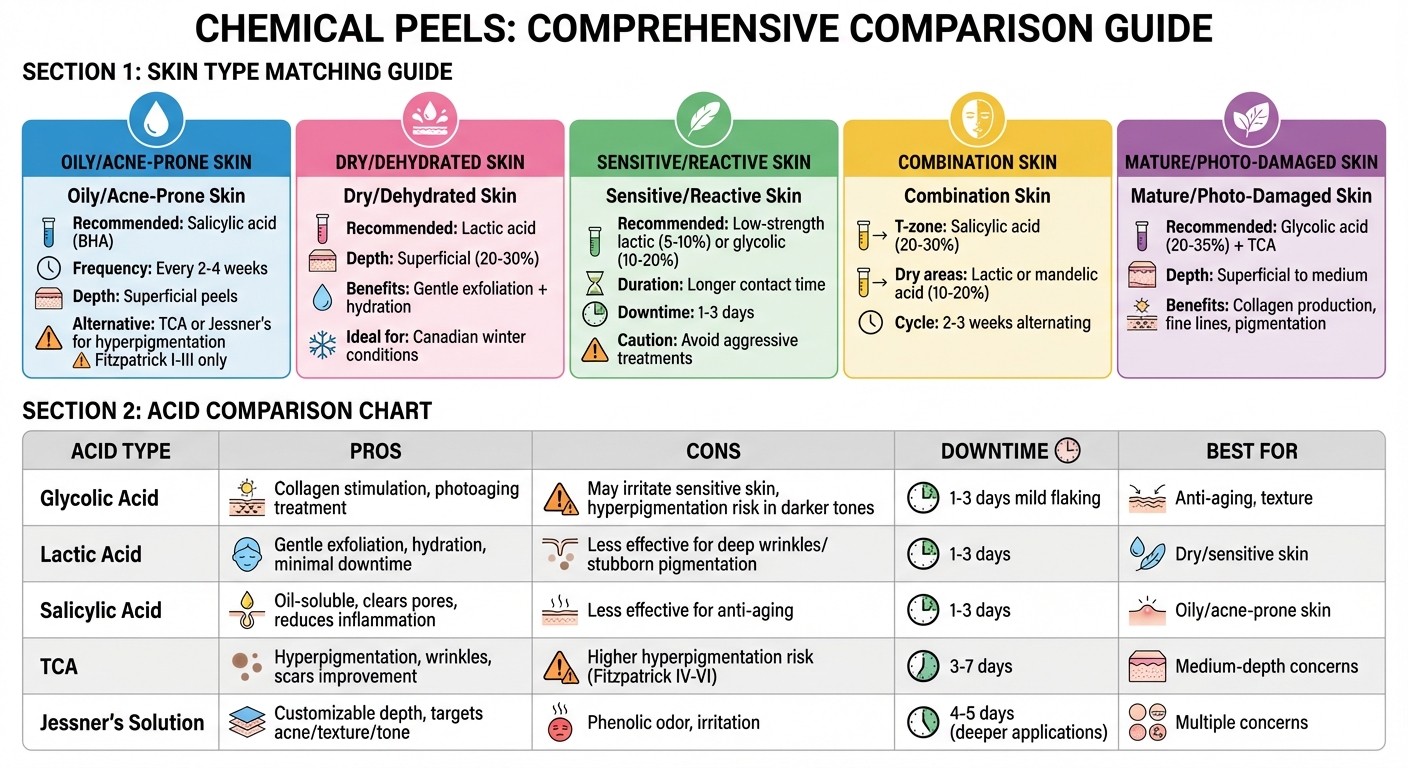
Chemical Peel Selection Guide by Skin Type and Acid Comparison
Choosing the right acid for a chemical peel depends on skin type, treatment goals, peel depth, and even external factors like Canada's climate. Here's a concise guide to help match acids to client needs, bridging detailed skin-specific treatments with practical application.
Skin Type and Recommended Acids
This quick reference outlines which acids work best for different skin types and concerns:
- Oily and acne-prone skin: Salicylic acid (BHA) in superficial peels every 2–4 weeks helps unclog pores, reduce acne, and control oil. For lingering hyperpigmentation or shallow scars, medium-depth peels like TCA or Jessner's are an option for Fitzpatrick types I–III. Be extra cautious with types IV–VI.
- Dry or dehydrated skin: Superficial lactic acid peels are ideal for gentle exfoliation and hydration. They smooth rough texture and enhance product absorption without harming the skin barrier.
- Sensitive or reactive skin: Opt for very low-strength lactic or glycolic peels applied for longer durations. Avoid aggressive treatments to prevent redness and barrier damage.
- Combination skin: Use salicylic acid for T-zone congestion and alternate with glycolic or lactic peels to brighten and smooth drier areas. A 2–3 week cycle works well.
- Mature or photo-damaged skin: Superficial to light-medium glycolic acid peels (20–35%) paired with medium-depth TCA peels can reduce fine lines, improve texture, and address pigmentation by encouraging collagen production.
Pros and Cons of Common Peel Acids
Each acid has its strengths and limitations. Here's what to consider:
- Glycolic acid: Great for collagen stimulation and addressing photoaging, with mild flaking for 1–3 days. However, it may irritate sensitive skin or increase hyperpigmentation risks in darker tones.
- Lactic acid: Offers gentle exfoliation and hydration with minimal downtime, making it perfect for dry or sensitive skin. However, it's not as effective for deeper wrinkles or stubborn pigmentation.
- Salicylic acid: This oil-soluble acid clears pores and reduces inflammation, making it the go-to for oily, acne-prone skin. It’s less effective for anti-ageing concerns.
- TCA: Delivers noticeable improvements in hyperpigmentation, wrinkles, and scars with medium-depth peels. Expect 3–7 days of downtime, and exercise caution with Fitzpatrick IV–VI clients due to a higher risk of hyperpigmentation.
- Jessner's solution: Combines salicylic, lactic, and resorcinol to target acne, texture, and tone. Layering allows for custom depth, with 4–5 days of downtime for deeper applications. However, its phenolic components may cause odour and irritation.
"I'm enjoying this 20% glycolic acid peel. It does not sting my face but I do not have sensitive skin and have experience with acids. I leave it on for 10 mins. My skin is so soft after removing the peel." – Cara, Sussex, New Brunswick, November 2025
For professionals looking for wholesale skincare products, post-care essentials, and exfoliation tools, Canadian suppliers like Dermaplaning Supplies Canada provide resources and training for safe peel protocols. When combining dermaplaning with chemical peels, stick to superficial options like glycolic, lactic, or salicylic acid for same-day use on well-prepped, non-sensitive skin. Avoid pairing medium-depth TCA or Jessner’s peels with dermaplaning to prevent over-exfoliation and reduce risks of post-inflammatory hyperpigmentation. These guidelines can help you seamlessly integrate chemical peels with other treatments in your practice.
Conclusion
When it comes to chemical peels, a one-size-fits-all approach simply doesn't work. Each treatment should be tailored to the client's unique skin type, specific goals, and current condition. Consider factors like seasonal climate and conduct a thorough client assessment to create a customized plan. For instance, salicylic acid is ideal for tackling oily, acne-prone skin by clearing out clogged pores, while lactic acid provides gentle hydration for dry or sensitive skin without disrupting the skin barrier. Combination skin? Alternating or blending peels can address multiple concerns at once, ensuring a comprehensive solution.
Safety should always be a top priority. Stick to superficial peels to reduce downtime and avoid complications, especially for clients with darker skin tones. For medium-depth peels like TCA or Jessner’s solution, extra caution is needed to prevent post-inflammatory hyperpigmentation. And don’t forget the Canadian climate - our harsh winters call for post-treatment care that emphasizes hydration and barrier protection to keep flaking and discomfort at bay.
For enhanced results, consider pairing chemical peels with dermaplaning. This combination boosts exfoliation and delivers smoother, more refined skin. When offering same-day treatments, stick to superficial peels like glycolic, lactic, or salicylic acid, and ensure proper skin preparation beforehand. If you’re looking for professional tools and training, check out Dermaplaning Supplies Canada.
FAQs
How can I choose the best chemical peel for my skin type?
To choose the right chemical peel, you first need to determine your skin type: oily, dry, sensitive, or combination. Each type benefits from specific ingredients tailored to its needs:
- Oily skin: Peels with salicylic acid are ideal, as they help manage excess oil and unclog pores.
- Dry skin: Go for gentle, hydrating peels that replenish moisture without causing irritation.
- Sensitive skin: Mild peels with soothing ingredients like lactic acid can help reduce redness and discomfort.
- Combination skin: You might need to use different treatments for various areas of your face to address its unique needs.
Given Canada's changing seasons and climate, which can influence your skin's condition, consulting a skincare professional is a smart move. They can help adjust the peel's strength and ingredients to suit your specific requirements.
What steps should I take to care for my skin after a chemical peel in Canada?
After getting a chemical peel in Canada, taking care of your skin is key to helping it heal and stay protected. Start by using a broad-spectrum sunscreen with at least SPF 30 every day - even during the colder months. This will help shield your skin from harmful UV rays. For the first two weeks, steer clear of direct sunlight. If you need to be outside, especially in chilly or windy conditions, wear protective clothing like a scarf or a hat to guard your skin.
Focus on keeping your skin well-hydrated. Opt for gentle, fragrance-free moisturizers and steer away from harsh products like exfoliants or retinoids until your skin has fully recovered. Drinking plenty of water can also support your skin’s recovery process. Lastly, follow the aftercare instructions provided by your skincare professional to ensure your skin heals properly and stays irritation-free.
Is it safe to combine dermaplaning with a chemical peel for better skin results?
Combining dermaplaning with a chemical peel can significantly boost results by increasing how well your skin absorbs products and refining its texture. That said, this duo should always be handled by a trained professional to ensure it’s done safely, especially if you have sensitive skin. An expert can evaluate your skin type and tailor the treatment to suit your specific needs.