

Dermaplaning can work wonders for smoother, brighter skin - but for sensitive, aging skin, it requires extra care. As skin ages, it becomes thinner, drier, and more reactive, making standard techniques risky. Adjustments to tools, pressure, and aftercare are essential to prevent irritation and achieve safe, effective results.
Here’s what you need to know:
- Use gentler tools like the #10R rounded-tip blade to minimize risks.
- Avoid dermaplaning on inflamed or compromised skin (e.g., rosacea, eczema, or active breakouts).
- Conduct a thorough skin assessment, including patch tests, before treatment.
- Apply lighter pressure and maintain a 45-degree blade angle to protect fragile skin. Using high-quality dermaplaning blades and tools ensures precision and safety during this delicate process.
- Focus on hydration and barrier repair during aftercare, avoiding harsh ingredients for at least a week.
- Always use SPF 30+ after treatment to protect the skin.
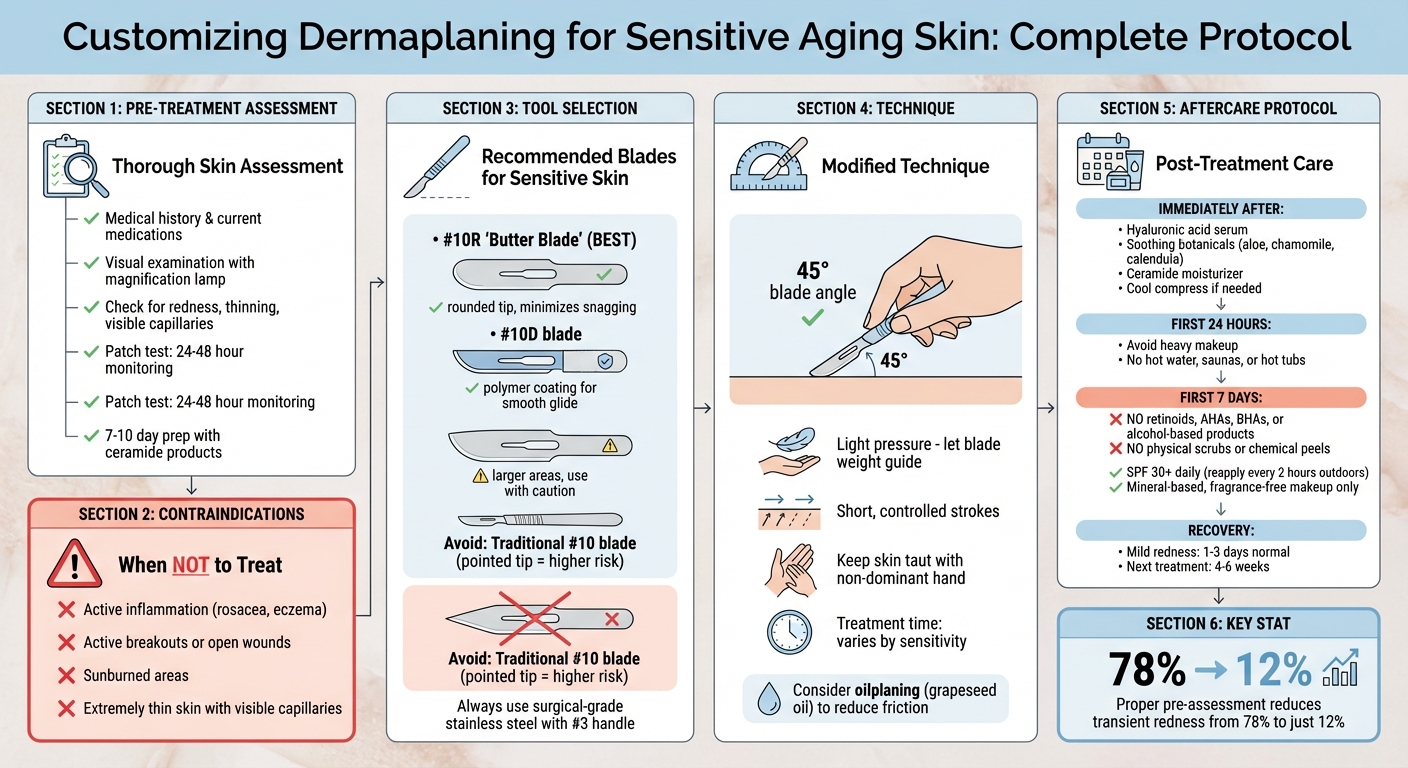
Safe Dermaplaning Protocol for Sensitive Aging Skin: Assessment to Aftercare
Why Sensitive Aging Skin Requires a Different Approach
How Aging Changes Skin Structure
As skin ages, its structure undergoes changes that can make it more sensitive to treatments like dermaplaning. The dermis and epidermis become thinner, which reduces the cushioning between the blade and the live tissue beneath it. Additionally, the natural processes of cell turnover slow down, and oil production decreases, leading to a duller complexion and persistent dryness.
Collagen loss is another factor, often resulting in weaker skin that may develop a crepey texture. Bibiana Dianiskova from Wing It Cosmetics highlights this issue:
"As we age, our skin's natural exfoliation process slows down, leading to a buildup of dead skin cells that can make the skin appear dull and uneven."
These changes mean that sensitivity must be carefully evaluated before any treatment is performed.
Identifying Sensitivities and When Not to Treat
Given the structural changes in aging skin, professionals need to recognize when dermaplaning might not be the best option. Treatments should be delayed if the skin is actively inflamed, such as during a rosacea flare-up, eczema episode, or when there is significant redness or swelling. As Kerry Benjamin advises:
"If your skin is actively inflamed or flaring, wait until it calms down. If you have a chronic skin condition, check with your dermatologist first."
It's also essential to assess the skin's surface condition. Dermaplaning should never be performed over active breakouts, open wounds, cuts, or sunburned areas. For clients with known sensitivities to metals, it's worth noting that some dermaplaning tools contain small amounts of nickel (around 5%). A patch test can help prevent any adverse reactions. Additionally, if the skin appears extremely thin or has visible capillaries, the treatment approach should be modified to avoid potential damage. Using magnifying glasses with LED lighting can help professionals better identify these subtle skin changes.
sbb-itb-c911f39
Preparing for Treatment with Sensitive Clients
Conducting a Thorough Skin Assessment
When working with mature, sensitive skin, a detailed and personalized approach is key. Start by gathering essential information through a consultation questionnaire. This should cover medical history, current skincare routines, allergies, medications (like blood thinners or retinoids), and any recent treatments such as chemical peels or laser procedures. Be sure to ask about conditions like rosacea, eczema, psoriasis, or autoimmune disorders, as these can impact the skin's ability to heal properly.
Follow this with a thorough visual and tactile examination. Use a magnification lamp to identify redness, thinning skin, visible capillaries (telangiectasia), or signs of micro-inflammation - issues often found in aging skin. A gentle touch can help you gauge texture and elasticity, which are indicators of skin barrier fragility. Keep in mind that factors like Canadian winters or irritants such as fragrances and fabric friction can worsen sensitivity.
A patch test is a must. After cleansing, apply a single light stroke with a sterile blade (commonly a #10 or #14) to a small area, like the jawline. Monitor the area for 24 to 48 hours. If the client experiences prolonged redness, stinging, or irritation beyond the first day, consider modifying or postponing the treatment. Careful pre-assessment can significantly reduce the chances of transient redness, lowering its occurrence from 78% to just 12%.
Document every detail in the client’s chart, including before-and-after photos, and ensure you have signed consent that outlines the risks involved. It’s also helpful to recommend a 7- to 10-day prep period using gentle, barrier-repair products like a hyaluronic acid jelly mask to strengthen the skin before treatment. With these steps, you’ll be well-equipped to provide a treatment plan that meets the specific needs of sensitive clients.
Managing Client Expectations
For clients with aging skin, managing expectations is just as important as the treatment itself. Using the information from your assessment, have a clear conversation about the likely outcomes. Visual aids, like before-and-after photos of clients with similar skin types, can help set realistic goals. Emphasize benefits like smoother texture and improved product absorption rather than promising dramatic wrinkle reduction or complete peach fuzz removal. Let them know that mild redness lasting one to two days is normal and that treatments should be spaced four to six weeks apart to allow for proper recovery.
Be upfront about potential risks. Sensitive, aging skin is more prone to micro-cuts, irritation due to a thinner outer layer, post-inflammatory hyperpigmentation, and dryness. Stress the importance of aftercare to minimize these issues. For instance, advise clients to avoid active ingredients like retinoids or acids for at least 72 hours after treatment.
If a client is on blood thinners or has a history of keloids, make sure to note this in their file and adjust your approach accordingly. Women over 45 represent a large portion of clients seeking dermaplaning options designed for sensitive skin, so addressing their unique concerns through a tailored consultation is essential for a successful experience.
Choosing the Right Blades and Tools
Which Blades Work Best for Sensitive Skin
Selecting the right blade is essential when working with sensitive, aging skin. For these clients, the #10R "Butter Blade" is highly recommended. Its rounded "bull nose" tip reduces the chances of snagging or scratching, which is especially important for skin with decreased elasticity and visible laxity. Dermaplaning Supplies Canada highlights the #10R Swann Morton Blade as a top choice for minimizing these risks.
Another option is the #10D blade, which features a polymer coating for a smoother glide, making it ideal for precise contouring. However, the traditional #10 blade, with its pointed tip, carries a higher risk of nicks. For treating larger facial areas, the #14 blade can be effective, but its sharper corners require careful technique to avoid scratches.
When it comes to material, stainless steel blades start off sharper, while carbon steel blades hold their edge for longer. For sensitive skin, pairing the chosen blade with a high-quality #3 surgical handle is equally important. A poorly fitted blade on a subpar handle increases the risk of injury significantly. Dermaplaning Supplies Canada offers the #10R Swann Morton Blades (box of 100) for $109.95 CAD, and they boast a perfect 5.0/5.0 rating from 30 professional reviews.
With these blade options in mind, the next step is to ensure you're using professional-grade tools to maintain safety and effectiveness during treatments.
Sourcing Quality Professional Supplies
After choosing the right blade, it’s critical to source genuine, surgical-grade tools for safe and effective treatments. High-quality, authentic supplies not only elevate the treatment experience but also protect sensitive skin. Trusted brands like Swann Morton, a company established in 1932, deliver the reliability that cheaper alternatives cannot match. Using inferior blades can lead to skin trauma and compromise the results of the treatment.
Dermaplaning Supplies Canada cautions against cutting corners:
"Beware of inexpensive imitations that are of poor quality and will affect your treatment quality or worse cause injury to your client - the compromise and risk aren't worth the minimal savings."
This Canadian distributor provides a wide range of professional-grade tools, including sterile, individually sealed blades, premium #3 scalpel handles (starting at $14.95 CAD), and specialized aftercare products like jelly masks to soothe skin post-treatment. Sourcing from a reliable supplier ensures you’re getting authentic, sterile tools that meet surgical-grade standards. For clients over 45 - a demographic that often seeks customized dermaplaning - investing in the best tools is a must for achieving safe and effective results.
Modifying Your Dermaplaning Technique
Using Lighter Pressure and Correct Blade Angles
Getting the technique right is especially important when working with sensitive or aging skin. To minimize irritation, stick to a 45-degree angle between the blade and the skin during the treatment. This angle helps achieve effective exfoliation while reducing the chance of discomfort.
Managing pressure is equally important. As Medical Aesthetician Nancy Davis explains:
"Avoid applying excessive pressure while dermaplaning delicate mature skin."
Instead, use gentle strokes and rely on the blade’s natural weight to guide your movements. Pressing too hard can lead to over-exfoliation, which is exactly what you want to avoid.
To keep the skin firm and smooth, hold it taut with your non-dominant hand. This prevents the blade from snagging on any looser areas of skin. For those with dry or sensitive skin, oilplaning can be a game-changer. By applying a thin layer of grapeseed oil or a specialized dermaplaning oil, you can reduce friction and make the process gentler. For example, Dermaplaning Supplies Canada offers an 8oz bottle of grapeseed dermaplaning oil for $8.00 CAD.
Once your technique is adjusted, focus on refining your stroke length and timing for the best results.
Adjusting Stroke Length and Treatment Time
Short, controlled strokes are key when dermaplaning mature skin. This technique allows for precise movement around fine lines and facial contours, which helps reduce irritation.
The length of the treatment will depend on the client’s comfort level and the area being treated. Sessions can range from just a few minutes to up to 90 minutes. Be extra cautious around fine lines and age spots - move slowly and shorten the treatment time if sensitivity becomes an issue.
Treating Delicate Facial Zones
When working on delicate areas, such as around the eyes and mouth, extra care is essential. These zones have thinner, more mobile skin, making them more prone to irritation. Keep the skin taut and use very gentle, ultra-light strokes. Michael Todd Beauty offers this advice:
"When using the Sonicsmooth Pro+, make sure to hold the device at a 45-degree angle and use short, feather-light strokes. Avoid applying too much pressure to prevent any potential irritation or nicks".
For these tricky spots, a blade like the #10R "Butter Blade" is especially useful. Its rounded tip makes it easier to navigate tight contours, such as those around the mouth and eyes, compared to traditional pointed blades. Adjust your speed and use even shorter strokes in these areas for added precision. After the treatment, soothe the skin with a hydrating serum containing ingredients like hyaluronic acid to lock in moisture and calm the freshly exfoliated skin.
My Dermaplaning Routine for Mature Skin (No Cuts, No Irritation!)
Aftercare for Sensitive Aging Skin
Taking proper care of sensitive, aging skin after treatments is key to ensuring comfort and promoting long-term skin health.
Calming and Moisturizing the Skin
Right after treatment, focus on hydrating and calming the skin. Start with a hyaluronic acid serum - a powerful humectant that helps lock in moisture and smooth fine lines. As Nu Skin Laser explains:
"Hyaluronic acid is known for its ability to draw moisture into the skin, making it an outstanding choice for replenishing hydration levels."
Next, use products featuring soothing botanicals like aloe vera, chamomile, or calendula to ease redness and reduce inflammation. To reinforce the skin’s barrier, apply a moisturizer containing ceramides, glycerin, and emollients, which help prevent moisture loss and aid recovery.
If the skin feels warm or sensitive, a cool compress or chilled gel pack wrapped in a soft cloth can help reduce swelling by constricting blood vessels. For extra protection, a professional-grade moisturizing oil can also be applied to support the skin’s barrier.
Once the skin is calm and hydrated, the next step is to shield it from environmental and ultraviolet damage.
Protecting Skin and Reintroducing Active Ingredients
After soothing the skin, it's essential to protect it from external stressors. Freshly treated skin is more vulnerable to UV damage, as Danica Tanjutco from Aloe Beauty Spa explains:
"After dermaplaning, your skin is more susceptible to ultraviolet damage, as the top layer of dead skin cells is removed."
Apply a broad-spectrum sunscreen with SPF 30 or higher daily, and reapply every two hours if spending time outdoors during the first week. Enhance sun protection by wearing a wide-brimmed hat and staying in shaded areas when possible.
For at least seven days post-treatment, avoid products containing retinoids, AHAs, BHAs, or alcohol, as these can be too harsh for sensitive skin. Tanjutco advises:
"Try to steer clear of any products containing retinoids, alpha hydroxy acids (AHAs), or beta hydroxy acids (BHAs) for a week after dermaplaning, as these can be too aggressive for your sensitive skin."
Heavy makeup should also be avoided for the first 24 hours. If makeup is needed after that, choose mineral-based, hypoallergenic, and fragrance-free formulations, and ensure brushes are clean to avoid irritation.
Scheduling Treatments and Recovery Time
Once the skin is protected and cared for, it's important to plan an appropriate recovery period. Dermaplaning generally requires no downtime, though some redness or sensitivity may last for one to three days. During this time, avoid hot water, saunas, and hot tubs, as extreme heat can irritate the skin further. Stick to mild, non-abrasive cleansers and lukewarm water, and gently pat the skin dry with a soft towel instead of rubbing.
For aging skin, avoid harsh physical scrubs or chemical peels for at least a week to allow the skin barrier to recover fully. Since the thickness and sensitivity of aging skin can vary, tailor treatment schedules to meet each client’s unique needs.
Key Points for Professionals
When working with sensitive, aging skin, dermaplaning requires a thoughtful and tailored approach that prioritizes both safety and comfort. These practical guidelines build on earlier insights, emphasizing methods to customize treatments effectively. As licensed aesthetician Kerry Benjamin puts it:
"Thinner skin does not mean you need to avoid exfoliation. It means you need to be more intentional about how you do it".
Here are the core principles for achieving safe, effective, and client-focused dermaplaning results for mature skin.
Choose high-quality, surgical-grade tools. Always opt for surgical-grade stainless steel blades, such as the #10R blade with its rounded tip. This design minimizes the chance of accidental nicks and is ideal for delicate areas. Pair these with durable, reusable handles for a smoother glide that avoids pulling on fragile skin.
Master precise technique. Keep the blade at a consistent 45° angle and use short, gentle strokes in the direction of hair growth, ensuring the skin remains taut. Watch for signs like blanching or redness, which indicate too much pressure, and listen for a faint "squeak" as a sign of proper glide. For clients with very reactive or thin skin, start with biweekly treatments before transitioning to the standard three- to four-week intervals. Precision in technique works hand-in-hand with thorough contraindication checks and personalized aftercare.
Screen for contraindications. Avoid treating clients with active inflammation or compromised skin barriers. As Pure Spa Direct advises:
"Being the professional who says 'not today, but let's do this instead' builds way more trust than the one who pushes through and causes a problem".
Prioritize post-treatment care. After the treatment, apply hydrating serums with hyaluronic acid or Epidermal Growth Factors to maximize the skin's enhanced absorption. Stress the importance of using broad-spectrum SPF 30 or higher to shield freshly exfoliated skin. Take time to debunk myths about vellus hair regrowth to reassure clients.
FAQs
How do I know if my skin is too irritated to dermaplane?
If your skin shows signs like redness, dryness, tightness, or heightened sensitivity lasting beyond 72 hours after dermaplaning, it might be too irritated for another session. Persistent issues such as inflammation or signs of infection are clear signals to pause and allow your skin to heal. To support recovery, stick to proper aftercare - avoid harsh products, steer clear of sun exposure, and, if the irritation doesn’t improve or worsens, consult a skincare professional for advice.
What’s the safest way to dermaplane thin, crepey skin?
Dermaplaning thin, crepey skin requires extra care to avoid irritation or damage. The key is to use gentle techniques and prioritize skin health throughout the process. Here’s what you need to know:
- Use the Right Tools: Opt for sterile, professional-grade blades to ensure precision and hygiene.
- Apply Light Pressure: Keep your strokes controlled and gentle to prevent unnecessary trauma to the skin.
- Prep the Skin Properly: Start by cleansing the skin thoroughly and make sure it’s completely dry before beginning.
- Post-Treatment Care: After dermaplaning, steer clear of harsh skincare products, heat, and direct sun exposure. Instead, focus on hydrating products to help the skin recover.
For the best results, it’s always a good idea to consult a trained professional who can assess your skin and tailor the treatment to your specific needs.
When can I restart retinol or acids after dermaplaning?
Avoid using products containing retinol or acids for at least 3–5 days after dermaplaning. This gives your skin the chance to recover and reduces the risk of irritation. Focus on gentle aftercare to keep your skin calm and balanced.