

If skincare seems to sit on top of your face instead of going on evenly, surface buildup may be part of the issue. I’d sum up dermaplaning this way: it removes dead skin and peach fuzz, which can help products spread in a more even layer and make closer contact with the skin.
Here’s the short version of what this article covers:
- Dead skin buildup is reduced, so serums and creams have less in the way
- Skin feels smoother, which can cut down on patchy application
- Peach fuzz no longer catches product, so less formula sits on hair
- Serums spread more evenly across the face
- Layered skincare goes on with more consistency
- Post-treatment products sit more evenly on the skin
- Treatment steps are easier to keep consistent in a spa or clinic setting
A simple point matters here: when skin is rough or covered with fine hair, product can pool, drag, or cling instead of laying flat. After dermaplaning, application often feels lighter and more even.
Quick comparison
| Area | Before dermaplaning | After dermaplaning |
|---|---|---|
| Surface feel | Rougher, with dead skin and fine hair | Smoother, clearer surface |
| Serum application | Can catch, pool, or sit unevenly | Tends to glide in a more even layer |
| Multi-step routine | Layers may go on patchy | Layers tend to apply with more control |
| Post-treatment care | Product may not sit as evenly | Calming products can make closer contact |
One note: dermaplaning changes how products sit on the surface. It does not mean every active will work better, and skin can be more sensitive right after treatment. That’s why simple aftercare matters most.
In short, I’d read this article as a guide to better product contact, smoother application, and smarter post-treatment product choice.
Why Product Absorption Changes After Dermaplaning
Before becoming a trained dermaplaning professional, it is important to understand how dead skin cells and fine facial hair can get in the way. They create a surface barrier that keeps products from making full contact with the skin. Instead of spreading in a smooth, even layer, product may cling to hair fibres or sit on top of surface debris.
Texture plays a part too. Rough patches can cause product to pool in some spots, which means one area gets too much while another gets too little.
After dermaplaning, that surface is smoother and clearer. Products come into more direct, even contact with the skin, so application tends to feel easier and more controlled.
| Surface Condition | Effect on Product Application |
|---|---|
| Fine facial hair (peach fuzz) | Pulls product off the skin and into the hair |
| Dead skin cell buildup | Creates a rough barrier; prevents direct surface contact |
| Uneven texture | Causes pooling and patchy coverage |
| Dermaplaned skin | Provides a smooth, clear surface for consistent, even product spread |
These surface changes set up the seven benefits below.
sbb-itb-c911f39
1. Dead Skin Buildup Is Reduced
Dead skin cells and fine vellus hair can sit on the skin like a thin barrier. That layer gets in the way and can limit how directly serums and moisturisers touch the skin. Dermaplaning clears away that surface buildup, which leaves skin smoother and helps products make better contact.
You can see this most clearly during professional serum application. In a treatment room, a post-treatment serum usually spreads more evenly over freshly dermaplaned skin. That means active ingredients can contact the skin more evenly from one area of the face to the next.
For Canadian spas and skin clinics, a sterile, disposable blade also helps products spread evenly across the face.
2. Skin Texture Becomes Smoother
Barrier removal is only part of the story. Skin texture also shapes how evenly products sit on your face.
When skin has tiny bumps, ridges, and dips, serums and moisturisers don't always spread in a smooth, even layer. Some of the product can collect in certain spots instead. After dermaplaning, those small surface bumps are reduced. That gives products a smoother surface to glide over and helps active ingredients make more even contact with the skin.
You can see this clearly in spas, salons, and skin clinics during mask application. After using a dermaplaning disposable kit, a hydrating mask can make more uniform contact with the treated area. That smoother surface can also help the next layer go on more evenly.
3. Peach Fuzz No Longer Traps Product
Beyond making skin feel smoother, vellus hair can also change how skincare sits on the face. Those fine hairs can hold product on the hair shafts instead of letting it reach the skin, which means serums and moisturisers may sit on that light hair layer rather than making direct contact with the skin surface.
You can see this pretty clearly in spas and clinics during serum application. Professionals often learn these techniques through a dermaplaning online training course to ensure optimal results. Once vellus hair is removed, products tend to glide over the skin instead of catching on hair. As a result, hyaluronic acid or vitamin C serums spread more evenly right away. That matters even more when more than one skincare layer goes on after.
The end result is more even product contact and a smoother application process.
4. Serums Spread More Evenly
A clearer skin surface makes a noticeable difference in how serums sit on the skin. With less surface clutter, the product can spread in a thinner, more even layer instead of catching or pooling in certain spots. That means the formula covers the treated area more evenly. This matters even more when you plan to apply multiple layers after that.
In a treatment room, estheticians may use a sterile dermaplaning blade to prep the skin for more even serum application. For best use, apply serums right after dermaplaning while the surface is still freshly cleared. This is also an ideal time to apply a hyaluronic acid jelly mask to lock in moisture.
5. Layered Skincare Applies More Consistently
This matters even more when a treatment has several steps. On freshly dermaplaned skin, each product in a multi-step routine tends to go on more evenly. Toners, serums, boosters, and moisturisers sit more predictably across the face.
Here’s the simple part: if the first layer goes on unevenly, every layer after that can follow the same pattern. Dermaplaning clears away surface barriers that can throw off even layering.
In a clinic or salon, that can make a clear difference. Estheticians using a multi-step protocol can expect each layer to absorb at a more predictable rate, with less risk of product building up in certain areas.
That same consistency also makes post-treatment product application easier to control.
6. Post-Treatment Products Make Better Surface Contact
Right after dermaplaning, post-treatment products make more even contact with a cleaner skin surface.
A calming serum or barrier-supportive balm can then sit more evenly across the treated skin. In a spa or clinic, that makes the final step simpler to control.
In Canadian spas, salons, and skin clinics, this is the point where professionals move straight into a calming or barrier-supportive finish.
Stick with soothing, barrier-supportive formulas here, not strong actives, so the skin gets support right after treatment.
That same evenness also helps create more controlled product protocols in the treatment room.
7. Treatment Rooms Can Use More Controlled Product Protocols
Dermaplaning can also help treatment rooms standardise product order and timing. It leaves behind a more even surface, which makes it easier to keep step timing consistent from one client to the next. That smoother finish also makes treatment protocols simpler to repeat.
For example, a hydrating serum can be applied first, followed by moisturiser, in the same order for each client. Using sterile, single-use blades can also help keep exfoliation depth consistent across practitioners.
The result is a more repeatable post-treatment routine.
Before and After Product Application: A Quick Comparison
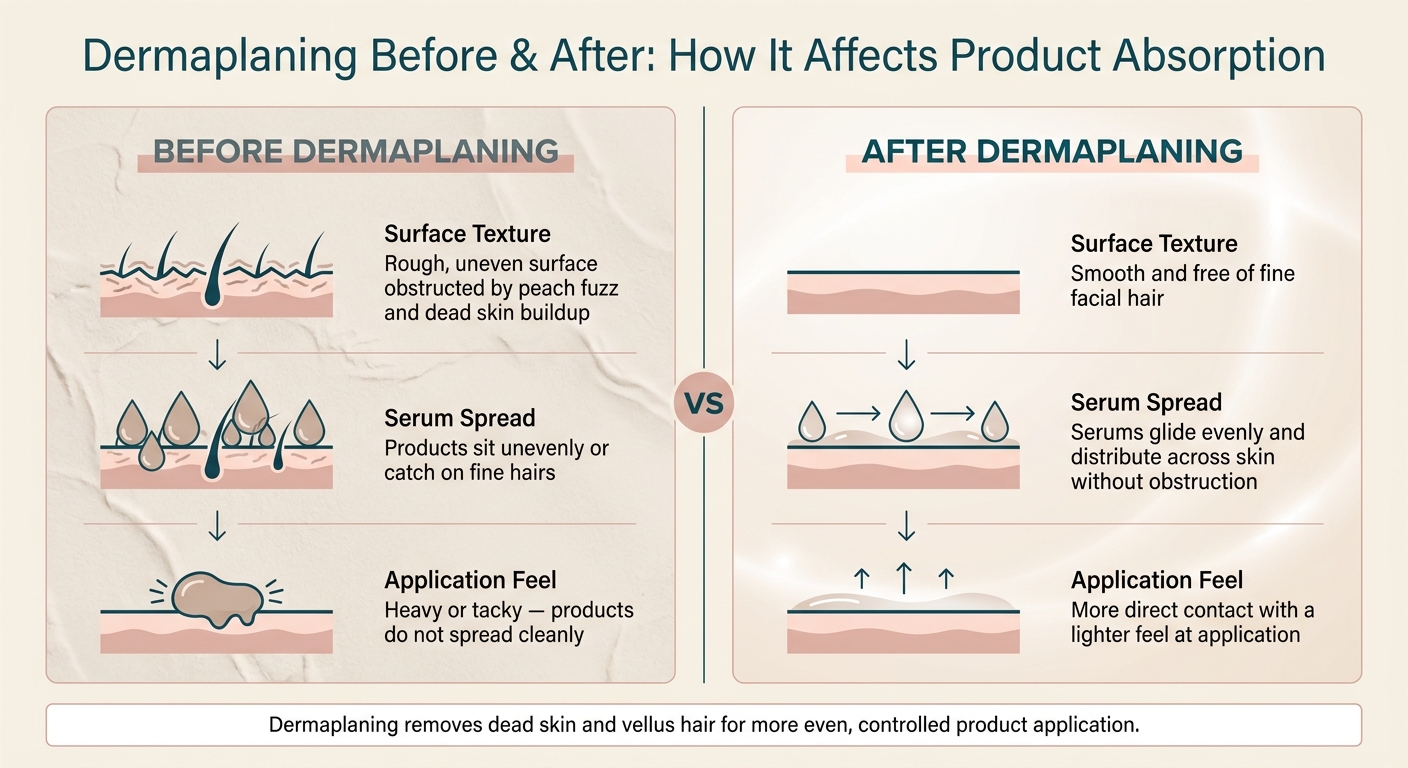
Dermaplaning Before & After: How It Affects Product Absorption
Dermaplaning changes how products sit, spread, and feel on the skin. The side-by-side view below puts those shifts in one place.
The table shows three common differences in treatment-room application.
| Factor | Before Dermaplaning | After Dermaplaning |
|---|---|---|
| Surface Texture | Rough, uneven, and obstructed by peach fuzz and dead skin buildup | Smooth and free of fine facial hair |
| Serum Spread | Products sit unevenly on the surface or catch on fine hairs | Serums glide evenly and distribute across the skin without obstruction |
| Application Feel | Heavy or tacky, as products do not spread cleanly | More direct, with a lighter feel at application |
These shifts matter most when treatment rooms decide what to apply next and in what order.
For spas, salons, and clinics, this kind of comparison can help shape product choice and application timing right after treatment.
Professional Notes for Canadian Spas, Salons, and Clinics
Once dermaplaning is done, the smoother surface lets skincare products reach the skin more directly. But this is where timing and product choice count.
The first products you apply after dermaplaning should help the skin recover, not push it too hard. Hyaluronic acid, aloe vera, and ceramide-based formulas work well right after treatment. They help support the skin barrier without overloading freshly exfoliated skin. Enzyme treatments and chemical exfoliants are better saved for another appointment.
Good product selection matters, but sanitation comes first in the treatment room. Use strict sanitation protocols. Every treatment should involve a sterile, single-use blade for each client. That helps protect both the client and the clinic, while also supporting Canadian health and safety standards for aesthetic services.
After the skin is prepared, the order of steps helps keep results steady from one client to the next. A simple sequence works best: cleanse, degrease, dermaplane, then apply the selected post-treatment serum. That order helps make sure the skin is ready for each stage.
Conclusion
Dermaplaning helps post-treatment products sit on the skin better by removing dead skin, rough texture, and vellus hair. With those surface barriers out of the way, serums and aftercare formulas can spread more evenly across smoother skin.
For Canadian estheticians, spas, salons, and skin clinics, that makes dermaplaning a practical add-on to the service menu. Clients can get more out of the products used after treatment, and your team can apply them with more even results. In spas, salons, and clinics, that means better spread, better skin contact, and a more controlled finish.
For Canadian professionals, dermaplaning works best as a prep step: clear the surface, use the right post-treatment products, and keep protocols sterile and consistent. Dermaplaning Supplies Canada offers professional blades, starter kits, and training for that workflow.
FAQs
Does dermaplaning help all skincare products absorb better?
No. Dermaplaning does not guarantee better absorption for all skincare products.
What it can do is remove dead skin cells and fine vellus hair, which leaves the skin feeling smoother and cleaner. That smoother surface may help professional-grade skincare sit more evenly on the skin.
But there’s a catch: results still depend on the product’s formulation and the client’s own skin needs. So while dermaplaning can support product use, it doesn’t automatically mean every product will absorb better.
What products should I use right after dermaplaning?
After dermaplaning, your skin is in a sweet spot for product absorption. That means what you put on it next matters a lot. Stick with products that hydrate, soothe, and protect the newly exfoliated skin.
The exact products you use should match your skin analysis and post-treatment plan. In plain terms, there’s no one-size-fits-all pick here. Use the products your skincare professional recommends to support your skin type and your treatment goals.
How soon can I use active ingredients after dermaplaning?
The search results don’t give a set timeline. To play it safe, wait until your skin feels calm and fully settled before you start using active ingredients again.
If you’ve had a treatment, follow the aftercare plan from your spa or clinic. It’s also smart to ask your provider when to restart actives based on the products used and how sensitive your skin tends to be.