

Dermaplaning is a top skincare treatment in Canada, offering instant results by removing peach fuzz and dead skin cells. Its rising demand has led to stricter standards for tools to ensure safety and effectiveness. High-quality surgical-grade stainless steel blades are essential for precision, durability, and hygiene. Popular blade types include #10, #10R, and #14, with prices ranging from CAD $29.95 to over CAD $269.00 for premium options. Hygiene is critical, with single-use blades and proper sterilization protocols being mandatory. Canadian regulations, including Health Canada's Medical Devices Regulations, ensure compliance and client safety. Suppliers like Dermaplaning Supplies Canada provide tools that meet these high standards while offering training and support for professionals. Investing in quality supplies not only ensures safety but also builds trust and long-term success.
Standards for Dermaplaning Blades
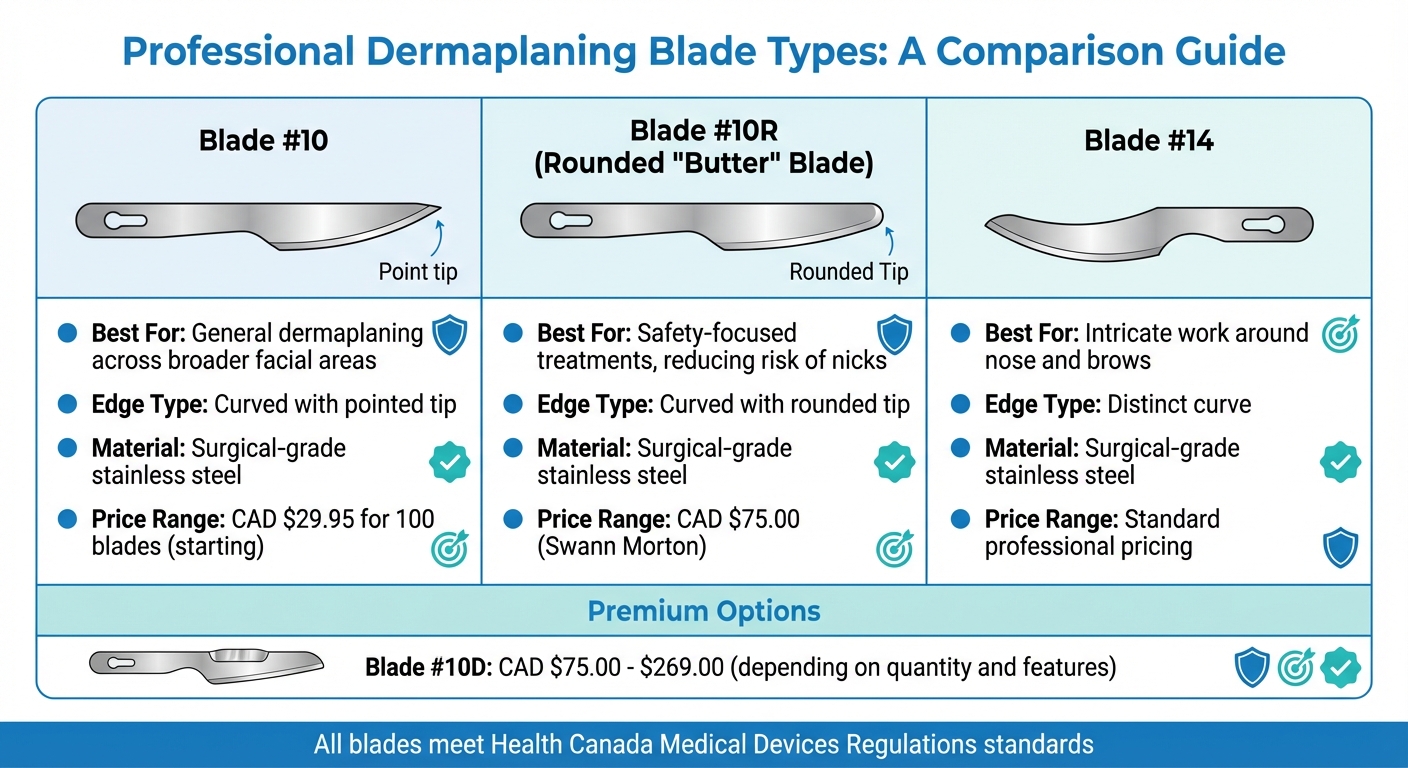
Dermaplaning Blade Types Comparison Guide for Canadian Professionals
Surgical-Grade Stainless Steel Blades
When it comes to professional dermaplaning, using surgical-grade stainless steel blades is non-negotiable. These blades meet the same rigorous standards as surgical scalpels, ensuring precision and consistency during treatments. The term "surgical-grade" refers to specific metallurgical and performance benchmarks that guarantee clean, predictable cuts with minimal resistance against the skin. Stainless steel stands out because it resists corrosion, retains sharpness, and reduces the risk of irritation. On the other hand, lower-quality blades made from substandard materials or prone to corrosion can tug at the skin, cause micro-tears, and lose their sharpness mid-treatment - compromising both safety and effectiveness.
In Canada, skincare professionals typically rely on three main blade types: #10, #10R (rounded "butter" blade), and #14. The #10 blade, with its curved edge and pointed tip, is ideal for general dermaplaning across broader facial areas. For intricate work around contours like the nose and brows, the #14 blade, with its distinct curve, is preferred. Meanwhile, the #10R blade, featuring a rounded tip, prioritizes safety by reducing the risk of accidental nicks.
These high-quality blades come at a cost that reflects their stringent manufacturing standards. In Canada, pricing begins at approximately CAD $29.95 for a box of 100 premium stainless steel blades, while specialized options like the Swann Morton #10R blades are priced around CAD $75.00. Advanced blades such as the #10D can range from CAD $75.00 to CAD $269.00, depending on the quantity and specific features. For those seeking reliable options, Dermaplaning Supplies Canada offers a curated selection tailored to meet the needs of Canadian skincare professionals.
The quality of surgical-grade blades is just the starting point. Maintaining their sharpness and durability is equally critical for delivering consistent, safe results.
Blade Sharpness and Durability
The sharpness of a dermaplaning blade is pivotal for achieving precise results, ensuring client comfort, and promoting healthy skin. A sharp, surgical-grade blade glides effortlessly across the skin, removing vellus hair and dead skin cells in a single pass without pulling or skipping. In contrast, a dull blade increases drag, leads to uneven exfoliation, and often requires multiple passes over the same area - heightening the risk of irritation.
Durability is just as crucial. Surgical-grade blades are designed to maintain their sharp edge throughout an entire session, with professionals typically using one blade per client. Inferior blades, while initially sharp, tend to degrade quickly during use, forcing practitioners to either continue with a compromised tool or interrupt the treatment to replace it. Premium blades reduce trauma and the risk of nicks, while lower-quality options with uneven edges can cause micro-tears or skip across the skin. For Canadian professionals, choosing high-quality blades is not just about technique - it’s about meeting the safety and performance expectations of their clients.
Safety and Ergonomic Design in Dermaplaning Tools
Protective Features in Tool Design
The foundation of safe dermaplaning tools lies in the use of medical-grade stainless steel, known for its sharpness and durability, which helps reduce the risk of irritation during treatments. However, the safety of these tools goes beyond just the blade. Built-in protective features are essential for preventing accidental injuries. For instance, tools designed for easy disassembly and cleaning help prevent bacterial growth and cross-contamination between clients.
To further enhance safety, many modern dermaplaning tools incorporate antimicrobial materials in their handles and blades, effectively reducing bacterial growth in busy treatment settings. Some advanced models even include UV-C light technology, which enables self-sanitizing between uses, adding an extra layer of hygiene and reassurance. These safety features, combined with high-quality blades, create a safer and more hygienic experience for both professionals and clients.
Ergonomic Design for Professionals
Safety isn’t the only focus - ergonomic design plays a huge role in ensuring precision and reducing fatigue for practitioners. Tools with anti-slip grips can improve control by 20–30%, as reported by estheticians, which significantly lowers the risk of accidental nicks during extended sessions.
Lightweight composite materials are often used to improve grip comfort without compromising durability, while antimicrobial stainless steel handles offer both hygiene and ease of use. Brands like Swann-Morton stand out by using high-grade steel that maintains sharpness while remaining lightweight, striking a balance between reducing infection risks and minimising practitioner fatigue in Canadian clinics. Additionally, round blades are designed to enhance control and decrease strain, making them particularly beneficial for professionals with varying levels of experience.
The growing emphasis on ergonomic design highlights the understanding that comfort for practitioners directly impacts treatment outcomes. Less physical strain means better precision, which ultimately leads to safer procedures and higher client satisfaction.
Hygiene and Sanitization Standards
Sterilization Protocols for Tools
Ensuring top-notch hygiene during dermaplaning treatments is critical - not just for client safety, but also to meet Canadian health regulations. Many clinics across Canada rely on single-use blades because they come pre-sterilized and ready to go. This eliminates the need for reprocessing and lowers the risk of cross-contamination.
For tools that are reusable, like metal handles, a detailed cleaning routine is essential. After each session, reusable components must first be pre-cleaned to remove any debris. They should then be disinfected or steam sterilized according to provincial guidelines. Once cleaned, these tools should be stored dry in clean, covered containers. Clinics are also required to maintain written infection-control protocols that align with provincial health standards. Staff must receive thorough training on sanitation practices, sharps safety, and the specific regulatory requirements in Canada.
Antimicrobial and UV-C Technologies
Beyond traditional sterilization methods, modern advancements have introduced antimicrobial and UV-C technologies to enhance hygiene practices. Some dermaplaning tools now feature antimicrobial materials in their handles and blade housings. These materials actively reduce bacterial growth on contact surfaces, offering an extra layer of safety in high-traffic professional environments.
Additionally, cutting-edge tools incorporate UV-C light technology to kill bacteria and viruses, complementing manual disinfection efforts. However, it’s important to note that these technologies are not standalone solutions. For example, UV-C systems can leave untreated areas due to shadowing, and they don’t meet Canadian regulatory standards for semi-critical devices on their own. Clinics must continue to follow detailed cleaning and disinfection protocols, using antimicrobial and UV-C features as supplementary tools within a broader hygiene program.
sbb-itb-c911f39
Regulatory Compliance and Quality Assurance in Canada
Health Canada Standards for Skincare Tools
In Canada, dermaplaning tools and blades are regulated as medical devices when marketed for medical or therapeutic purposes. This means manufacturers and importers must adhere to the Medical Devices Regulations outlined in the Food and Drugs Act. These regulations cover proper classification, licensing, and ongoing compliance. Skincare professionals in Canada are required to meet both federal Health Canada standards and provincial rules governing personal-service establishments.
Professional dermaplaning supplies must adhere to stringent safety and performance criteria to ensure client safety. For instance, surgical-grade stainless steel blades must maintain their sharpness without breaking. Additionally, clear labelling is mandatory, detailing the manufacturer, sterilization method, and expiry date. Infection prevention measures also play a critical role - disinfectants used on hard surfaces in professional settings must have a Drug Identification Number (DIN), verifying their safety and effectiveness as evaluated by Health Canada.
Maintaining proper documentation is another key aspect of compliance. Clinics should keep detailed treatment records, which include blade lot numbers, treatment dates, practitioner names, and any reported adverse events. Written infection-control protocols, up-to-date staff training records, and signed consent forms outlining procedures, risks, and contraindications are also essential for demonstrating adherence to regulations.
Quality Assurance and Testing
Beyond meeting regulatory requirements, rigorous testing ensures that dermaplaning tools meet Canadian standards. Clinics are encouraged to request certificates that verify material composition, sterilization methods, and compliance with recognized standards. Many Canadian wholesalers prioritize blades from top-tier manufacturers like Swann-Morton, known for their reliability and support for quality assurance and traceability needs.
Before introducing new dermaplaning tools into their practice, clinics should validate their performance through third-party certifications and regular audits. These audits should assess factors such as blade angle, skin tension, and the proper use of personal protective equipment. A robust quality-assurance plan includes these evaluations to ensure consistent and safe outcomes. Additionally, investing in dermaplaning certification programs that cover infection control, tool handling, and contraindications helps staff stay competent as industry standards evolve.
For Canadian skincare professionals, sourcing compliant dermaplaning tools is non-negotiable. At Dermaplaning Supplies Canada, we are dedicated to offering products that align with Health Canada and provincial quality standards, ensuring safe and effective treatments every time.
Market Trends Shaping Dermaplaning Supply Standards
Advancements in Blade Technology
Manufacturers are pushing the boundaries of blade precision to meet the rising demand for reliable and safe dermaplaning tools. By using surgical- and medical-grade stainless steel and employing advanced manufacturing techniques, they’re achieving uniform sharpness and consistent edge geometry. This allows practitioners to confidently use one blade per client while ensuring optimal performance.
Hygiene-focused designs are also transforming dermaplaning tools. Features like antimicrobial coatings and built-in UV-C technology for automatic surface sanitization are becoming standard, particularly in response to the growing demand for minimally invasive aesthetic procedures in busy clinics and dermatology practices. These innovations align with Canada’s strict safety and hygiene regulations, ensuring that technological advancements prioritize client protection. Beyond improving performance, these developments are also shaping pricing and accessibility for professionals across the country.
Balancing Cost, Quality, and Accessibility
As these technologies advance, Canadian suppliers are adapting to ensure professional-grade dermaplaning tools remain accessible without sacrificing quality. Wholesale pricing options and treatment starter kits are helping smaller clinics and spas invest in high-performance, regulation-compliant products. For instance, Dermaplaning Supplies Canada offers free shipping on orders over $199 CAD nationwide and frequently updates its product lines to reflect the latest industry innovations.
Practitioners in Canada are also looking for more than just tools - they expect robust support from suppliers. This includes training resources, clear sterilization guidelines, and documentation to meet regulatory requirements. By providing this comprehensive support, suppliers help clinics consistently adhere to Canadian quality assurance standards while offering safe and effective treatments.
Conclusion
Adhering to industry standards for dermaplaning supplies isn’t just about following the rules - it’s about safeguarding your clients and establishing a practice that thrives over the long term. By opting for surgical-grade stainless steel blades, ergonomic tools, and materials that comply with Health Canada's regulations, you significantly lower the chances of complications, infections, or inconsistent results that could harm both your clients and your reputation. This dedication to quality forms the foundation of a successful and trusted practice.
Investing in top-tier supplies also gives practitioners a competitive edge. Those who choose professional-grade, quality-controlled products position themselves to deliver outstanding results, standing out in Canada’s growing aesthetics industry.
Canadian skincare professionals face specific regulatory challenges, including Health Canada's Cosmetic Regulations and provincial hygiene standards. Partnering with reliable suppliers who understand these requirements can make compliance much simpler. Look for suppliers who provide not just products but also training resources, sterilization protocols, and proper documentation. For example, Dermaplaning Supplies Canada frequently updates its offerings to include innovations like antimicrobial coatings and UV-C sanitization features.
FAQs
What makes surgical-grade stainless steel blades ideal for dermaplaning?
Surgical-grade stainless steel blades are built to last and retain their sharp edge, delivering accurate and consistent exfoliation. Their high-quality material helps minimise the risk of irritation or infection, offering a safer option for dermaplaning. These blades are crafted to meet professional standards, ensuring dependable performance for skincare experts and their clients alike.
What role do Canadian regulations play in ensuring the safety and quality of dermaplaning supplies?
In Canada, regulations are crucial in ensuring the safety and reliability of dermaplaning supplies. Health Canada sets out detailed guidelines that cover everything from sterilization procedures to labelling requirements and product safety testing.
These standards ensure that dermaplaning tools and products meet strict safety criteria, protecting both skincare professionals and their clients. By following these guidelines, the industry upholds trust and delivers high-quality treatments that prioritize safety and professionalism in skincare services across the country.
What new innovations in dermaplaning tools are influencing industry standards?
Recent developments in dermaplaning tools are changing the game by prioritizing safety, precision, and ease of use. Today’s blades are crafted with advanced safety features, like better edge control, to reduce the chances of accidents during treatments. Ergonomically designed handles offer a more secure grip, giving skincare professionals greater control and making procedures smoother and more comfortable. On top of that, improved sterilization methods ensure these tools meet top hygiene standards, supporting safer practices in clinics and spas throughout Canada.