

If I had to give one short answer: after dermaplaning, most people do best with both a hydrating serum and a cream. The serum adds water back into the skin. For an intensive boost, a hyaluronic acid jelly mask can also provide deep hydration. The cream helps keep that water from leaving. Right after dermaplaning, skin can lose moisture more easily, so that two-step approach often works best.
Here’s the simple breakdown:
- Use a serum first if your skin feels tight, dry, or warm after treatment
- Use a cream after to help lower water loss and support the skin barrier
- Use cream only if your skin is very sensitive and needs a plain, low-step routine
- Use serum only mainly if your skin is very oily and the weather is humid
- Skip strong actives for 72 hours, including retinoids, AHAs, BHAs, harsh vitamin C, scrubs, and alcohol-heavy products
- Wear SPF 30+ every morning, since post-dermaplaning skin can react more to sun and weather
In Canada, this matters even more. Cold air, indoor heating, and low humidity can dry skin out fast for much of the year. That means a light serum may not be enough on its own, especially in fall and winter.
Quick Comparison
| Option | What it does | Best for | Main limit |
|---|---|---|---|
| Hydrating serum | Pulls water into the skin with ingredients like glycerin or hyaluronic acid | Oily, acne-prone, or mildly dry skin | Does not do much to hold moisture in on its own |
| Cream / moisturiser | Seals moisture in and helps lower TEWL | Dry, sensitive, mature, or winter-stressed skin | Can feel heavy if you use too much |
| Serum + cream | Adds water, then helps keep it there | Most skin types after professional dermaplaning | Takes one extra step |
A few ingredients stand out. Ceramides help support the skin barrier. Glycerin and hyaluronic acid help draw in water. Dimethicone and petrolatum help slow moisture loss. If your routine is working, you should notice less tightness, less flaking, and less stinging within the first 24 to 72 hours.
So if you’re deciding between a serum and a cream, I’d keep it simple: pick both unless your skin is very oily or very reactive. That gives you hydration now and better moisture hold after.
sbb-itb-c911f39
Hydrating Serums After Dermaplaning
A hydrating serum gives your skin a light first layer of moisture after dermaplaning. Since freshly dermaplaned skin can take in hydrating products more easily, a soothing serum from your facial supplies is a smart first step for easing tightness and dryness. The best formulas keep things simple and non-irritating.
Key Ingredients and Main Benefits
Aloe vera helps soothe the skin and reduce redness. Squalane adds hydration without feeling heavy, and it also has gentle anti-inflammatory properties.
| Ingredient | Post-Dermaplaning Benefit |
|---|---|
| Aloe Vera | Soothes the skin and reduces redness |
| Squalane | Hydration that won't feel heavy, with anti-inflammatory properties |
Texture matters too. Not every serum works the same way for every skin type, so the formula you pick can make a big difference.
Best Use Cases and Limits
Serums work well for oily and acne-prone skin because they hydrate without adding heaviness. They can also work for sensitive skin, as long as the formula is simple and fragrance-free. For freshly dermaplaned skin, it's best to stick with low-irritation dermaplaning supplies.
There is a limit, though. Dry or mature skin often needs a cream on top to cut down water loss. If dryness is the main issue, a cream usually does a better job of finishing the routine.
Creams and Moisturizers After Dermaplaning
A serum gives skin a fast drink of water. A cream does the part that lasts longer.
Creams and moisturizers blend humectants, emollients, and occlusives in one formula. That combo softens the skin and slows water loss. After dermaplaning, that matters. Skin can feel tight, exposed, and a bit more reactive, so the right cream helps keep it calm for longer. It also supports barrier repair. When you apply it after a hydrating serum, it helps seal that moisture in.
Barrier-Support Ingredients and Protective Benefits
Start with ingredients that help the skin hold onto water and feel less tight.
Ceramides help rebuild the lipid structure between skin cells. That can ease the tightness and sensitivity that often show up after treatment. Glycerin is a reliable humectant that pulls moisture into the outer layers of the skin, which helps with that dry, stretched feeling in the first few hours after a session. Professionals can learn more about post-treatment care in a dermaplaning online training course. Hyaluronic acid adds water, but a cream helps keep that water from disappearing too fast.
On the occlusive side, dimethicone forms a breathable layer that cuts down transepidermal water loss (TEWL) without feeling thick or greasy. If parts of the skin are very dry or a bit compromised, petrolatum is one of the strongest options for slowing water loss. It works well as a spot treatment or as an overnight layer.
| Ingredient | Role | Post-Dermaplaning Benefit |
|---|---|---|
| Ceramides | Barrier lipid | Rebuilds the skin's lipid matrix, reduces tightness |
| Glycerin | Humectant | Draws moisture into outer skin layers, relieves dryness |
| Hyaluronic Acid | Humectant | Adds water; a cream keeps it from evaporating |
| Dimethicone | Occlusive | Reduces TEWL with a breathable, non-greasy layer |
| Petrolatum | Occlusive | Highly effective at preventing water loss; best for dry spots or overnight use |
Choosing the Right Texture by Skin Type and Season
Texture should match both your skin type and the time of year.
For oily or combination skin, a light gel-cream or lotion usually gives enough barrier support without feeling heavy. These formulas often lean on humectants and lighter emollients like squalane, which add moisture without clogging pores.
For dry or mature skin, a richer cream with ceramides, shea butter, and stronger occlusives tends to feel better, especially in the first 24 to 48 hours after treatment. That extra cushion can make a big difference when skin feels stripped or rough.
Weather plays a part too. In fall and winter, cold air and indoor heating can increase TEWL, so richer creams often work better across more skin types. A balm or heavier cream at night can help a lot if you're dealing with wind, low humidity, or forced-air heating. In summer, a lighter lotion or gel-cream is often enough. That's one of the main differences between creams and serums after dermaplaning: serums add water fast, while creams help keep it there.
Hydrating Serums vs. Creams: Direct Comparison for Post-Dermaplaning Care
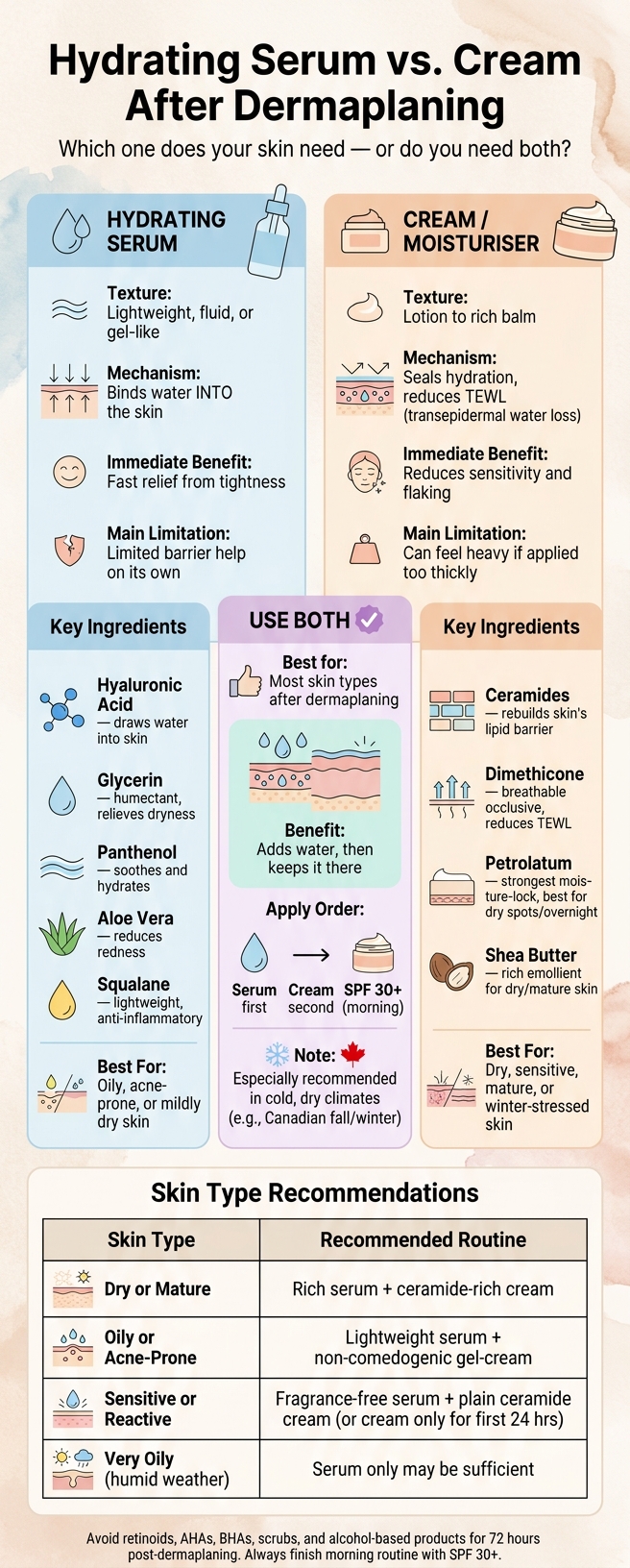
Hydrating Serum vs. Cream After Dermaplaning: Which Do You Need?
Serums add water. Creams help keep that water from escaping. After dermaplaning, the right pick comes down to what your skin is missing most: hydration, barrier help, or both.
How Each Product Works on Post-Treatment Skin
Now that the ingredient jobs are clear, the next step is figuring out which format should come first after dermaplaning.
A hydrating serum sends concentrated humectants - like hyaluronic acid, glycerin, and panthenol - into the epidermis. That usually means faster relief from tightness and a more comfortable feel. For additional soothing, professionals often use ice globes to calm the skin immediately after the procedure.
A cream does a different job. It slows how fast water leaves the skin, while emollients and occlusives help shield it from wind, cold, and temperature swings. Apply serum first, then cream. In the morning, finish with SPF 30+.
That split matters most when skin is dry, oily, sensitive, or mature.
| Feature | Hydrating Serum | Cream / Moisturiser |
|---|---|---|
| Texture | Lightweight, fluid, or gel-like | Lotion to rich balm |
| Mechanism | Binds water into the skin | Seals hydration, reduces TEWL |
| Immediate Benefit | Fast relief from tightness | Reduces sensitivity and flaking |
| Main Limitation | Limited barrier help on its own | Can affect sunscreen feel if applied too thickly |
Which Option Suits Dry, Oily, Sensitive, and Mature Skin
Dry or mature skin tends to do best with a rich hydrating serum under a ceramide-rich cream with cholesterol and fatty acids. That combo helps with short-term dehydration and supports barrier repair over time.
Oily or acne-prone skin often does well with a lightweight hydrating serum and a non-comedogenic gel-cream. For some people with oily skin, serum plus SPF may be enough during the day, with the gel-cream saved for night.
Sensitive or reactive skin usually needs the simplest routine. Go with a minimal-ingredient, fragrance-free serum with glycerin, panthenol, and beta-glucan, followed by a plain ceramide cream without essential oils or strong actives. For clients with rosacea or higher sensitivity, pros may suggest starting with only the cream for the first 24 hours, then adding the serum if skin handles it well.
When One Product Is Enough and When Both Are Better
Most routines work better with both steps, though a few skin types can keep things simpler.
Most skin types do best with serum plus cream. Use serum on its own only for very oily skin in humid weather. Use cream on its own only for highly reactive skin that needs a stripped-back routine. For most skin types, especially with Canada's up-and-down climate, using both gives better post-treatment support than either one alone.
Post-Dermaplaning Routine and Final Takeaways
What to Do in the First 24 Hours and Days 2 to 3
After looking at both options, the simplest post-dermaplaning routine is pretty straightforward.
The first 24 to 72 hours after dermaplaning are the main recovery window. That’s when skin tends to feel a bit more exposed, so keeping things gentle matters most.
Morning: gentle cleanser → hydrating serum → cream → SPF 30+ mineral sunscreen
Evening: gentle cleanser → hydrating serum → cream
For 72 hours, avoid retinoids, AHAs, BHAs, strong vitamin C, scrubs, fragrance, alcohol-heavy products, and heavy sweating.
Ingredient Checklist and Signs the Routine Is Working
What you use matters, but only if the formula isn’t too harsh.
Go for humectant-rich serums and barrier-support creams that help hold moisture in the skin. Think of it like this: the serum adds water, and the cream helps keep it from slipping away.
Signs the routine is working are simple: less tightness and little to no flaking. If clients report persistent stinging, ongoing redness, breakouts, or increased sensitivity, strip the routine back even more.
Conclusion: Serum, Cream, or Both
The right pick comes down to how much hydration your skin needs and how much barrier support it can handle.
Serums hydrate. Creams seal in moisture. Use both for dry or mature skin, a cream alone for very sensitive skin, and a serum alone only for very oily skin in humid conditions.
FAQs
Can I use niacinamide after dermaplaning?
Yes. Niacinamide (vitamin B3) is often recommended after dermaplaning because it can help calm redness, ease irritation, and support the skin barrier.
It’s generally seen as safe and effective for soothing sensitive skin while it recovers, especially in concentrations of 2–5%.
How soon after dermaplaning can I go back to my usual skincare?
Wait at least 24 to 48 hours before bringing active skincare ingredients back into your routine after dermaplaning.
In most cases, you can get back to your usual routine, including exfoliants and retinoids, about 3 to 5 days after treatment. The key is to wait until your skin has calmed down and any redness or sensitivity has gone away.
What if my skin still feels tight after using both?
If your skin still feels tight after using both, it may need more moisture or a bit more barrier support. In that case, a thin layer of non-comedogenic occlusive balm - such as petrolatum - over dry areas can help lock in hydration and ease that tight, uncomfortable feeling.
It may also help to use products with humectants like hyaluronic acid, glycerin, or panthenol. If the tightness sticks around, pause active ingredients and skip harsh products for now. And if you start to notice redness or irritation, it’s a good idea to check in with a skincare professional or dermatologist.