

My advice after dermaplaning: keep skin care simple, and follow your trained dermaplaning professional's instructions first. Use a gentle cleanser and moisturiser, pause irritating products, and apply broad-spectrum SPF 30+ once tolerated.
Here’s what I focus on between appointments:
- Hydration: Choose a fragrance-free moisturiser. A hydrating serum can go underneath, but may not replace it.
- Product timing: Restart actives one at a time, only when skin feels normal and your provider approves.
- Sun protection: Reapply sunscreen every 2 hours outdoors. SPF 30 blocks about 97% of UVB rays when used as directed; clouds and Canadian winters don’t remove the need for protection.
- Seasonal care: Change moisturiser texture only if your skin feels dry or your current cream feels too heavy.
- Repeat treatments: Track recovery and review appointment timing if irritation lasts. Seek medical care for worsening swelling, blistering, severe pain, pus or fever.
My rule: <u>comfortable skin comes before more products - or another appointment.</u>
Choosing Moisturizers and Serums
Moisturizers for Hydration and Barrier Support
Once your skin no longer stings, move from recovery care to choosing a moisturizer. Focus on what the ingredients do, not a post-treatment label. Glycerin and hyaluronic acid draw in water. Ceramides help replenish barrier lipids, while squalane softens skin and helps reduce moisture loss.
Dry or reactive skin may prefer a fragrance-free cream. Use a small amount of ointment on very dry areas only if your provider recommends it. For oily or combination skin, a lighter lotion or gel may feel more comfortable. Indoor heating and cold Canadian weather may call for a richer texture.
A hydrating serum may not replace moisturizer. It can supply water-binding ingredients, or humectants, without enough emollient or occlusive protection to limit water loss. If the product instructions allow, apply it to clean, slightly damp skin, then follow with moisturizer. Aim for skin that feels comfortable - not tight or greasy. An oil-free formula can still cause irritation.
Serums and Actives: Uses, Timing and Risks
Pause benzoyl peroxide until your provider clears it. Once your skin tolerates moisturizers, reintroduce actives one at a time, starting at a lower frequency.
| Product category | Primary purpose | Appropriate timing | Potential concern | Skin types or conditions requiring caution |
|---|---|---|---|---|
| Hydrating serums | Add water-binding hydration | Once skin feels comfortable; apply under moisturizer | May not limit water loss enough on their own | Very dry skin or an impaired skin barrier |
| Niacinamide | Support the skin barrier and oil balance | After recovery; introduce gradually | Higher concentrations may sting or cause flushing | Sensitive, rosacea-prone or inflamed skin |
| Antioxidants | Help address oxidative stress from surroundings | Daytime after recovery; follow with sunscreen | Acidic vitamin C formulas may irritate | Reactive or recently treated skin |
| Retinoids | Address acne or photoageing | After full recovery and provider approval | Dryness, peeling and burning | Eczema, rosacea or highly sensitive skin; pregnancy or breastfeeding requires medical guidance |
| Exfoliating acids | Address selected texture, acne or pigment concerns | After healing, with provider guidance | Over-exfoliation and barrier irritation | Dermatitis, eczema, rosacea or use of other irritating actives |
Product Selection Checklist
Look for fragrance-free, low-irritant formulas without exfoliating acids, scrubs, essential oils or strong alcohol-based ingredients.
Add one new product at a time, and record its start date and any reaction. Patch testing after recovery can reveal irritation, but it cannot confirm that your whole face will tolerate a product.
Stop using a product if it causes persistent burning or redness. Seek medical advice for swelling, hives, blistering, oozing or symptoms that worsen quickly.
sbb-itb-c911f39
Building a Daily and Weekly Routine
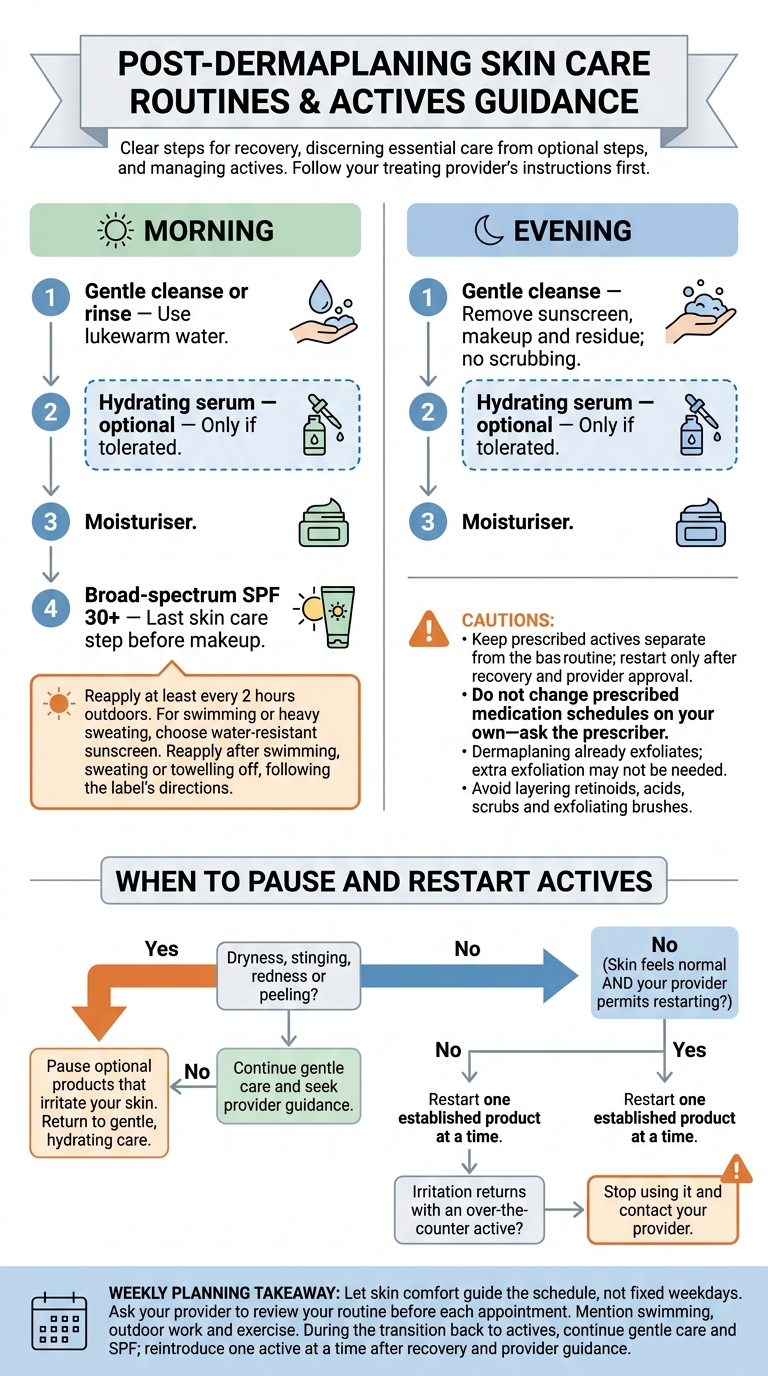
Daily Skin Care Routine After Dermaplaning
Morning and Evening Care
Keep daily care simple with professional facial supplies to support your skin barrier and reduce irritation between appointments.
In the morning, gently cleanse or rinse with lukewarm water. Follow with a hydrating serum if tolerated, moisturiser and broad-spectrum SPF 30+ as the last step before makeup. Reapply sunscreen at least every 2 hours outdoors. For swimming or heavy sweating, choose a water-resistant sunscreen. Reapply after swimming, sweating or towelling off, following the label’s directions.
At night, gently cleanse away sunscreen, makeup and residue - no scrubbing. Then apply a hydrating serum if tolerated and moisturiser. Keep prescribed actives separate from this base routine, and restart them only after recovery and provider approval.
Weekly Routine Planning
Once your daily routine is in place, adjust how often you use products and actives based on your skin’s response. Let skin comfort guide the schedule, not fixed weekdays.
Ask your provider to review your routine before each appointment. Mention swimming, outdoor work or exercise, as these affect cleansing and sunscreen needs. Use the table as a starting point, then adjust it to your provider’s instructions, your skin’s response and treatment timing.
| Routine period | Morning | Evening |
|---|---|---|
| Ordinary week | Gentle cleanse or rinse, hydrating serum if tolerated, moisturiser, SPF 30+ | Gentle cleanse, hydrating serum if tolerated, moisturiser; use one provider-approved active on a separate night |
| Transition back to actives | Continue gentle care and SPF | Reintroduce one active at a time after recovery and provider guidance |
Keep this base routine in place; bring actives back only once your skin stays calm.
When to Pause and Restart Actives
If your routine starts to sting, scale back before adding anything new. Confirm when to pause and restart products before each appointment. Timing depends on the product, your skin’s tolerance and any combined procedures.
Dermaplaning already exfoliates, so you may not need extra exfoliation. Avoid layering retinoids, acids, scrubs and exfoliating brushes.
If dryness, stinging, redness or peeling develops, pause optional products that irritate your skin and return to gentle, hydrating care. Restart one established product at a time, only when your skin feels normal and your provider permits it.
Do not change prescribed medication schedules on your own - ask the prescriber for instructions. If irritation returns with an over-the-counter active, stop using it and contact your provider.
Year-Round Sun Protection
Once your skin tolerates daily care, make sunscreen the final step in your morning routine, every day.
How to Apply and Reapply Sunscreen
Use enough broad-spectrum SPF 30+ sunscreen to cover your face, ears, neck, hairline and temples. Broad-spectrum sunscreen protects against UVA and UVB rays. SPF 30 blocks about 97% of UVB rays when used as directed. Follow the label’s directions for the amount to apply, and put it on 15 minutes before going outdoors.
Reapply every 2 hours while outdoors, and after swimming, heavy sweating or towel drying. For water-resistant formulas, follow the label’s 40- or 80-minute limit.
Choose a fragrance-free, non-comedogenic formula that doesn’t sting when you apply it. A mineral sunscreen with zinc oxide or titanium dioxide may suit sensitive skin, but patch-test it first. If burning continues or redness develops, stop using that formula and ask your treating professional for advice. Rely on shade and protective clothing until you find an option your skin tolerates.
Sun Protection in Clouds and Snow
In Canada, UV risk shifts with the weather and season. Winter protection matters just as much as summer protection. Check the UV Index, not the temperature, to judge sun risk: clouds don’t block all UV radiation. Take extra care when the UV Index is 3 or higher, and check Environment and Climate Change Canada’s local forecast before longer outdoor activities.
Snow can nearly double UV exposure, so protect your skin during skiing, skating and winter walks. Cover exposed skin when practical, wear UV-protective sunglasses or goggles, and choose a wide-brimmed hat when suitable. Seek shade and limit long periods in direct sunlight during the strongest midday hours, about 10 a.m. to 3 p.m.
Seasonal Skin Care in Canada
Between appointments, seasonal changes can affect how comfortable and hydrated your skin feels.
Seasonal product changes are optional. Keep gentle cleansing, moisturizer and daily sun protection as your base. Adjust texture and frequency when the weather changes how your skin feels - not just because a new season starts.
Winter Dryness and Indoor Heating
If your routine feels too light in winter, change textures rather than starting from scratch.
When cold air and indoor heating leave your face tight or flaky, swap a lightweight lotion for a fragrance-free cream with ceramides or glycerine. These ingredients help with hydration and barrier support. An ointment with petrolatum can help dry areas. Apply moisturizer while your skin is slightly damp, and reapply when dryness returns.
Use a gentle, fragrance-free cleanser. Cut back on morning cleansing if it causes tightness, but keep cleansing in the evening and after heavy sweating.
If optional actives start to sting as your skin dries, reduce or pause them instead of adding more products. Reintroduce one active at a time, only once your skin feels comfortable and your practitioner has cleared it.
Spring, Summer and Autumn Care
As you spend more time outdoors, keep using sunscreen and choose a moisturizer texture that feels comfortable.
If your skin stays calm, keep the same products, adjusting texture only as needed. When heat or humidity makes cream feel heavy, try a lighter fragrance-free lotion or gel-cream. Change one product at a time, watching for dryness, burning or new breakouts. If your current moisturizer still feels comfortable, stick with it.
In autumn, switch back to a richer cream if your summer lotion no longer prevents tightness.
Keep your products stable around appointments.
Skin Care After Repeat Treatments
With repeat appointments, let your skin’s tolerance guide what you keep and what you change.
When to Keep or Simplify Your Routine
Repeat dermaplaning doesn’t automatically call for stronger actives or extra exfoliation. Keep your usual moisturizer and serum routine if it feels comfortable and your skin is calm and back to baseline. If your skin is more reactive than usual after treatment, stick to a gentle cleanser, moisturizer and SPF until it settles. Pause optional actives and any product that stings.
Dryness between appointments is a reason to review how often you use actives - not to add stronger products or more exfoliation. If you’ve combined dermaplaning with a peel or microneedling, ask whether you need more protective recovery care instead of your usual restart schedule. When you simplify your routine, record exactly what changed so your next appointment can be adjusted.
Reviewing Products and Appointment Timing
Ask your practitioner to record each treatment date, home products, medications, combined services and recovery time. Note when symptoms begin and settle. These details help you compare how moisturizers, serums and combined treatments affect recovery from one appointment to the next.
Updated written aftercare instructions should explain what to pause, when to restart, whom to contact and when to return for review.
If recovery changes, review the timing of your next treatment. When recovery takes longer or irritation persists between visits, delay treatment until your skin has been reassessed. Review your notes with your practitioner to decide whether the next appointment should go ahead as planned or be delayed.
When to Seek Medical Assessment
Mild sensitivity should settle within the expected recovery period. Contact your healthcare provider if recovery takes unusually long. Seek prompt medical assessment for persistent or worsening swelling, blistering, severe pain, a spreading rash, increasing warmth, pus or fever.
Watch for warmth, tenderness and swelling - not just redness, which can be harder to see on some skin tones.
Conclusion: Hydration, Sun Protection and Product Tolerance
Between appointments, keep daily care simple: wash with lukewarm water and a non-abrasive cleanser, moisturize regularly, and apply broad-spectrum SPF 30+ every morning.
Beyond cleansing, moisturizing and SPF, active ingredients are optional for maintenance. Use them only to address a specific skin concern. Restart them only when your skin tolerates them and your provider gives the go-ahead.
Change product textures with the seasons only if your skin needs it. Try a richer cream for winter tightness and a lighter texture in summer if needed. Keep using sun protection year-round - even on cloudy days and around snow.
After each repeat appointment, check whether your routine still keeps your skin comfortable and hydrated. Review this with your provider to decide what to keep, rather than what to add.
FAQs
How can I tell if my skin barrier has recovered?
Your skin should feel comfortable throughout your daily routine, with no persistent redness, burning, or excessive dryness. If you use active products such as retinol or AHAs, they should no longer cause unusual stinging.
If you’re unsure whether your skin has fully settled, book a follow-up with a skincare professional. They can help confirm whether you’re ready for further intensive treatments.
Do I need sunscreen indoors after dermaplaning?
Yes, keep wearing sunscreen indoors after dermaplaning. Removing dead skin cells and vellus hair leaves your newly exfoliated skin more sensitive, and UV rays can pass through windows.
Apply broad-spectrum SPF daily as part of your aftercare routine to help prevent irritation and sun damage while your skin recovers.
How do I distinguish irritation from a breakout?
Watch your skin over the next day or two. Redness across a large area, stinging, or a raw, tight feeling soon after treatment are more likely signs of irritation. Individual clogged pores, bumps, or pimples in specific areas are more likely signs of a breakout.
Skip dermaplaning if your skin is excessively dry, irritated, or breaking out. Introduce new products cautiously before resuming treatments, and consider a patch test if you have sensitive skin.