

Managing rosacea during dermaplaning requires a cautious approach to avoid flare-ups and irritation. Rosacea, a chronic skin condition affecting over three million Canadians, makes the skin highly sensitive, prone to redness, and reactive to treatments like dermaplaning. Here’s what you need to know:
- Avoid dermaplaning during active flare-ups or on areas with visible lesions to prevent worsening symptoms.
- Gentle techniques are key: Use light pressure, a sterile dermaplaning blade, and limit passes over the skin to minimize irritation.
- Pre-treatment steps: Assess the skin, perform patch testing, and consult a dermatologist for severe cases.
- Post-treatment care: Focus on hydration with ceramide-based moisturizers, avoid active ingredients like retinoids, and apply SPF 30+ to protect the skin.
Dermaplaning can improve skin texture for rosacea clients if their condition is well-managed, but it’s critical to prioritize safety, adjust techniques, and follow strict aftercare. Always monitor for signs of irritation and consult professionals when needed. For those looking to specialize, completing a dermaplaning certification course ensures you can handle sensitive skin types safely.
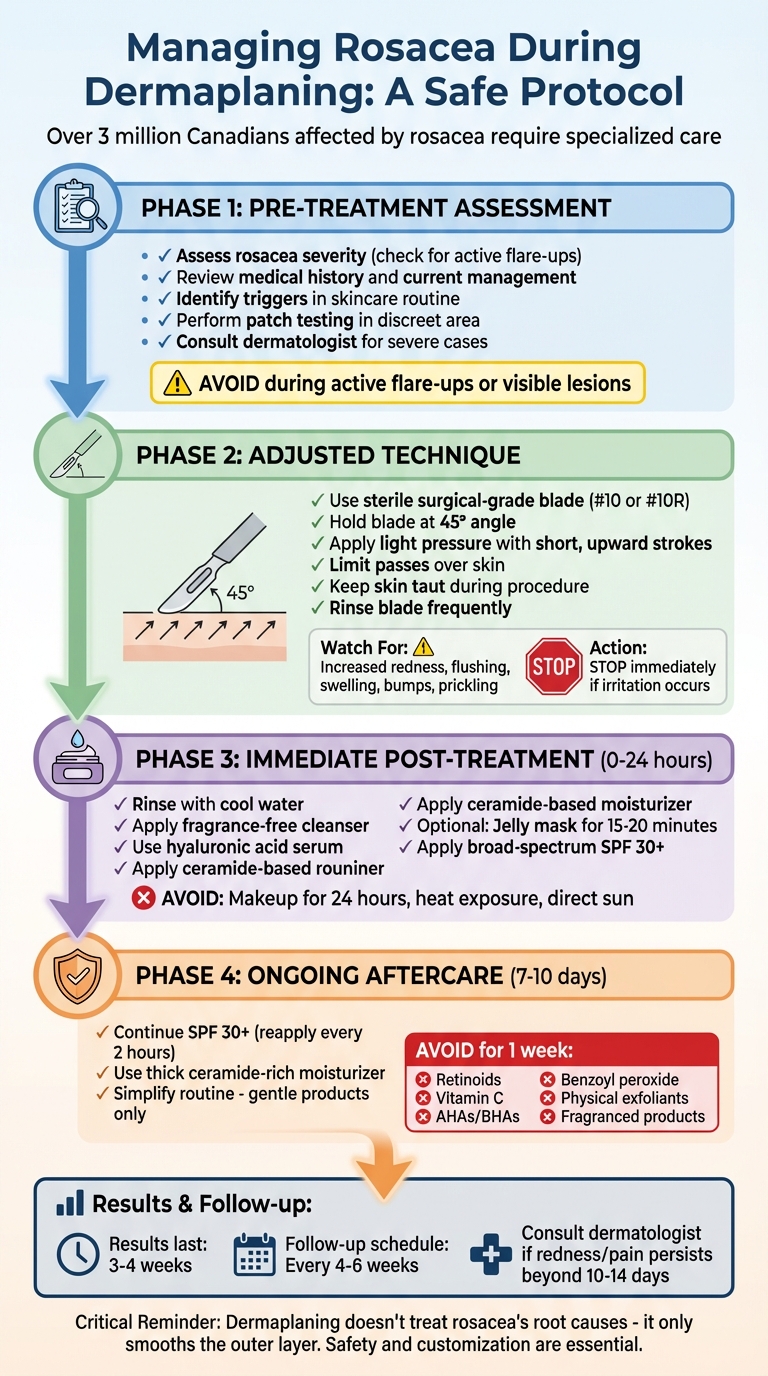
Safe Dermaplaning Protocol for Rosacea-Prone Skin: Pre-Treatment to Aftercare
Understanding Rosacea and Its Impact on Dermaplaning
What is Rosacea?
Rosacea is a long-term inflammatory skin condition affecting over three million Canadians. It usually develops in adults aged 30 to 50 and is marked by redness, flushing, and visible blood vessels. In some cases, it can also cause acne-like bumps, such as papules or pustules, although it doesn’t include blackheads or whiteheads.
People with rosacea often experience highly sensitive skin that’s prone to dryness, burning, and irritation. According to the Canadian Dermatology Association:
"rosacea features can vary from one person to another as can severity. There is no known cure, but it can be managed with appropriate treatment and lifestyle changes".
This sensitivity is a key reason why dermaplaning procedures need to be adjusted - or avoided altogether - for those with rosacea.
Why Dermaplaning Can Be Risky for Rosacea-Prone Skin
Dermaplaning involves using a surgical blade to exfoliate the skin, which can pose challenges for individuals with rosacea. Because their skin is already reactive, this procedure can increase irritation, leading to flare-ups. It often causes temporary redness or a bumpy texture that can last for hours or even days. Beyond that, it can weaken the skin’s natural barrier, leaving it more exposed to environmental stressors like UV rays.
It’s important to note that dermaplaning doesn’t address the root causes of rosacea, such as inflammation or issues with blood vessels. Instead, it focuses on smoothing the skin’s outer layer. If performed during an active flare-up, the procedure can exacerbate symptoms. For instance, a nick in the skin could overstimulate sebaceous glands, resulting in excessive oiliness. As AIVI Aesthetics warns:
"dermaplaning is strictly contraindicated during active rosacea flare-ups, as it can worsen irritation and redness".
sbb-itb-c911f39
Pre-Treatment Considerations for Rosacea Clients
Assessing Rosacea Severity
Start by closely examining the skin for signs of active rosacea flare-ups, such as pronounced redness, inflammation, or the presence of papules or pustules. Avoid treating areas with lesions or open sores. Determine the severity of the condition - whether it’s under control with minimal redness or more severe and unmanaged. Dermaplaning is typically suitable for clients whose symptoms are well-regulated. Be mindful of other sensitive skin conditions like acne or eczema that may require extra care.
It’s also essential to identify potential triggers based on the client’s history. Take a detailed look at their skincare routine to check for products that could aggravate sensitivity, such as prescription retinoids or high-strength acids. Signs of a weakened skin barrier, like dryness or flaking, should also be noted during this assessment.
Once the evaluation is complete, have a thorough consultation with the client to ensure they’re ready for treatment.
Consultation and Patch Testing
Review the client’s medical history, how they currently manage their rosacea, and any past reactions to exfoliation treatments. For clients with severe cases, it’s wise to collaborate with their dermatologist before moving forward. As Ruli points out:
"Individuals with severe rosacea should consult with a dermatologist before considering dermaplaning. Depending on the severity and sensitivity of the skin, alternative treatment options may be recommended".
Patch testing is a crucial step in this process. Perform a small test stroke in a discreet area to check for any immediate irritation or heightened sensitivity, which can be managed with calming ice globes. This allows you to gauge the skin’s response without committing to a full treatment. Be transparent with clients about what to expect based on their sensitivity and postpone the procedure if there’s visible inflammation.
Finally, outline a clear post-treatment plan. Advise clients to apply a broad-spectrum SPF30+ immediately after the procedure and to steer clear of acids or retinoids for at least a week to protect their skin.
Adjusting Dermaplaning Techniques for Rosacea
Using Gentle Techniques
When working with rosacea-prone skin, it's important to adapt your dermaplaning approach. Hold the surgical-grade blade at a 45° angle and use short, upward strokes that move against the direction of hair growth. Keep the strokes light and swift, applying minimal pressure to avoid over-exfoliation. Additionally, limit the number of passes over the skin to reduce the risk of irritation.
Selecting the right tools is equally important. Opt for sterile, surgical-grade blades like the #10 or #10R from Dermaplaning Supplies Canada. The #10R blade, with its rounded tip, offers an extra layer of safety. Make sure to keep the skin taut during the procedure for a smooth glide, and rinse the blade frequently to clear away any debris that accumulates.
As you adjust your technique, keep a close eye on the skin for any signs of irritation.
Recognizing and Responding to Signs of Irritation
Even with a gentler approach, it's critical to stay vigilant for any signs of irritation. Watch for symptoms such as increased redness, flushing, swelling, or the appearance of bumps. Clients might also report sensations like prickling, heightened sensitivity, or mild discomfort. If any of these occur, stop the procedure immediately to prevent a flare-up.
Rinse the affected area with cool water right away, and apply a neutralizing solution to help rebalance the skin's pH. If you notice inflamed areas or lesions during the treatment, avoid dermaplaning those spots entirely to prevent further irritation.
Post-Treatment Aftercare for Rosacea Clients
Taking proper care of the skin after treatment is key to preventing flare-ups and keeping rosacea-prone skin calm and protected.
Recommended Soothing Products
Right after dermaplaning, it’s important to focus on calming and hydrating the skin. Start with a gentle, fragrance-free cleanser to clear away any lingering debris. Follow this with a hydrating serum containing hyaluronic acid, which helps draw in moisture and reduce inflammation.
For extra relief, look to soothing botanicals like aloe vera or chamomile. These natural ingredients are known for their anti-inflammatory properties and can provide immediate comfort. To strengthen the skin’s barrier, use a ceramide-based moisturizer with glycerin to lock in hydration and improve resilience. Ingredients like Centella Asiatica are also great for restoring balance to the skin after exfoliation.
For a cooling effect, try a jelly mask. Mix three scoops of powder with two scoops of water, apply, and leave it on for 15–20 minutes. Dermaplaning Supplies Canada offers Roselisa Jelly Mask Powders starting at $1.95 CAD. Options like Chamomile Petals can hydrate and repair, while Lavender works well for reducing blemishes.
Stay away from irritants such as retinoids or heavily fragranced products for at least a week. If breakouts are a concern, consider alcohol-free toners or mists featuring tea tree oil or witch hazel. These can help maintain the skin’s pH balance without causing dryness.
Once the skin is soothed, the next priority is to rebuild and protect the weakened barrier.
Protecting the Skin Barrier
After dermaplaning, the skin’s natural barrier is more delicate and needs extra attention. This temporary weakening can make the skin more susceptible to irritation, even from typically mild ingredients like fragrances or preservatives. Symptoms like burning, stinging, or breakouts may occur if the barrier isn’t properly cared for.
Simplify your skincare routine for 7–10 days post-treatment. Avoid using "active" products such as retinoids, Vitamin C, AHAs/BHAs, benzoyl peroxide, or physical exfoliants. Instead, opt for a thick, ceramide-rich moisturizer, and consider applying petrolatum at night to seal in moisture.
Sun protection is a must. With the removal of the outermost skin layer, the newly exposed skin is much more sensitive to UV rays. Use a broad-spectrum SPF 30+ sunscreen and reapply every two hours when outdoors. Pair sunscreen with a wide-brimmed hat for extra protection. Mineral sunscreens are often the best choice to avoid irritation.
Clients should also wait at least 24 hours before using makeup, giving the skin time to recover. Additionally, avoid excessive heat from saunas or direct sun exposure immediately after treatment. If symptoms like redness, pus, or pain persist for more than 10 to 14 days, it’s important to consult a dermatologist, as these could signal an infection rather than a typical flare-up.
Long-Term Management Strategies for Rosacea Clients
After focusing on proper post-treatment care, maintaining a consistent daily routine is key to managing sensitive, rosacea-prone skin and reducing flare-ups.
Daily Skincare Tips for Rosacea
For rosacea, a gentle and consistent skincare routine can make all the difference. Start with a mild, non-foaming cleanser that contains calming ingredients like allantoin, niacinamide, or glycerin. These help cleanse the skin without removing its natural oils.
Follow up with lightweight, fragrance-free moisturizers enriched with ceramides and hyaluronic acid to strengthen the skin barrier. Serums with azelaic acid or green tea extract can also help reduce redness and irritation. For more targeted treatments, options like ZO ROZATROL or Vivier Redness Solution Complex can support skin balance.
Sun protection is non-negotiable. Use a mineral-based broad-spectrum SPF 30 or higher with zinc oxide or titanium dioxide. Tinted sunscreens can provide extra help by neutralizing redness while shielding the skin.
Encourage clients to steer clear of common triggers, such as spicy foods, alcohol, and extreme temperatures, to help prevent flare-ups.
Follow-Up and Professional Development
Regular follow-ups are essential in ensuring the effectiveness of tailored skincare routines. These visits allow you to monitor your client’s progress and make any necessary adjustments. If temporary redness or irritation occurs, suggest calming approaches to manage these symptoms.
Ongoing assessments are key to long-term success in managing rosacea. For skincare professionals, continuing education is a great way to stay informed and improve your ability to care for clients with sensitive skin. Dermaplaning Supplies Canada offers dermaplaning training manuals to help you expand your knowledge and expertise in managing conditions like rosacea.
Conclusion
Dermaplaning can be an effective option for clients with well-managed rosacea, but its success hinges on understanding the condition, adjusting techniques, and prioritizing safety. Pay close attention to blade pressure and technique, adapting them to suit each client’s sensitivity. If any discomfort arises during the session, stop immediately. To prepare the skin, gentle steaming can help ensure a calm and relaxed surface before starting.
After treatment, proper aftercare is crucial to maintain healthy skin. Clients should avoid acids, retinoids, and harsh exfoliants for at least one week and consistently apply a broad-spectrum SPF 30+ to protect the freshly exfoliated skin. Fragrance-free moisturizers containing ceramides or barrier-repairing ingredients can further aid in recovery and support the skin’s natural defences.
When done correctly, dermaplaning can improve skin texture and enhance product absorption for rosacea clients, with results typically lasting 3 to 4 weeks. Scheduling follow-ups every 4 to 6 weeks allows practitioners to monitor progress and make necessary adjustments to the treatment plan. By combining a customized approach, diligent aftercare, and ongoing education, professionals can effectively manage rosacea while achieving great results with dermaplaning.
For additional training and resources, visit Dermaplaning Supplies Canada.
FAQs
How do I know if my rosacea is calm enough for dermaplaning?
To figure out if your rosacea is suitable for dermaplaning, take a close look at your skin. Check for signs like sensitivity, redness, or inflammation. If you're experiencing an active flare-up or noticeable irritation, it's better to hold off on treatment. The best time for dermaplaning is when your skin is calm, stable, and shows only mild redness. Always consult a dermatologist or skincare expert beforehand to ensure your skin is prepared and to avoid aggravating your symptoms.
What should I do if my skin flares up right after dermaplaning?
If your skin becomes irritated after dermaplaning, it's best to pause the use of active skincare products and switch to a gentle, fragrance-free cleanser to help protect your skin's barrier. To ease redness and swelling, apply cool compresses or use ice packs. Keep your skin well-hydrated with calming ingredients like hyaluronic acid or ceramides, and steer clear of heat, excessive sweating, and harsh treatments for at least 24 to 72 hours. Should the irritation persist or worsen beyond 10 to 14 days, it's important to seek advice from a doctor.
When can I restart retinoids, acids, or Vitamin C after dermaplaning?
It’s a good idea to wait 3 to 5 days after dermaplaning before reintroducing products like retinoids, acids, or Vitamin C into your skincare routine. This gives your skin enough time to recover and minimizes the chances of redness or irritation. Keep an eye on how your skin reacts, and if you’re uncertain, consult a skincare professional for advice.