

After dermaplaning, I’d keep the next 48 to 72 hours very simple: protect skin with mineral SPF 30+, wash with a gentle cleanser, add light hydration, and use a barrier cream to cut down dryness and sting. That matters even more in Canada, where indoor heat, dry air, and sun off snow can hit newly treated skin hard.
Here’s the short version of what I’d want a reader to know right away:
- Use mineral sunscreen every day after treatment
- Skip harsh actives at first, including retinoids, AHAs, BHAs, benzoyl peroxide, and strong vitamin C
- Focus on water + barrier support with hyaluronic acid, glycerin, ceramides, and squalane
- Soothe skin with a calming mask if there’s heat or redness
- Wait 24 to 48 hours before bringing in a peptide serum
- Don’t forget lips, since the area around the mouth can feel dry after hair removal
- Travel-size kits can help clients follow the plan at home
The eight product types covered are: mineral SPF, gentle cleanser, hyaluronic serum, barrier cream, calming mask, peptide serum, lip treatment, and travel minis. I’d group them by one job: protect, rehydrate, or support the barrier.
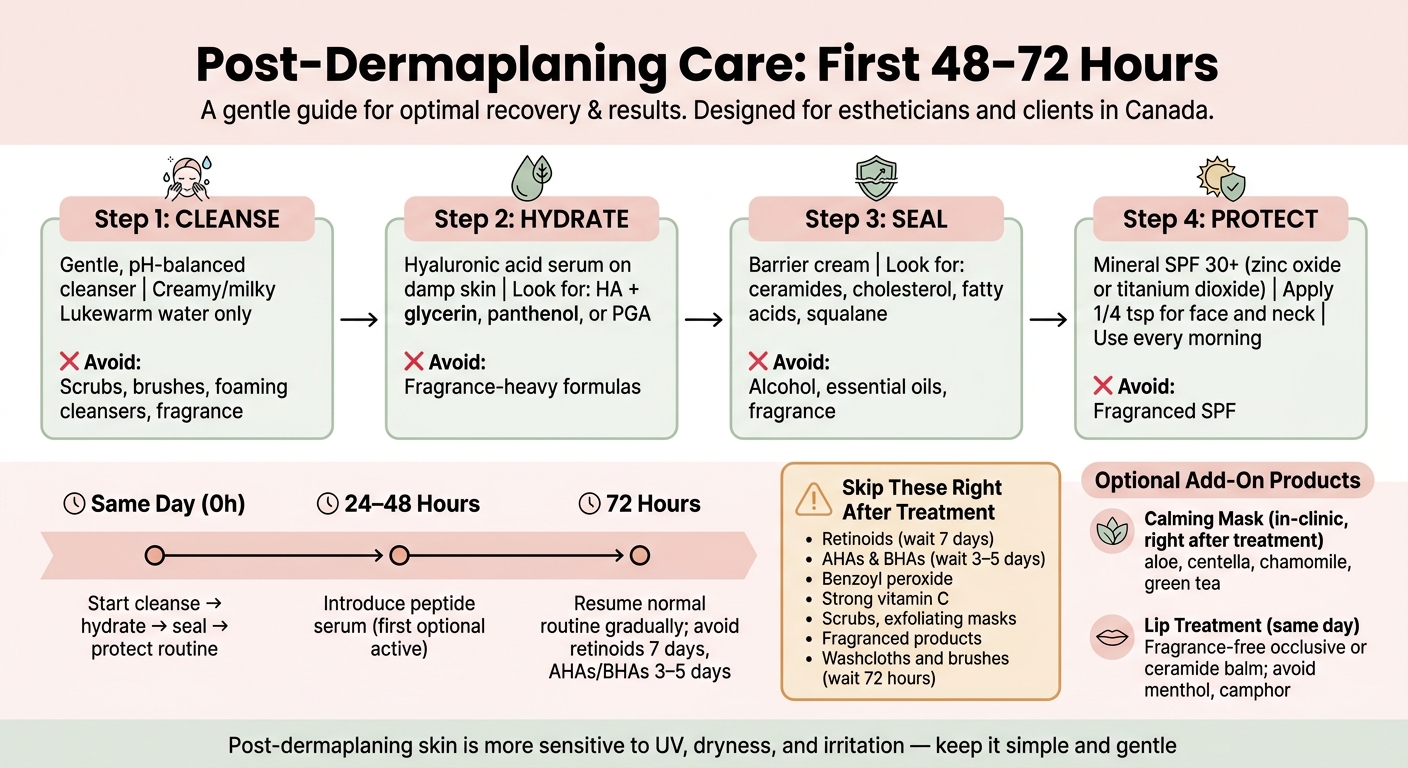
Post-Dermaplaning Skincare Routine: First 48–72 Hours
The Secret to Calmer, Glowing Skin After Dermaplaning | Esthetician Tip
sbb-itb-c911f39
Quick Comparison
| Product type | Main job | Best time to use | What to look for | What to avoid right after |
|---|---|---|---|---|
| Mineral SPF 30+ | Protect from UV | Same day, every morning | Zinc oxide, titanium dioxide | Fragranced SPF if skin stings |
| Gentle cleanser | Clean without stripping | Same day | pH-balanced, creamy or milky texture, glycerin, aloe | Scrubs, foaming cleansers, brushes |
| Hyaluronic serum | Add water back to skin | Same day | HA, glycerin, panthenol, PGA | Fragrance-heavy formulas |
| Barrier cream | Help seal in moisture | Same day | Ceramides, cholesterol, fatty acids, squalane | Alcohol-heavy or scented creams |
| Calming mask | Cool and calm skin | In clinic, right after treatment | Aloe, centella, chamomile, green tea | Strong acids or exfoliating masks |
| Peptide serum | Light follow-up active | After 24 to 48 hours | Peptides in a simple base | Day-one use |
| Lip treatment | Protect dry lip area | Same day | Plain occlusives, ceramides | Menthol, camphor, fragrance |
| Travel minis | Make aftercare easier to follow | Take-home | Small cleanser, serum, cream, SPF | Overpacked kits with too many steps |
I’d sum it up like this: if skin has just been dermaplaned, the safest plan is cleanse, hydrate, seal, protect - then keep everything else on hold for a bit.
8 post-dermaplaning products estheticians often suggest
1) Broad-spectrum mineral SPF 30+ and 2) gentle pH-balanced cleanser
The first take-home product after dermaplaning is mineral SPF 30+. Dermaplaning removes surface buildup that helps buffer UV exposure, so sun protection matters even more than usual right after treatment.
"Sunscreen is your best defense against skin damage from UV rays... especially after cosmetic treatments that make your skin vulnerable, like dermaplaning." - Kristina Cadwell, PA, Vibrant Skin Bar
Look for zinc oxide or titanium dioxide as the active ingredients. These mineral filters sit on the skin's surface, which makes them a solid pick for freshly exfoliated skin. Clients should use about 1/4 teaspoon for the face and neck.
The second must-have is a gentle, pH-balanced cleanser. After dermaplaning, the skin barrier is temporarily weakened, so a harsh cleanser can make sensitivity worse. Creamy, milky, or gel-to-milk textures tend to work best, especially formulas with glycerin, aloe, or panthenol. Use lukewarm water only, and skip washcloths, brushes, and scrubs for 72 hours. It's also smart to avoid foaming cleansers, salicylic acid, benzoyl peroxide, and fragrance right after treatment.
| Skin Type | Cleanser Texture | SPF Feature | Key Post-Care Goal |
|---|---|---|---|
| Dry/Dehydrated | Creamy, non-foaming | Tinted mineral (moisturizing) | Replenish NMF and lipids |
| Oily/Acne-Prone | Lightweight gel (low-foam) | Oil-free, non-comedogenic | Hydrate without clogging pores |
| Sensitive/Reactive | Milky, fragrance-free | Pure zinc oxide (soothing) | Minimize redness and inflammation |
Once skin is clean and protected, hydration and barrier repair become the main focus.
3) Hyaluronic serum, 4) barrier cream, and 5) calming mask
After dermaplaning, skin tends to take in product more easily. That makes hydration and barrier support the top priority for the first 24 to 72 hours.
A hyaluronic acid (HA) serum is often the go-to humectant during this window. Apply it to damp skin right after cleansing so it can hold onto surface moisture more effectively. Formulas that combine HA with glycerin or panthenol can give extra support. Serums with polyglutamic acid (PGA) are also worth a look, since PGA is a strong humectant.
Once the serum has settled in, follow with a barrier cream to lock it down. This step matters even more in a Canadian winter, when cold air outside and dry indoor heat can speed up transepidermal water loss on skin that's already more exposed than usual. Good ingredients to look for include ceramides, cholesterol, fatty acids, and squalane. Fragrance, essential oils, and alcohol are best left out of any post-treatment moisturizer.
For in-clinic care, a calming mask right after treatment can help cool the skin and ease visible redness. Jelly masks are a common choice because they sit comfortably on the skin and pair well with soothing ingredients like centella asiatica, chamomile, green tea, aloe, and panthenol. Dermaplaning Supplies Canada carries jelly masks for in-clinic post-treatment protocols.
After the first 24 to 48 hours, clients can start bringing back a mild active and keep the rest of their routine simple.
6) Peptide serum, 7) lip treatment, and 8) travel minis
Once the early sensitivity window has passed, post-care can shift toward light actives, lip repair, and easy take-home kits that people will actually use.
A peptide serum is not for day one. Skin is still rebuilding during the first 24 to 48 hours after treatment, so it's better to wait. After that point, peptides are a smart first active to reintroduce because they're less likely to irritate than retinol, AHAs, BHAs, or high-strength vitamin C.
"Applying strong actives too soon will trigger unwanted inflammation and severely compromise the skin barrier." - GlyMed Plus
Lip treatment is one of those small details that can make a big difference. Removing vellus hair near the mouth can leave the lip border feeling dry or touchy. A plain, fragrance-free occlusive or a ceramide-rich balm works well. Skip menthol, camphor, and synthetic fragrance, since they can sting sensitized skin.
Travel minis can also help with aftercare compliance. When clients have the right products in small, easy-to-carry sizes, they're more likely to stick with the plan.
| Kit Type | Contents | Best For | Approx. Price (CAD) |
|---|---|---|---|
| The Recovery Trio | Mini cleanser (30 mL), HA serum (10 mL), barrier cream (15 mL) | All skin types / sensitive | $55–$65 |
| The Essential 48 | Mini cleanser, HA serum, barrier cream, mineral SPF (15 mL) | Commuting / travel clients | $75–$85 |
| The Winter Shield | Mini cleanser, ceramide cream, lip treatment, mineral SPF | Dry skin / Canadian winter | $80–$95 |
How to recommend and retail these products in Canadian clinics
Build a simple first-48-hours routine for clients
Keep aftercare easy. If clients have to guess what goes where, or when to use it, things tend to fall apart fast.
A simple four-step order works well: cleanse, hydrate, seal, protect.
For the morning routine, guide clients to use:
- a gentle cleanser
- a hyaluronic acid serum on damp skin
- a barrier cream
- a mineral SPF 30+
The calming jelly mask fits best as an in-clinic step right after treatment, when skin may feel warm or a bit touchy.
At checkout, give every client a written 48-hour home-care card. Keep it short and specific. It should show what to use, the order to use it in, and what to avoid. That includes retinoids for at least 7 days and AHAs/BHAs for 3 to 5 days. A small card like this cuts down on confusion and helps keep aftercare the same from one client to the next. It can also point clients to the bundle you sell in-clinic.
Use bundles and add-ons to increase product uptake
Bundles make the choice easier. Instead of asking clients to pick items one by one, offer one ready-made aftercare kit with the basics for the first 48 hours: a travel-sized gentle cleanser, HA serum, barrier cream, and mineral SPF.
That kind of bundle removes friction. It also helps clients leave with what they need, not just what they happen to remember.
The jelly mask works well as a premium add-on during the dermaplaning visit. If you want to nudge uptake without making the offer feel pushy, a tiered discount can help. For example, 20%–30% off a post-care bundle when it's bought with the dermaplaning service is a simple approach. Peptide serums also fit nicely as a follow-up retail pick for repeat clients, since they can be brought back in after the first sensitivity window has passed.
Source protocol-ready supplies from one Canadian wholesaler
If your clinic wants one set routine, it makes sense to source from a single Canadian supplier. Dermaplaning Supplies Canada offers clinic-ready blades, starter kits, jelly masks, skincare add-ons, marketing materials, and online training certification.
Conclusion: Keep post-dermaplaning care simple, gentle, and protective
The main idea across all eight product types is simple: protect what’s been exposed, hydrate what’s been depleted, and support what’s been weakened. Dermaplaning removes surface dead skin, which leaves skin more open to UV, dryness, and irritation. That’s why aftercare matters so much. And it’s the same idea that shapes the first 48 hours of care.
For the first 48 to 72 hours, keep the routine tight: cleanse, hydrate, seal, and protect. After that, peptides are the first optional active to bring back in. The same pared-down approach should also carry into how you present the routine in clinic.
That’s what makes the system work. When every client leaves with the same routine, aftercare becomes easier to follow and less likely to go sideways. Clear, repeated instructions help with compliance. Simple routines are easier to follow, easier to retail, and better suited to post-treatment skin.
These eight products are simple because post-dermaplaning care should be simple.
FAQs
When can I wear makeup after dermaplaning?
Wait at least 24 to 48 hours before applying makeup after dermaplaning. If you put products on too soon, you may irritate freshly treated skin or clog your pores.
When you wear makeup again, stick with light, non-comedogenic, mineral-based formulas. Clean brushes and applicators matter too. If they’re dirty, you’re putting that mess right back on skin that’s still a bit raw.
Take it easy at the end of the day as well. Remove makeup gently each night instead of rubbing or scrubbing.
How do I know if my skin barrier is irritated after treatment?
Some sensitivity after treatment is normal. But there’s a point where it shifts from expected to not worth ignoring.
Signs that your skin barrier may be irritated or compromised include redness lasting more than 48 hours, swelling, burning, stinging, itching, or skin that feels tight and flaky even after you’ve tried to hydrate it.
Small bumps, rashes, and signs of infection like pus matter too. If any of that shows up, contact your skincare professional and stop using active exfoliants, retinoids, and fragranced products for now.
Can I use niacinamide after dermaplaning?
Yes - niacinamide can be used after dermaplaning because it may help reduce redness and support the skin barrier.
That said, advice varies. Some sources say it’s fine to use right away if the formula is soothing. Others suggest waiting 48 hours. A good middle ground is to pick a 2% to 5% formula that’s fragrance-free and alcohol-free, then bring it back slowly once your skin feels calm and no longer tender.