

If I had to give one short answer, it’s this: use peptides first, then bring retinol back later.
After dermaplaning with professional tools, skin takes in products more easily. That can make retinol hit harder, with more risk of redness, stinging, dryness, and peeling. Peptides are usually the better pick in the first 24 to 72 hours because they support the skin barrier with a much lower chance of irritation.
Here’s the plain-English version:
- Retinol is better for texture, fine lines, clogged pores, and dark marks
- Peptides are better for barrier care, hydration, comfort, and early recovery
- Most people should wait at least 24 to 48 hours before using retinol again
- Sensitive or reactive skin may need 3 to 7 days
- Peptides can usually be used right away
- Daily SPF 30+ matters after dermaplaning, since skin is more exposed and retinol can add to sun sensitivity
A few numbers stand out:
- Peptide results often show over 8 to 12 weeks
- Retinol results often start around 4 to 12 weeks
- The first 48 to 72 hours after dermaplaning are the main recovery window
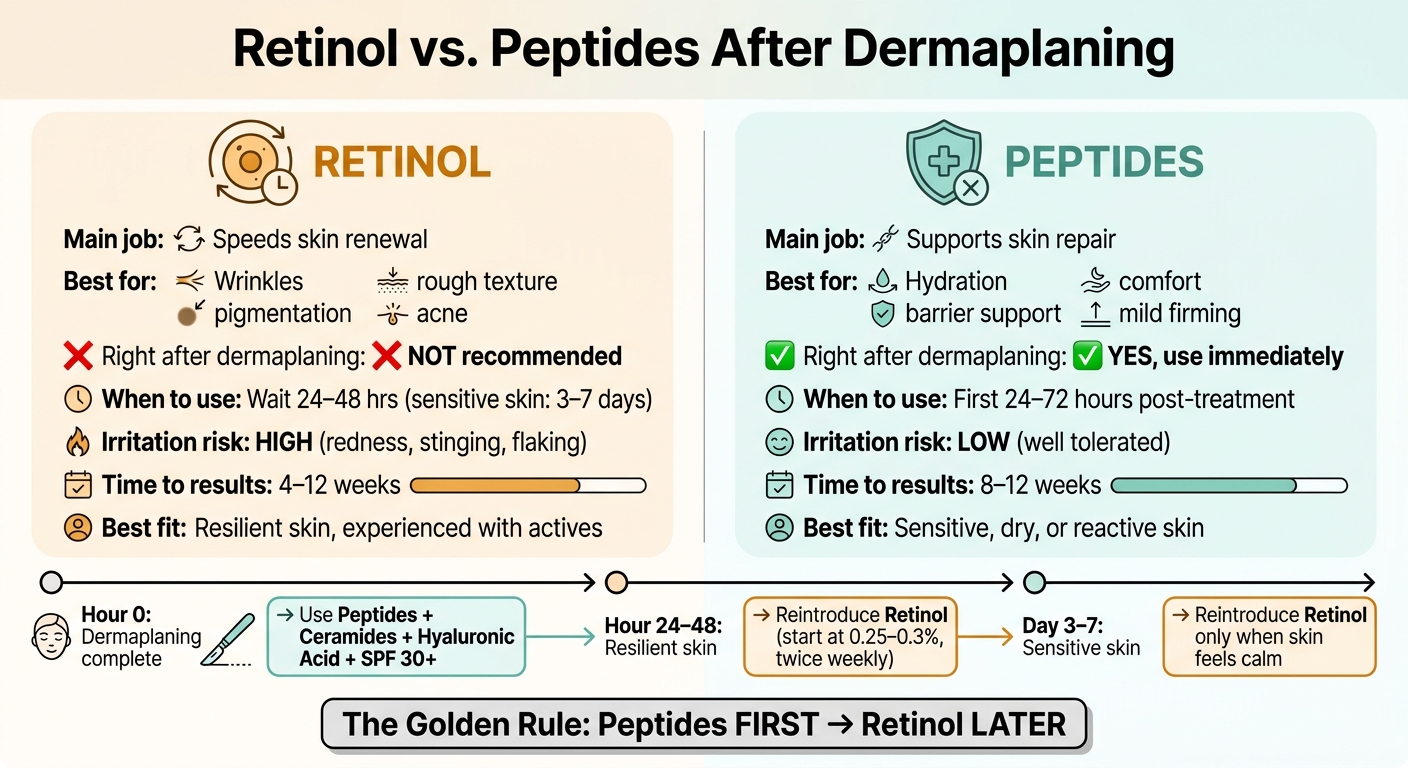
Retinol vs. Peptides After Dermaplaning: Quick Reference Guide
Exfoliation Explained by Dermatologists | AHAs, BHAs, retinoids, dermaplaning & skin barrier damage
sbb-itb-c911f39
Quick Comparison
| Feature | Retinol | Peptides |
|---|---|---|
| Main job | Speeds skin renewal | Supports skin repair |
| Best for | Wrinkles, pigment, rough texture, acne | Dryness, barrier support, comfort, mild firming |
| Right after dermaplaning | No | Yes |
| When to use | Usually after 24 to 48 hours; longer for sensitive skin | In the first 24 to 72 hours |
| Irritation risk | Higher | Low |
| Good fit | Skin already used to actives | Sensitive, dry, or reactive skin |
My take: if skin has just been dermaplaned, I’d keep the routine simple - peptides, hyaluronic acid, ceramides, and SPF. Then I’d bring retinol back only when the skin feels calm.
That’s the whole decision in one line: retinol treats more, but peptides are the safer first step after dermaplaning.
Retinol After Dermaplaning: Stronger Results, Higher Irritation Risk
Retinol speeds up cell turnover and helps support collagen production, which can improve texture and soften fine lines over time. After dermaplaning, the stratum corneum has been removed, so retinol can sink in more deeply and work with more force. That sounds like a good thing at first. But there’s a catch: it also bumps up the risk of redness, stinging, flaking, and barrier damage. In practice, that makes retinol a later-step active, not something to use right away after treatment.
When that turnover effect gets stronger because of deeper absorption, the skin can end up moving faster than the barrier can repair itself. That’s when retinol irritation tends to show up: redness, stinging, burning, flaking, and more sun sensitivity.
What Retinol Improves in Ageing Skin
Retinol can help fade PIH, smooth rough texture, unclog pores, soften fine lines, and support firmer-looking skin over time. The key thing here is patience. Results don’t show up overnight. Most visible changes take months of steady use, which is why the timing after dermaplaning matters more than using it right away.
When to Restart Retinol After Dermaplaning
Most clients can start retinol again after 24 to 48 hours. For people with sensitive skin, those who are new to retinol, or those using prescription retinoids, waiting 3 to 7 days is the safer move. In Canada, dry conditions can make barrier care even more important when retinol comes back into the routine.
Which Clients Are Good Candidates for Retinol During Recovery
The best fit is someone with skin that already handles retinol well and has clear signs of photoageing. Even then, retinol should only come back once the barrier has calmed down and the client already does well with actives.
Retinol is best avoided during recovery for clients with:
- rosacea
- eczema
- psoriasis
- perioral dermatitis
- pregnancy
- breastfeeding
- isotretinoin use
During that first recovery stretch, peptides are the gentler option.
Peptides After Dermaplaning: Barrier Support with Gentler Anti-Ageing Care
In the first 48 to 72 hours after dermaplaning, peptides are the safer anti-ageing option because they help skin recover without the irritation retinol can set off. Instead of pushing the skin to respond the way retinol does, peptides act more like messengers. They support skin repair and help with collagen and elastin production, with less chance of irritation. That’s why they’re the better pick in those first 48 to 72 hours.
Why Peptides Work Better in the First 48 to 72 Hours
Right after dermaplaning, the skin barrier is temporarily weakened. Peptides fit this stage well because they help cut down water loss and support barrier repair while skin settles. For best results, apply a peptide serum in the evening, when the skin’s natural repair cycle is most active.
You can get more out of this step by pairing peptides with ceramides, hyaluronic acid, or other barrier lipids. If you’re choosing a formula, look for lipid-bound peptides such as palmitoyl pentapeptide or palmitoyl tripeptide-38.
That early support matters, but peptides and retinol still play very different roles over time.
What Peptides Can and Cannot Do Compared to Retinol
A 2026 review of 19 randomised controlled trials found that peptides improved hydration and brightness. Over eight weeks, peptide use also improved barrier function. So yes, they can help skin feel firmer and less dry with steady use.
But there’s a limit. Peptides do not resurface skin or fade pigmentation the way retinol can. Visible changes in texture and firmness tend to build more slowly, usually over 8 to 12 weeks of consistent use.
That’s why peptide-led care makes sense for clients who need recovery first, then a slower anti-ageing plan after that.
Which Clients Benefit Most from Peptide-Focused Aftercare
Peptide-focused aftercare is a good fit for mature, dry, sensitive, or reactive skin, and for clients who can’t tolerate retinoids. They’re generally well tolerated and can be used right after treatment, without a retinol ramp-up period.
They’re also especially helpful when dry air or cold weather leaves skin touchy and more likely to react. In that short window, peptides are often the better choice before retinol comes back in.
That timing shift is what drives the protocol choice in the comparison below.
Retinol vs. Peptides: Side-by-Side Comparison for Post-Dermaplaning Protocols
Use this comparison to match the active to the recovery window.
The table below helps you pick the active, timing, and client fit in one step.
| Feature | Retinol | Peptides |
|---|---|---|
| Mechanism | Boosts cell turnover and collagen support | Messenger peptides that support collagen and elastin production |
| Primary Benefit | Best for deep wrinkles, pigmentation, and texture renewal | Best for firmness, elasticity, hydration, and barrier support |
| Time to Results | 4 to 12 weeks; deeper changes take longer | 8 to 12 weeks with steady use |
| Post-Dermaplaning Use | Not ideal right after dermaplaning; wait at least 48 hours, and up to 7 days for sensitive skin | Preferred for the first 24 to 72 hours |
| Barrier Effect | Can temporarily weaken the barrier | Supports barrier integrity and reduces water loss |
| Irritation Risk | Higher risk of redness, flaking, and stinging | Generally very low and well tolerated |
| Best Fit | Resilient skin; advanced ageing; oily or acne-prone clients | Sensitive, dry, or barrier-compromised skin; maintenance care |
First 72 Hours: Which Active to Use and Why
In the first 24 to 72 hours, peptides should be in the routine and retinol should stay out. Skin is more exposed after dermaplaning, so adding retinol too soon can lead to more redness, stinging, and a higher risk of PIH in reactive skin.
Peptides help support repair without the irritation profile linked to retinol. In this early window, keep the routine simple: peptides, hyaluronic acid, and ceramides. For sensitive skin, delay retinol for up to seven days.
Long-Term Plan Between Dermaplaning Sessions
Between sessions, peptides work well as a daily support step. After the barrier has settled, retinol can come back in as the renewal step.
A simple way to think about it: peptides help skin recover and stay comfortable, while retinol does the heavier lifting on texture, pigmentation, and deeper lines once skin is ready for it. That pairing often makes sense between appointments.
Matching Active Ingredients to Skin Type and Ageing Concern
Not every client needs the same split. Some do better with peptides only for a while, while others can bring retinol back sooner.
| Skin Type / Concern | Recommended Approach | Key Consideration |
|---|---|---|
| Sensitive / Rosacea | Peptides only until calm | Delay retinol up to 7 days post-treatment |
| Dry / Barrier-Compromised | Peptides first; retinol later | Peptides help prevent transepidermal water loss |
| Oily / Acne-Prone | Retinol after recovery | Resume retinol after 48 hours to help keep pores clear |
| Mature / Sun-Damaged | Combined care | Peptides daily; retinol 3× weekly for stronger renewal |
| Resilient / Experienced | Combined care | Standard 24- to 48-hour wait; peptides used as a buffer |
For lower-maintenance ageing prevention, peptides may be enough between sessions. That split should shape the in-clinic aftercare instructions cards and home-care instructions.
That protocol choice also shapes in-clinic instructions and take-home aftercare.
Clinic Application and Conclusion
In-Clinic and Take-Home Aftercare Structure
This is where the aftercare plan stays simple.
Right after dermaplaning, apply a peptide-rich serum or a soothing barrier formula first. Before the client leaves the treatment room, finish with broad-spectrum SPF 30+ no matter the season or what the weather looks like outside.
At home, the order stays the same: peptides first, retinol later. During the first 48 to 72 hours, the focus should stay on peptides and gentle barrier support. Retinol should come back only once the skin is calm, which is usually 24 to 72 hours later. When it does, start low at 0.25% to 0.3%, apply it on fully dry skin, and use it twice weekly. Retinol on damp skin absorbs more deeply, which can increase the risk of irritation.
Safety Points Professionals Should Cover with Clients
Before the client leaves, check for sensitivity and spell out what they should watch for when retinol comes back into the routine.
Clients should monitor for redness, burning, or heavy flaking. If any of these show up, they should stop retinol and go back to barrier-supportive products until the skin settles.
Retinol also increases UV sensitivity, so daily SPF is non-negotiable all year in Canada. Clients should pause scrubs, acids, and peels during the post-dermaplaning recovery window as retinol is phased back in.
Conclusion: Use Peptides First, Reintroduce Retinol Later
The rule is straightforward: peptides belong in the immediate post-dermaplaning routine. They help support barrier repair, signal collagen production, and come with a very low risk of irritation.
Retinol is the stronger anti-ageing corrective, but it works best when the skin barrier is stable. That means waiting.
For clients who tolerate it, a combined plan - peptides daily and retinol a few nights per week after recovery - can support longer-term anti-ageing goals. And for clients who can't tolerate retinol, peptides alone are a clinically appropriate first choice, not a lesser option. That call should be made by the professional, with a clear understanding of the client's skin. Professionals looking to refine these protocols can benefit from a dermaplaning online training course to ensure optimal patient outcomes.
FAQs
Can I use vitamin C after dermaplaning?
Yes, you can use vitamin C after dermaplaning.
That said, if your skin feels sensitive, it’s smart to wait 2–3 days to help avoid irritation.
How do I know when my skin is ready for retinol again?
Wait 48 to 72 hours after dermaplaning before you start using retinol again. That gap gives your skin time to settle and can help cut down on irritation.
If your skin still feels tender, tight, or extra sensitive, give it a bit more time before bringing retinol back in.
Can peptides replace retinol long term?
Not in most cases. Peptides can help support collagen production and the skin barrier, and they tend to do that with less irritation. That makes them a good fit for long-term use, especially after dermaplaning.
That said, peptides are usually a partner to retinol, not a complete swap. Retinol still delivers stronger cell turnover and tends to work faster for anti-aging, though your skin may need a 24- to 72-hour recovery period after dermaplaning before you use it again.