

After dermaplaning, your skin is smoother but temporarily more sensitive. Proper care is essential to protect and repair your skin. Here's a quick summary of what to do:
- Hydrate: Use products with hyaluronic acid, ceramides, or glycerin to lock in moisture. Applying a soothing jelly mask can also help calm the skin.
- Protect from Sun: Apply a mineral sunscreen (SPF 30+) daily, even indoors.
- Avoid Irritants: Skip retinoids, acids, and exfoliants for 48–72 hours.
- Be Gentle: Use a pH-balanced, fragrance-free cleanser and avoid harsh tools or makeup for at least 24 hours.
Canada’s climate can slow healing, so adjust your routine for dry winters or humid conditions. Follow these steps to maintain your glow and prevent irritation.
How Dermaplaning Affects the Skin Barrier
What Dermaplaning Does to the Skin
Dermaplaning involves physically removing the stratum corneum, which is the outermost layer of dead skin cells, along with fine vellus hair. By taking off this layer, the skin becomes more permeable, allowing serums and moisturizing jelly masks applied immediately afterward to penetrate more effectively. This is particularly important for the barrier repair and protection protocols discussed throughout this guide.
However, this removed layer plays a critical role in protecting the skin. As board-certified dermatologist Yoshinori Abe, MD, explains:
"Because dermaplaning removes the outermost layer of skin (the stratum corneum), it temporarily weakens your skin barrier. That's where problems can begin."
The treatment also activates the skin's natural repair mechanism. While this renewal process is beneficial, it leaves the skin more vulnerable during the interim period - making it susceptible to UV rays, environmental irritants, and moisture loss. Understanding these vulnerabilities is key to managing post-treatment care.
Normal Skin Reactions After Treatment
After a dermaplaning session, it's common to experience mild redness, tightness, or heightened sensitivity for a few hours. These are typical responses to the exfoliation process. Dermatologist Melissa Piliang adds:
"Your skin may feel a little irritated for a day or so after you do it."
The table below highlights what’s considered a normal reaction versus signs of potential complications:
| Reaction | Normal Response | Possible Complication |
|---|---|---|
| Redness | Mild, fades within a day | Spreading, warm, or swollen |
| Sensation | Slight tightness or sensitivity | Intense burning or worsening pain |
| Texture | Smooth and soft | Flaking, blistering, or oozing |
| Breakouts | Minor temporary purging | Inflamed, pus-filled lesions (folliculitis) |
If symptoms persist for more than 10 to 14 days or worsen, it’s important to consult a medical professional.
Recognizing these normal reactions is essential for identifying additional risks that might lead to prolonged damage.
Factors That Increase Barrier Disruption Risk
Healing rates after dermaplaning can vary widely. Certain factors, such as pre-existing skin conditions like rosacea, eczema, or active acne, can increase the risk of inflammation and infection. Lifestyle habits, including poor sleep or smoking, also play a role. Over-exfoliation - by scheduling treatments more frequently than every four to six weeks - can lead to chronic issues with the skin barrier. This risk underscores why it is vital to become a trained dermaplaning professional before performing these treatments.
Canada’s climate poses additional challenges, especially during the winter. Dry indoor heating pulls moisture from already sensitive skin, contributing to trans-epidermal water loss (TEWL). Dermatologist Shari Marchbein describes the impact:
"If the outermost layer of the epidermis (the stratum corneum) doesn't contain enough water, skin will lose elasticity and appear dry, rough, and flaky. Poorly hydrated skin is also unable to maintain an appropriate intact skin barrier."
These combined risks highlight the importance of both professional and at-home care routines, which are explored in the following sections.
sbb-itb-c911f39
In-Clinic Post-Treatment Protocols
How to Finish the Treatment Safely
Once dermaplaning is complete, it’s essential to care for the skin properly to maintain results and avoid irritation. Start by cleansing the skin with a pH-balanced, sulfate-free, and fragrance-free cleanser, using gentle patting motions to avoid unnecessary friction. Follow up with a hydrating serum containing hyaluronic acid or glycerin to help counteract transepidermal water loss. Next, apply a moisturiser that strengthens the skin barrier, and finish with a broad-spectrum mineral sunscreen (SPF 30+). Sunscreens with zinc oxide or titanium dioxide are ideal because they sit on the skin's surface and are less likely to cause irritation.
For professional-grade post-treatment products, Dermaplaning Supplies Canada offers excellent options. The Afterglow+ Dermaplaning Facial Oil, infused with Monoi butter and Marula oil, helps protect the skin from environmental stressors while maintaining moisture. For hydration, consider the Collagen Bomb Miracle Facial Serum, featuring marine collagen and apple extract, or the Skin Nectar Radiance Facial Serum, packed with fruit extracts and avocado oil.
Products to Apply Right After Treatment
As Kerry Benjamin, CEO of StackedSkincare, explains:
"Dermaplaning removes dead skin and peach fuzz, leaving your skin ultra-smooth - but also more vulnerable. This is prime time for absorption, so it's crucial to nourish your skin with the right ingredients."
The table below highlights the types of products and ingredients that are safe and effective for immediate post-treatment care:
| Product Category | Recommended Ingredients |
|---|---|
| Cleansers | Sulfate-free, pH-balanced, cream or gel-based cleansers |
| Serums | Hyaluronic acid, glycerin, Vitamin B5 (panthenol), aloe vera |
| Moisturisers | Ceramides, squalane, Marula oil, Apricot Kernel oil |
| Sunscreen | Mineral-based (zinc oxide, titanium dioxide), SPF 30+ |
For best results, apply serums and moisturisers to slightly damp skin, as this enhances absorption. Soothing ingredients like aloe vera and chamomile can also help calm any redness before the client leaves the clinic.
Products to Avoid After Treatment
While post-dermaplaning skin is highly receptive to nourishing products, it’s also more sensitive. For the first 48 to 72 hours, steer clear of the following:
- Retinoids (e.g., retinol, tretinoin)
- Alpha hydroxy acids (e.g., glycolic acid, lactic acid)
- Beta hydroxy acids (e.g., salicylic acid)
- Benzoyl peroxide
- Alcohol-based toners
- Physical scrubs or exfoliating brushes
Avoid any additional exfoliants during this time, as they can further compromise the skin barrier. It’s also a good idea to skip makeup for at least 24 hours to prevent irritation or breakouts caused by deeper product penetration.
At-Home Care for the First Week After Dermaplaning
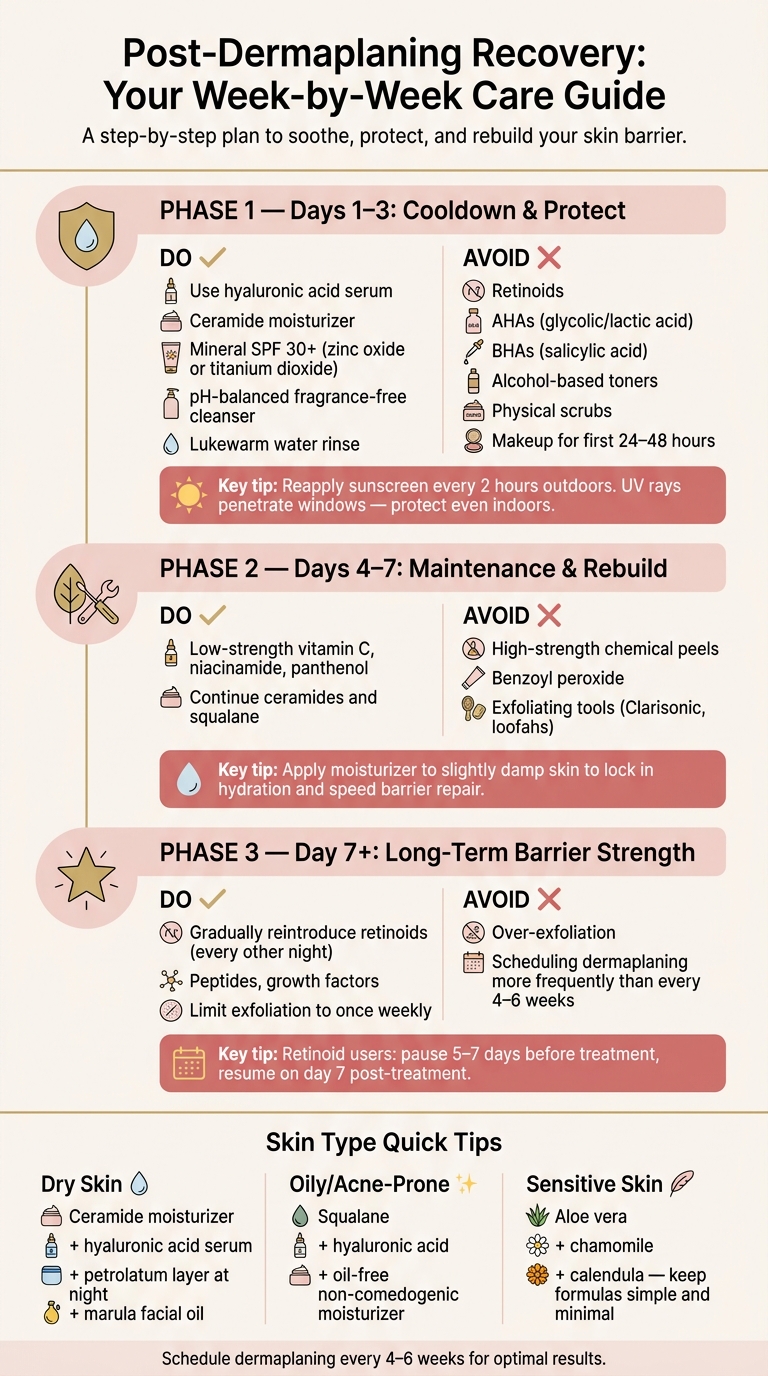
Post-Dermaplaning Skincare Routine: Week-by-Week Recovery Guide
After your in-clinic treatment, how you care for your skin at home during the first week is just as important. Freshly treated skin is incredibly receptive to products but also more prone to irritation, UV damage, and barrier issues. A simple, consistent routine can help protect your results and support healing.
How to Cleanse Fragile Post-Treatment Skin
For the first week, stick to a gentle cleansing routine. Use a fragrance-free, sulfate-free, pH-balanced gel or cream cleanser with lukewarm water. Be gentle - use soft patting motions and dry your face with a soft towel.
"In the first 24 hours, treat your face like delicate silk." - Coastal Health & Medical Spa
Skip tools like Clarisonic brushes, loofahs, or exfoliating washcloths for at least a week. In the morning, rinsing with lukewarm water alone is enough. If you're showering, take care to keep shampoo and conditioner off your face, as these products can irritate freshly exfoliated skin.
After cleansing, focus on restoring hydration to help your skin recover.
Hydration and Moisturising After Dermaplaning
Since dermaplaning increases product absorption, it's important to choose hydrating and barrier-repairing products. Start with a hydrating serum containing ingredients like hyaluronic acid, panthenol, or polyglutamic acid, applied to slightly damp skin. Follow this with a moisturiser rich in ceramides, squalane, or glycerin to lock in moisture.
If your skin feels especially dry or sensitive - common during Canada’s colder months when indoor heating lowers humidity - add a thin layer of petrolatum over your moisturiser. This creates a barrier to prevent water loss. For an extra hydration boost, try professional-grade jelly masks from Dermaplaning Supplies Canada, which provide cooling, deep moisture that’s perfect for the first few days post-treatment.
Once your skin is hydrated, it’s time to protect it from the sun.
Sun Protection and Shielding from the Elements
Your skin is more sensitive to UV rays after dermaplaning, so daily sun protection is non-negotiable - even on cloudy days or when indoors, as UV rays can pass through windows.
"Make sunscreen a daily habit, even if you are indoors or it is cloudy. Sun protection is a must after dermaplaning, as UV rays can penetrate windows and cause harm." - Clarebella
Choose a broad-spectrum mineral sunscreen with SPF 30 or higher. Apply it every morning and reapply every two hours if you’re outside. For added protection, wear a wide-brimmed hat and sunglasses, and try to avoid direct sun exposure for the first 48–72 hours.
Lifestyle Changes to Reduce Irritation
To keep your skin calm and irritation-free, avoid activities that cause heat or sweating, like intense workouts, hot yoga, saunas, or steam rooms. Skip makeup for the first 24–48 hours, but if you must, stick to mineral-based products and use clean brushes. Lastly, keep your hands off your face to avoid transferring bacteria to your freshly treated skin.
Long-Term Barrier Repair After Dermaplaning
Once you've tackled the first week of post-treatment care with a focus on hydration and quick barrier repair, it's time to shift gears. Maintaining your skin's strength and health between dermaplaning sessions is just as important. Since dermaplaning aligns with your skin's natural cell turnover, scheduling it every four to six weeks is ideal. During this downtime, your goal should be to rebuild and protect your skin.
When and How to Reintroduce Active Ingredients
Jumping back into your usual skincare routine too soon can be a recipe for irritation. Freshly exfoliated skin is more permeable, which means potent active ingredients can cause stinging, peeling, or even compromise your skin barrier.
"Post-dermaplaning skin temporarily loses some of its protective buffer against irritants. Strong exfoliants may cause stinging and micro-flaking that dulls your glow." - Coastal Health & Medical Spa
The trick? Gradually reintroducing actives. Here's a simple phased plan to follow:
| Phase | Timeline | What to Use | What to Avoid |
|---|---|---|---|
| Cooldown | Days 1–3 | Hyaluronic acid, ceramides, squalane, aloe vera | Retinoids, AHAs/BHAs, alcohol-based products |
| Maintenance | Days 4–7 | Low-strength vitamin C, niacinamide, panthenol | High-strength peels, benzoyl peroxide |
| Long-Term | Day 7+ | Retinoids, peptides, growth factors | Over-exfoliation (limit to once weekly) |
If you're a retinoid user, take a break from them five to seven days before dermaplaning. After your treatment, ease back in by using them every other night starting on day seven. This slow approach helps your skin adjust without risking irritation.
Once these active ingredients are back in your routine, tweak your daily skincare to fit your specific skin needs.
Building a Home Care Routine by Skin Type
Between sessions, your skincare should focus on replenishing what dermaplaning temporarily removes - moisture, lipids, and a strong skin barrier. Tailor this to your skin type for the best results:
- Dry skin benefits from rich, nourishing products. Layer a ceramide-based moisturiser over a hyaluronic acid serum, and at night, seal everything in with a thin layer of petrolatum. Facial oils, like marula oil, can also provide an extra boost.
- Oily or acne-prone skin does better with lightweight, non-comedogenic hydration. Squalane and hyaluronic acid are excellent options, paired with oil-free moisturisers to keep pores clear.
- Sensitive skin thrives on simple formulas with calming ingredients. Look for aloe vera, chamomile, or calendula to soothe redness and irritation.
Dr. Shari Marchbein, a board-certified dermatologist, explains:
"If the outermost layer of the epidermis (the stratum corneum) doesn't contain enough water, skin will lose elasticity and appear dry, rough, and flaky. Poorly hydrated skin is also unable to maintain an appropriate intact skin barrier, leaving the skin more vulnerable to damage from external/environmental sources."
For an extra boost, apply your moisturiser to slightly damp skin. This helps lock in hydration and speeds up barrier repair.
Customizing your skincare routine based on your skin type lays the groundwork for even better results during future dermaplaning sessions.
Using Professional-Grade Products for Consistent Results
High-quality, professional-grade products, like those available from Dermaplaning Supplies Canada, can make all the difference in maintaining your skin's recovery and glow between treatments. Investing in these ensures you're giving your skin the care it needs to stay healthy and radiant.
Conclusion
Taking care of the skin after dermaplaning is crucial to maintaining hydration, protecting against sun damage, and supporting the skin's natural barrier. Since dermaplaning temporarily weakens the skin's protective layer, it increases water loss and makes the skin more susceptible to UV exposure and irritation.
Your role as a skincare professional goes beyond the treatment itself. Providing clear, written aftercare instructions helps clients maximize the benefits of their session. Pairing these instructions with professional-grade products ensures clients can maintain their glowing results at home.
"Proper post-care ensures that your clients' skin remains healthy, protected, and glowing. It also minimizes the risk of irritation or complications, which will help maintain their trust and loyalty to your spa." - Esthetician Training
Advise clients to apply a broad-spectrum SPF 30 or higher every day - even on overcast days - and reapply every two hours when outdoors. For the first 48 hours, recommend gentle, pH-balanced cleansers and nourishing moisturizers, while avoiding makeup, intense heat, and any harsh skincare ingredients.
"Educated clients are happy clients, so make sure your team is well-versed in dermaplaning aftercare." - Esthetician Training
FAQs
How long does post-dermaplaning sensitivity last?
Post-dermaplaning, sensitivity tends to last for about 2–3 hours. You might notice mild redness, which can stick around for 1–2 days but usually clears up within 72 hours. During this period, prioritizing gentle hydration and using sun protection can help your skin recover smoothly.
What should I do if redness or burning gets worse after dermaplaning?
If you notice increased redness or burning after dermaplaning, it's best to pause the use of active skincare products that could further irritate your skin. Instead, shift your focus to soothing and repairing the skin barrier with gentle, hydrating moisturizers and broad-spectrum sunscreen. However, if you experience symptoms such as spreading redness, pus, fever, severe pain, or blisters - or if the irritation persists for more than 10–14 days - consult a healthcare professional without delay.
Can I dermaplane if I have acne, rosacea, or eczema?
Dermaplaning isn’t advisable if you’re dealing with active acne, rosacea, or eczema. These skin conditions can heighten the chances of irritation or worsen symptoms, making it a poor choice for sensitive or already inflamed skin.