

Dermaplaning leaves your skin smooth and better at absorbing products but also temporarily weakens its natural barrier, making hydration a priority. Without proper aftercare, you may experience dryness, redness, or irritation - especially during Canada’s cold winters. Here's what you need to know:
- Why hydrate post-dermaplaning? It prevents water loss, soothes sensitivity, and repairs the skin barrier.
- Key ingredients to use: Hyaluronic acid, ceramides, squalane, and niacinamide.
- What to avoid: Retinoids, exfoliants, alcohol-based products, and strong vitamin C.
- At-home care tips: Use gentle cleansers, hydrating serums, barrier-repair moisturizers, and SPF 30+ daily.
- Lifestyle advice: Stay hydrated, eat omega-3-rich foods, and avoid alcohol and sugar for better skin recovery.
For professionals, offering hydration-focused products like jelly masks or ceramide creams ensures better results and client satisfaction. Always tailor hydration routines to specific skin types - dry, oily, or sensitive - to maintain healthy, glowing skin.
In-Clinic Hydration Protocols
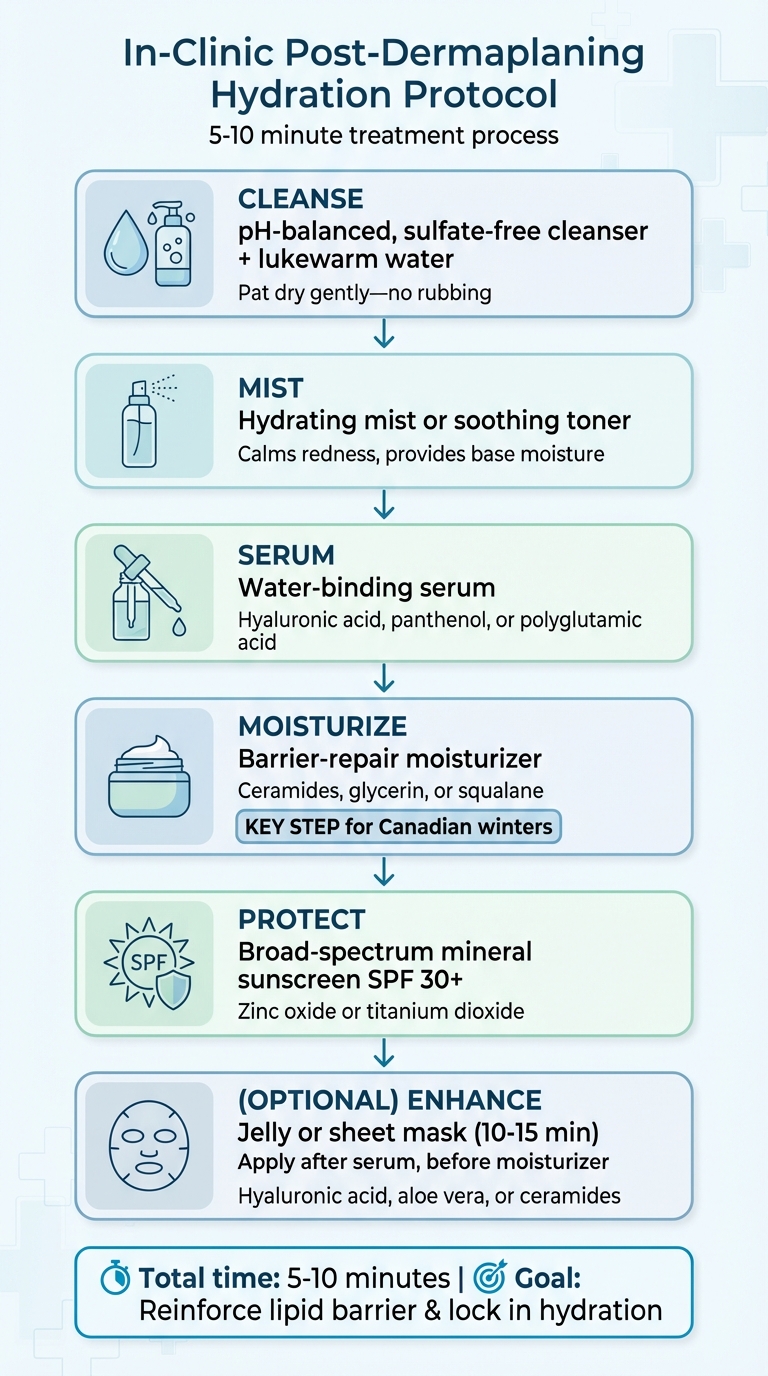
Post-Dermaplaning Hydration Protocol: Step-by-Step Professional Treatment Process
Step-by-Step Post-Treatment Process
Right after dermaplaning, start by cleansing the skin with a pH-balanced, sulfate-free cleanser and lukewarm water. Be gentle - pat the skin dry instead of rubbing it. Next, apply a hydrating mist or a soothing toner to calm any redness and provide a base layer of moisture. Follow this with a water-binding serum that contains ingredients like hyaluronic acid, panthenol, or polyglutamic acid. These ingredients help draw moisture into the skin, which is especially important after exfoliation. Seal everything in with a barrier-repair moisturiser rich in ceramides, glycerin, or squalane. This step is key to reinforcing the skin’s lipid barrier, particularly during Canada’s cold winters, which are notorious for drying out the skin. Finish the routine with a broad-spectrum mineral sunscreen (SPF 30+), using one that includes zinc oxide or titanium dioxide for added protection. This entire process, which takes about 5–10 minutes, should be done immediately after the treatment to set the stage for optimal hydration.
Hydrating Masks and Treatment Add-ons
If you want to take hydration to the next level, consider adding jelly or sheet masks to your post-treatment routine. These masks, infused with ingredients like hyaluronic acid, aloe vera, or ceramides, provide extra soothing and hydration. After applying the serum, place a professional jelly or sheet mask on the skin for 10–15 minutes. Once removed, continue with the moisturiser to lock everything in. Dermaplaning Supplies Canada highlighted the Roselisa Citrus Vitality Vitamin C Jelly Mask Powder (725 g / 23 oz for $59.95 CAD) as a great option in November 2025, noting that “Dermaplaning + Jelly Masks = The Perfect Pairing!” For clinics looking to explore different formulations, they also offer the Roselisa Top 4 Bestsellers Jelly Mask Starter Bundle for $239.99 CAD and the Roselisa Jelly Mask Sampler Bundle (featuring all nine samples) for $49.95 CAD. These add-ons not only help reduce redness but also enhance client satisfaction, making the overall treatment experience even more enjoyable.
Products and Tools for Hydration
To deliver top-notch hydration treatments, make sure your clinic is stocked with the right tools and products. Opt for non-foaming, fragrance-free cleansers, hydrating serums featuring multi-molecular hyaluronic acid or panthenol, and barrier-repair creams with ceramides and squalane. For example, in December 2025, Dermaplaning Supplies Canada introduced the SkinHealthMD Advanced Peptide + Complex Hydrating Cleanser (8 oz / 236 ml, starting at $4.99 CAD), which is ideal for professional use. Maintain hygiene with tools like soft spatulas, silicone brushes, or disposable applicators. Handy items such as the Facial Mask Spatula Applicator (priced at $2.49 CAD) or the 4-piece Facial Set (including a mixing bowl, spatula, and measuring scoops for $6.95 CAD) can streamline your protocols. Given Canada’s cold and dry winters, it’s essential to have richer moisturisers and occlusive balms on hand to combat transepidermal water loss caused by harsh winds and indoor heating. Dermaplaning Supplies Canada offers a wide range of hydration-focused products designed to meet the demands of Canadian climates and professional care standards.
Client Homecare Hydration Instructions
Following your in-clinic hydration treatment, these at-home steps will help your skin recover and maintain its glow.
First 24 Hours After Treatment
The first day post-dermaplaning is crucial for healing. In the evening, cleanse your face with a fragrance-free, lukewarm cleanser and gently pat it dry with a clean towel. While your skin is still slightly damp, apply a simple hydrating serum containing ingredients like hyaluronic acid, panthenol, or aloe. Seal in the moisture with a barrier-supporting moisturiser that includes ceramides, glycerin, or squalane. If your skin feels tight, add a thin layer of non-comedogenic occlusive balm to any dry areas.
For the first 24 hours, avoid makeup and active ingredients such as retinoids, vitamin C, AHAs, BHAs, scrubs, and fragrances. Protect your skin by skipping hot showers, steam rooms, saunas, and intense workouts that cause heavy sweating. Keep your hands off your face, sleep on a clean pillowcase, and stay out of direct sunlight. If you need to step outside, apply a broad-spectrum mineral SPF 30+ and wear protective accessories like a wide-brimmed hat and sunglasses.
Days 2–7: Building a Routine
From day two through the first week, stick to a gentle and consistent skincare routine. Each morning, cleanse your face softly, follow with a hydrating serum, apply a ceramide-rich moisturiser, and finish with a broad-spectrum mineral SPF 30+. When outdoors, reapply sunscreen every two hours - even on cloudy or snowy days in Canada, as UV rays can cut through clouds and reflect off snow.
In the evening, cleanse your skin to remove sunscreen and daily grime, then reapply your hydrating serum and barrier-repair moisturiser. For extra comfort, consider using a soothing hydrating mist or a gentle gel mask one to three times during the week. Avoid physical scrubs, cleansing brushes, chemical exfoliants, retinoids, and strong vitamin C for at least five to seven days - or longer if your skin is particularly sensitive. Light, non-comedogenic makeup is generally fine starting on day two, as long as it doesn’t irritate your skin. Always remove it gently at night. Think of this week as caring for "baby skin" - be gentle, keep it moisturized, protect it from the sun, and avoid anything that could cause tingling or peeling.
Don’t forget: supporting your skin from the inside is just as important as your external routine.
Lifestyle Tips for Better Hydration
Your lifestyle choices play a big role in your skin’s recovery after dermaplaning. Aim to drink about 2 L of water daily. Unsweetened herbal teas can also count toward this goal. Add omega-3-rich foods like salmon, mackerel, sardines, flaxseed, chia seeds, and walnuts to your meals, along with antioxidant-packed produce like berries, leafy greens, and colourful vegetables. These foods help strengthen your skin’s lipid barrier and combat oxidative stress.
During the first week, cut back on alcohol and excess sugar, as both can dehydrate your body and increase inflammation. Prioritise quality sleep and avoid environmental irritants like chlorinated pools, hot tubs, and high-heat environments that can dry out or irritate freshly exfoliated skin. Even small changes - like drinking more water, eating an omega-3-rich meal, or skipping that extra glass of wine - can make a noticeable difference in your skin’s recovery and overall results.
Key Ingredients for Post-Dermaplaning Hydration
Best Ingredients for Hydration and Repair
After dermaplaning, your skin becomes more receptive to topical treatments since the outermost layer of dead cells has been removed. This heightened permeability means it’s the perfect time to focus on hydrating and repairing the skin barrier to ensure comfort and recovery.
Humectants are a must-have here. These ingredients draw water into the skin, helping to relieve any tightness that might occur after the procedure. Look for options like hyaluronic acid, glycerin, panthenol (pro-vitamin B5), and polyglutamic acid. These lightweight hydrators are suitable for all skin types, even in Canada’s often dry and fluctuating climate.
Equally crucial are barrier-repairing lipids. Ingredients like ceramides, squalane, cholesterol, and fatty acids help rebuild the skin’s protective layer, reducing water loss and soothing sensitivity. A well-formulated lipid-rich moisturizer can speed up the recovery process significantly.
To address redness and irritation, soothing and anti-inflammatory agents are key. Botanicals such as centella asiatica (cica), aloe vera, green tea extract, chamomile, and allantoin are known for their calming and healing properties. Niacinamide (used at 2–5%) is particularly effective for reducing redness and strengthening the skin barrier. For in-clinic treatments, hydrojelly masks and sheet masks infused with these ingredients provide an occlusive layer that enhances absorption and minimizes downtime. Always opt for formulations that are fragrance-free and alcohol-free, with minimal ingredient lists, to lower the risk of irritation.
While these ingredients can support recovery, some actives should be avoided immediately after treatment.
Ingredients to Avoid After Treatment
Freshly dermaplaned skin is more sensitive and reactive, so certain ingredients can cause irritation or even lead to complications like post-inflammatory hyperpigmentation. To protect the skin, it’s best to avoid these ingredients for at least three to five days - or even up to two weeks for clients with very sensitive skin:
- Retinoids (e.g., retinol, tretinoin, adapalene, retinaldehyde) can cause peeling, dryness, and burning.
- Chemical exfoliants like AHAs (glycolic, lactic, mandelic acids), BHAs (salicylic acid), and PHAs add unnecessary exfoliation, which can disrupt healing.
- Physical scrubs can create mechanical trauma on already delicate skin.
- High-alcohol toners and astringents exacerbate dryness and stinging.
- Fragranced products or essential oils often irritate compromised skin.
- High-strength vitamin C (especially low-pH L-ascorbic acid) can sting and should be reintroduced gradually.
It’s essential to hold off on these active ingredients until the skin has fully recovered. Providing clients with clear, written aftercare instructions that outline safe and unsafe ingredients can help them navigate their post-treatment routine, especially in Canada’s dry climate.
Selecting Professional Products
Once you’ve identified the right ingredients, it’s time to select professional products that meet these criteria. Always review ingredient lists to ensure they are free of fragrance and alcohol while prioritizing hydrating and barrier-supportive components. Choose products that comply with Health Canada regulations and are explicitly tested for post-procedure use.
For your treatment room, consider stocking:
- Hydrating serums in professional sizes,
- Ceramide-rich moisturizers,
- Soothing jelly masks containing hyaluronic acid, aloe vera, or centella asiatica,
- Mineral SPF formulations that are gentle enough for freshly treated skin.
Professional-grade hydrating serums typically range from $40 to $120 CAD for a 30–50 mL bottle, while jelly or hydrogel masks are available for approximately $5 to $20 CAD per treatment, depending on the brand.
For Canadian clinics, Dermaplaning Supplies Canada (https://dermaplaningsupplies.com) offers a comprehensive range of tools and post-treatment products. Their selection includes dermaplaning blades, starter kits, hydrating serums, jelly masks, and barrier-repair moisturizers - all tailored to post-dermaplaning care. By sourcing your supplies and skincare products from one domestic distributor, you can ensure consistency, streamline inventory management, and access training on product use. Plus, they offer free shipping on orders over $199 CAD and same-day shipping for orders placed before 2 PM AST, making it easy to keep your clinic stocked with essentials for optimal client recovery.
sbb-itb-c911f39
Hydration for Different Skin Types
When it comes to hydration after dermaplaning, one size definitely doesn’t fit all. Each skin type has unique needs, and adjusting products and techniques is key to achieving the best results. The main goal, however, stays the same: strengthen the skin barrier and lock in moisture. Whether in the clinic or at home, these tailored approaches can help ensure optimal hydration for every skin type.
Dry or Mature Skin
Dry or mature skin often feels tight and flaky after dermaplaning, so adding extra moisture is essential. Start with a layered approach: apply a hyaluronic acid serum to damp skin, followed by a ceramide-rich cream that contains squalane or glycerin. At night, a thin layer of a petrolatum-based occlusive over dry areas can help seal in hydration while the skin repairs itself.
For these clients, it’s crucial to hold off on reintroducing active ingredients. While many skin types can resume retinoids within 48–72 hours, dry or mature skin may need up to a week before starting products like retinol or AHAs again. This extra time allows the skin barrier to recover fully and prevents further dryness. Encourage generous use of moisturizers both morning and night, and remind clients to stay hydrated by drinking plenty of water.
Oily and Acne-Prone Skin
Yes, even oily skin needs hydration - especially after dermaplaning. The focus here should be on lightweight, non-comedogenic products that won’t clog pores or trigger breakouts. Look for oil-free gels or serums with ingredients like hyaluronic acid, panthenol, polyglutamic acid, or niacinamide. These products help repair the barrier without adding unnecessary heaviness.
A simple routine works best for oily or acne-prone skin. In the morning, cleanse gently, apply a hydrating serum, follow with a lightweight moisturizer, and finish with a mineral SPF 30+. At night, use a pH-balanced, fragrance-free cleanser and a barrier-supportive moisturizer. Avoid heavy creams or oils, as they can lead to congestion. Drinking enough water - around eight glasses a day - can also help maintain skin balance without relying too much on topical products.
Sensitive or Rosacea-Prone Skin
Sensitive and rosacea-prone skin requires extra care and caution. These skin types are more reactive to ingredients, so it’s best to stick with minimal-ingredient, fragrance-free products designed to soothe and calm. Look for ingredients like aloe vera, panthenol, ceramides, chamomile, or green tea extract, which are known to reduce redness and inflammation. Avoid anything containing fragrance, alcohol, or harsh surfactants, as these can easily trigger irritation.
A gentle routine is essential: start with a gel or cream cleanser (avoid foaming cleansers), followed by a soothing serum and a moisturizer with barrier-repairing lipids. If certain areas feel particularly tight, a thin layer of petrolatum-based occlusive can be applied to those spots. Always recommend patch-testing new products before full-face use, and advise clients to cleanse with lukewarm water, as hot water can worsen redness. These clients should avoid active ingredients for at least five to seven days - or longer if their skin remains sensitive.
Conclusion
Keeping skin hydrated after dermaplaning isn’t just a nice-to-have - it’s a must for happy clients and healthy skin. Replenishing the moisture barrier within the first 72 hours helps prevent dryness, irritation, and that uncomfortable tight feeling, while also promoting a radiant, smooth complexion. This approach supports quicker recovery, less downtime, and longer-lasting results.
Using professional-grade skincare products is key to effective post-treatment hydration. Ingredients like hyaluronic acid, ceramides, and niacinamide work wonders on freshly exfoliated skin, helping to repair the barrier and lock in moisture. These products not only speed up recovery but also reduce the risk of irritation, delivering consistent results - whether applied in the clinic or recommended for at-home care.
Canada’s climate, with its cold winters and humid summers, demands tailored skincare protocols. For example, incorporating occlusive ingredients like squalane at night, combining them with humectants such as hyaluronic acid, and always finishing with a mineral SPF 30+ can protect the skin’s compromised barrier. Fragrance-free and alcohol-free formulations help avoid irritation, and reminding clients to stay hydrated - by drinking water and eating omega-3-rich foods - can address dryness from within.
A strong focus on hydration doesn’t just improve treatment results; it also encourages repeat appointments and opens up opportunities for retail sales. When clients leave with smooth, plump skin, they’re more likely to leave glowing reviews, refer friends, and stick around for the long haul. Partnering with trusted Canadian suppliers like Dermaplaning Supplies Canada ensures access to high-quality tools, clinical skincare products, and even training tailored to the unique needs of Canadian professionals and their clients.
FAQs
What’s the best way to keep my skin hydrated after dermaplaning, especially during Canada’s cold winters?
To keep your skin well-hydrated after dermaplaning, start by applying a hydrating serum or moisturiser containing hyaluronic acid immediately after the treatment. Follow this up with a nourishing facial oil to seal in the moisture. During Canada’s chilly winters, steer clear of hot water and harsh cleansers, as they can rob your skin of much-needed hydration. Adding a humidifier to your indoor space can also help counteract the dryness caused by heating systems.
On top of that, stay hydrated by drinking plenty of water throughout the day. For an extra moisture boost, try using a gentle, hydrating mask once or twice a week as part of your skincare routine.
What skincare products are best for soothing sensitive skin after dermaplaning?
After dermaplaning, your skin needs a little extra care to recover and stay healthy. Opt for gentle, hydrating products to soothe and nourish. Think along the lines of aloe vera gel for calming effects, hyaluronic acid serums to lock in moisture, and barrier-repair creams to protect your skin while it heals. These can help minimize redness, dryness, and irritation, leaving your skin feeling soft and refreshed.
Steer clear of anything harsh, like products with alcohol, fragrances, or exfoliating ingredients, as these can aggravate your sensitive skin. Focusing on hydration and protection will keep your skin looking radiant and feeling its best after the treatment.
How long should I wait to use active ingredients like retinoids after dermaplaning?
After dermaplaning, it’s important to give your skin some time to recover. Avoid using active ingredients like retinoids, AHAs, or BHAs for at least 48 to 72 hours. These can be too harsh on freshly exfoliated skin and may lead to irritation or heightened sensitivity.
Instead, focus on hydration and calming your skin. Opt for gentle products such as hyaluronic acid serums or moisturizers packed with ceramides to help replenish and support your skin barrier. This approach ensures your skin stays nourished and protected while it heals.