

Dermaplaning removes dead skin cells and peach fuzz, leaving your skin smoother and more receptive to skincare products. However, it also makes your skin sensitive and prone to moisture loss. Jelly masks are an excellent post-treatment option to hydrate, calm irritation, and support recovery. These masks form a cooling, occlusive layer that soothes redness, locks in moisture, and enhances the absorption of active ingredients like hyaluronic acid or ceramides.
Key Steps for Using Jelly Masks After Dermaplaning:
- Cleanse Gently: Use a mild, non-foaming cleanser to avoid irritation.
- Prime Your Skin: Apply a hydrating serum with hyaluronic acid or ceramides.
- Prepare the Mask: Mix the jelly powder with water until smooth and apply evenly with a spatula.
- Set and Remove: Leave the mask on for 15–20 minutes, then peel it off carefully.
- Finish with Care: Apply a fragrance-free moisturizer and SPF 30+ to protect your skin.
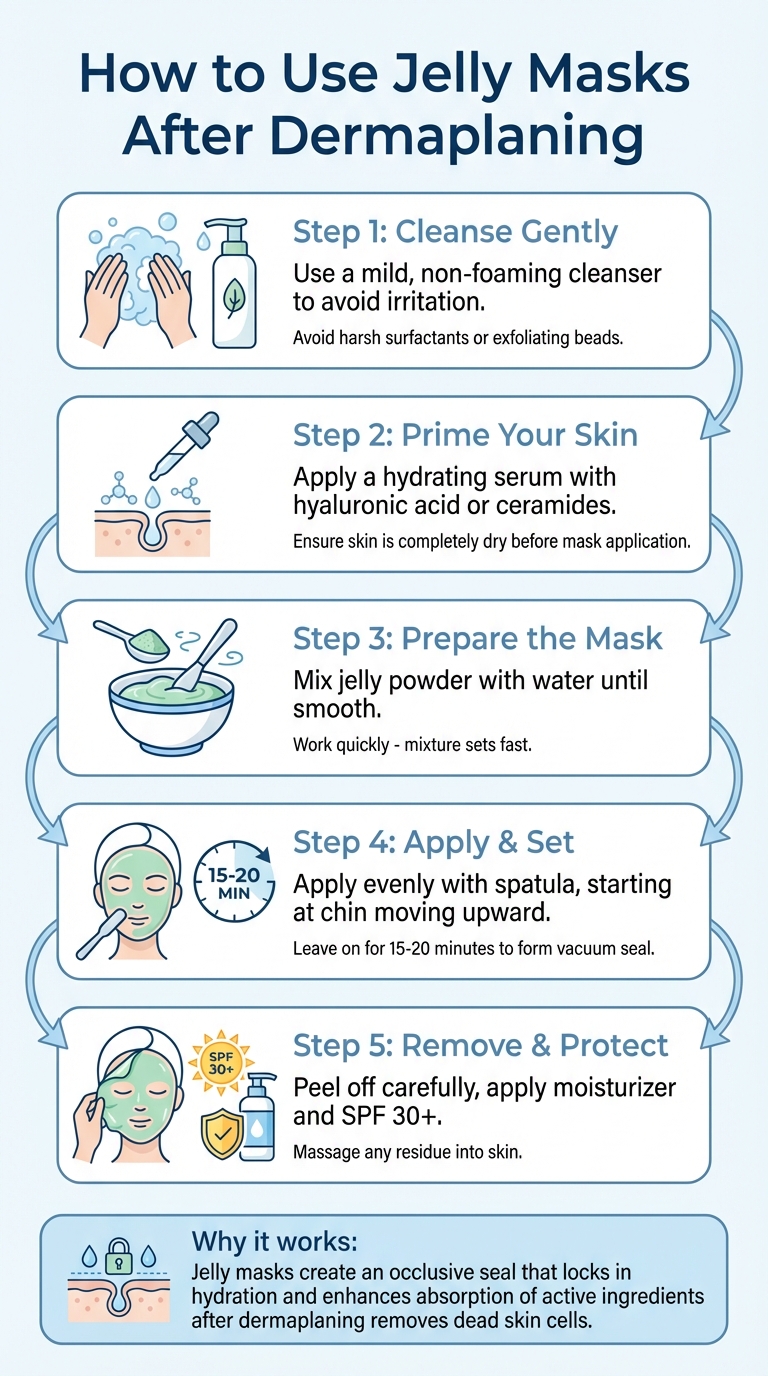
5-Step Guide to Applying Jelly Masks After Dermaplaning
Why Jelly Masks Work Well After Dermaplaning
Hydration and Soothing Properties
After dermaplaning, your skin is freshly exfoliated, slightly flushed, and more sensitive than usual. This is where jelly masks shine. Made with an alginate base, they form a hydrogel that moulds perfectly to your face. This creates a cooling, soothing vacuum seal that helps calm your skin while locking in hydration. The gel-like consistency keeps your skin at an ideal temperature and moisture level. Many professional jelly masks also include electrolytes like potassium, magnesium, and sodium, which help your skin retain moisture and maintain a balanced pH.
Better Ingredient Absorption
Jelly masks don’t just hydrate - they also enhance how well your skin absorbs active ingredients. Dermaplaning removes the top layer of dead skin cells and fine hair, making your skin more receptive. The mask’s vacuum seal keeps beneficial ingredients from evaporating or sitting on the surface. As Luminous Skin Lab explains:
"The jelly consistency creates a vacuum seal effect on the skin. This close contact prevents beneficial ingredients from evaporating or soaking into the mask."
Hyaluronic acid, a popular ingredient in jelly masks, can hold up to 1,000 times its weight in water. Leaving the mask on for 15–20 minutes gives it time to fully form the seal and push these nutrients deeper into your skin. Beyond hydration, this process also strengthens your skin’s resilience.
Repairing the Skin Barrier
Dermaplaning temporarily leaves your skin more exposed, making it prone to losing moisture. Jelly masks, with their alginate base, create an occlusive layer that helps prevent transepidermal water loss while stabilizing hydration. This is especially crucial in the hours right after treatment, when your skin is most vulnerable.
Ingredients like chamomile, oat flour, aloe vera, and green tea extract further help by reducing redness and calming irritation. For even better results, many estheticians suggest applying a ceramide-rich serum before the jelly mask. The mask’s vacuum seal then drives these barrier-repairing ingredients deeper into your skin.
| Ingredient | Primary Benefit Post-Dermaplaning | Best For |
|---|---|---|
| Hyaluronic Acid | Intense hydration & barrier strength | Dehydrated/Dry Skin |
| Chamomile/Oat | Reduces redness & soothes irritation | Sensitive Skin |
| Aloe Vera | Anti-inflammatory & cooling | Reactive/Inflamed Skin |
| Vitamin C | Brightening & collagen support | Dull/Mature Skin |
| Seaweed Extract | Nourishment & revitalization | General Recovery |
sbb-itb-c911f39
How to Prepare Skin for Jelly Mask Application
Getting your skin ready before applying a jelly mask is essential to make the most of its benefits.
Gentle Cleansing After Dermaplaning
After dermaplaning, your skin is more receptive but also more delicate. Use a mild, non-foaming cleanser to remove makeup, oils, and residue. Avoid anything with harsh surfactants or exfoliating beads, as these can irritate freshly exfoliated skin. Stick to cleansing with your hands and lukewarm water for the gentlest approach.
As The Injection Room explains:
"Dermaplaning prepares the skin by removing barriers (dead skin cells and peach fuzz) that could impede product absorption. The freshly exfoliated skin is more receptive to the active ingredients in the jelly mask."
Pat Skin Dry and Apply a Light Serum
Once cleansed, gently pat your skin dry with a clean towel. It’s important to ensure your skin is completely dry, as the jelly mask needs to adhere properly to create an effective peelable layer. Next, apply a light hydrating serum with ingredients like hyaluronic acid, polyglutamic acid, panthenol, or ceramides. These will enhance the mask’s effectiveness by boosting hydration under the occlusive layer.
For the best results, follow this sequence: cleanse, dermaplane, apply a treatment serum, and then apply the jelly mask. Steer clear of retinoids, strong AHAs/BHAs, or alcohol-based toners for at least 72 hours after dermaplaning to avoid irritation.
With your skin clean, dry, and primed, your jelly mask is ready to work its magic.
How to Apply Jelly Masks Step-by-Step
Jelly masks set quickly once the powder is mixed with water, so you'll need to work fast to ensure smooth and even application before the mixture hardens.
Applying the Jelly Mask Evenly
Begin by mixing the powder with water thoroughly. Whisk vigorously to remove any clumps and achieve a smooth, lump-free consistency. You can use cold water for a refreshing, cooling effect or tepid water if you prefer a neutral temperature. To spread the mask evenly, a professional spatula - available for around $2.49 CAD - is your go-to tool.
As Lash Stuff suggests:
"Using a spatula to apply helps you to apply it in a thicker consistency across the face. I recommend applying it starting at the chin and working your way up."
Follow this technique by starting at your chin and moving upward toward your forehead. This upward motion ensures even coverage and gives extra attention to the jawline. For easier removal, apply the mask slightly thicker along the edges. This trick allows the mask to peel off in one clean piece. Be sure to cover all areas of the face, ensuring the mask adheres well to every contour.
Ensuring Proper Mask Coverage
Once the mask is applied, check for full coverage, especially on curved areas like the nose, cheeks, and jawline. A flexible silicone spatula is ideal for pressing the mask into the skin, allowing it to conform to your facial contours. Press firmly to create a snug, occlusive layer that locks in the mask's benefits.
Avoid applying the mask near lash extensions, hairlines, or long braids. Let the mask set for 15–20 minutes. As Atlas Rose Skincare explains:
"After about 15-20 minutes, the jelly mask solidifies, creating a vacuum seal that pushes all the beneficial ingredients into your skin's pores."
This vacuum-like seal enhances absorption, helping any serum applied beforehand penetrate deeply into your freshly treated skin.
How Long to Leave the Mask On and Removal Tips
Recommended Leave-On Time
After dermaplaning, it's best to leave a jelly mask on for 15–20 minutes. This timeframe allows the alginate base to create an occlusive seal, which helps lock in hydration. According to Luminous Skin Lab:
"The optimal application time is 15–20 minutes. This ensures that the alginate base forms a complete occlusive seal and allows deeper hydration transfer into the epidermis."
For masks with nutrient-dense formulas, such as Roselisa's Vitamin C or Collagen jelly masks (priced at $59.95 CAD for a 725g container), you can extend the time to 30 minutes. Ensure the mask fully solidifies before removal - it should transform from a gel-like consistency to a rubbery, flexible layer. If it still feels wet, wait a little longer.
Peeling Off the Mask and Final Steps
Once the mask has set, carefully peel it off. Start at either the chin or forehead and work your way across the face. If it tears during removal, don't worry - just peel it off in smaller sections. This won't affect the mask's effectiveness.
After removal, use your hands to gently massage any leftover product into your skin. If there’s still residue, wipe it away with a moist sponge or a warm towel compress. To wrap up your routine, apply a fragrance-free moisturizer with ceramides or hyaluronic acid. Follow this with a broad-spectrum SPF 30+ to shield your freshly treated skin from UV exposure. These final steps help maintain the benefits of your post-dermaplaning treatment.
Post-Mask Care and Dermaplaning Supplies Canada Products
Moisturizing and Sun Protection
Once the mask is removed, it’s vital to repair your skin’s barrier and protect it from UV damage. Since dermaplaning can temporarily compromise the skin’s natural defence system, taking these steps is essential . WestEnd MedSpa highlights this by stating:
"Dermaplaning temporarily disrupts your skin's barrier, making it crucial to lock in moisture and support repair."
Start with a barrier-repair moisturizer to lock in hydration and deliver active nutrients. Look for ingredients like ceramides, peptides, or niacinamide, which are known to strengthen the skin’s protective layer and reduce moisture loss . Follow this with a mineral sunscreen containing zinc oxide or titanium dioxide (SPF 30 or higher). Since exfoliated skin is more prone to UV damage, sunscreen is non-negotiable. As WestEnd MedSpa puts it, "Your skin is more susceptible to sun damage after dermaplaning, so never skip sunscreen".
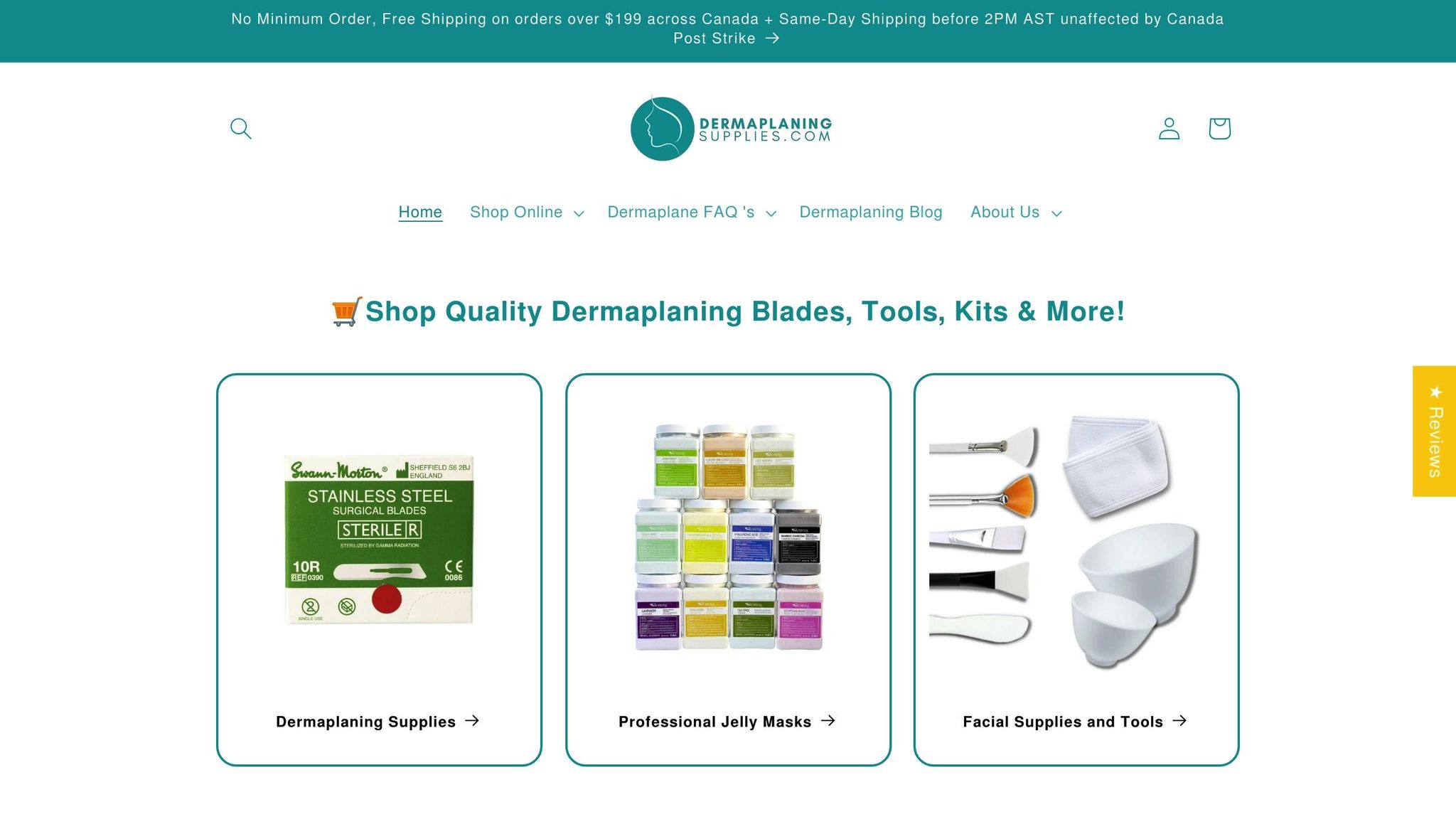
For products tailored to enhance this recovery process, check out our curated selection below.
Why Choose Dermaplaning Supplies Canada for Jelly Masks
The right products can elevate your post-mask care routine, and Dermaplaning Supplies Canada offers a wide range of professional-grade solutions. Their Roselisa jelly mask collection is specially formulated to target various skin concerns. With 725g tubs available, these masks provide multiple treatments at a cost-effective per-use price.
This supplier boasts a stellar 5.0/5.0 rating from over 280 reviews . Professionals praise their Swann Morton blades for effectively removing hair and dry skin. Beyond blades, Dermaplaning Supplies Canada stocks all the essentials: dual measuring scoops and spatulas starting at $1.95 CAD, professional dermaplaning blades in sizes #10, #10R, and #14, and targeted treatments like Gold Collagen Gel Lip Masks .
They also offer perks like bulk discounts and professional training to support skincare practices. Starter bundles range from $239.99 CAD to $549.00 CAD, and orders over $199 ship free across Canada . For those looking to expand their expertise, the company provides online dermaplaning certification, complete with modules on jelly mask application and post-treatment care .
Conclusion
Combining dermaplaning with jelly masks offers a powerful approach to skin renewal. Jelly masks create an occlusive barrier that locks in hydration and nutrients, delivering a level of moisturization that surpasses traditional masks. To get the best results, follow these steps: mix the jelly mask thoroughly, apply it evenly with a spatula starting at the chin, let it set for 15–20 minutes to form a protective seal, then gently remove it. Finish the process with a barrier-repair moisturiser and a broad-spectrum SPF to safeguard the freshly treated skin.
For skincare professionals in Canada, Dermaplaning Supplies Canada offers high-quality tools and products tailored for this treatment. Their Roselisa jelly mask collection features specialized formulations, earning a 4.8/5-star rating from 281 reviews. Plus, they provide free shipping on orders over $199, making them a trusted choice for professionals. By incorporating these steps and products into your routine, you can elevate treatment results and deliver exceptional skincare outcomes.
FAQs
When can I use a jelly mask after dermaplaning?
After dermaplaning, applying a jelly mask is a great next step. Use it for about 10–15 minutes to help hydrate and calm your skin. This can aid in recovery, boost moisture levels, and support the repair of your skin's barrier.
What ingredients should I avoid right after dermaplaning?
Avoid applying products containing harsh ingredients right after dermaplaning. Ingredients like alcohol, acids, or strong exfoliants can irritate your skin, which tends to be more sensitive and easily irritated after the procedure.
How often should I dermaplane and use jelly masks?
It’s typically suggested to dermaplane every 3–4 weeks. For post-treatment care, consider using jelly masks 1–2 times a week. This frequency can vary based on your skin’s sensitivity and any advice from a skincare professional. Adjust as necessary to keep your skin hydrated and aid in its recovery.