

Dermaplaning is a simple way to make your skincare products work better. By removing dead skin cells and peach fuzz, this treatment clears the outer barrier that stops serums from penetrating deeply. This means your anti-aging ingredients - like hyaluronic acid, peptides, and retinoids - can reach the layers of your skin where they’re most effective. The result? Smoother skin, better hydration, and visibly reduced fine lines.
Here’s why it works:
- Dead skin cells and peach fuzz block absorption: Over time, layers of dead cells build up, especially as skin renewal slows with age. This barrier prevents serums from reaching living skin cells.
- Dermaplaning removes this barrier: A surgical-grade blade gently exfoliates the skin, clearing away dead cells and fine hairs.
- Serums absorb better after dermaplaning: Active ingredients can penetrate up to 30–40% more effectively during the first 48 hours post-treatment.
To maximize results, apply hydrating and collagen-boosting serums right after dermaplaning. Avoid harsh ingredients like retinol or vitamin C immediately after to prevent irritation. This straightforward treatment is a game-changer for achieving youthful, glowing skin.
The Problem: What Prevents Anti-Aging Serums from Working
Dead Skin Cells and Peach Fuzz Block Product Penetration
Did you know your skin sheds about 50 million cells every single day? While younger skin naturally renews itself every 28 days, this process slows down significantly as you age. By your 40s, it can take anywhere from 60 to 90 days - or even longer - for your skin to renew itself. Over time, these dead skin cells pile up, forming 5 to 10 layers on the surface. This build-up acts like a shield, preventing those pricey anti-aging serums from penetrating deeply enough to reach the living skin cells they’re meant to nourish.
And it’s not just dead skin cells causing trouble. Fine vellus hair, often called peach fuzz, traps skincare products and debris on the surface of the skin. This further reduces the contact between active ingredients and your skin. As AIVI Aesthetics puts it:
"The outermost layer of your skin is comprised of dead skin cells. This layer can act as a blockade, preventing serums and moisturisers from fully penetrating".
So instead of soaking in, your serums and moisturizers often end up stuck on this outer layer, unable to deliver their full potential.
The Stratum Corneum Limits Product Absorption
The stratum corneum - the outermost layer of your skin - plays a major role in this problem. Normally, this barrier is about 10–20 μm thick, but when dead skin cells build up, it can grow to 30–50 μm. And here’s where it gets tricky: according to Fick’s law of diffusion, doubling the thickness of this layer can slash product absorption by as much as 75%.
There’s another challenge, too. Most anti-aging ingredients are simply too large to pass through this barrier. Molecules smaller than 500 Daltons can penetrate the skin, but many active ingredients like peptides (1,000–5,000 Daltons) and growth factors (15,000–30,000 Daltons) far exceed this size limit. Combine this with the thickened stratum corneum, and it’s no surprise that up to 90% of skincare products fail to deliver their promised results. Without addressing these barriers, even the best serums may fall short of their claims.
The Solution: Dermaplaning Removes Barriers to Absorption
How Dermaplaning Works
Dermaplaning is a method of mechanical exfoliation that uses a sterile scalpel to gently remove the outer layer of dead skin. Along with this, it also eliminates vellus hair (commonly known as peach fuzz), which can trap products on the skin’s surface.
Professional estheticians typically use #10 or #10R stainless steel blades for the procedure. The #10R, often called the "butter blade", is designed to reduce the risk of nicks while still achieving a thorough exfoliation. The blade is held at a 45-degree angle against stretched skin, and short, controlled strokes are used to remove impurities and hair efficiently.
Karen Fernandez, Head of Aesthetics at SkinSpirit, describes the process:
"The dermaplaning tool houses a sharp, straight edge razor that glides over the skin, removing dead skin cells and hairs from that stratum corneum layer".
In just one session, dermaplaning can remove up to three weeks’ worth of accumulated dead skin cells. This not only leaves the skin feeling smoother but also makes it more receptive to skincare products.
A Smooth Surface Allows Deeper Serum Penetration
By creating a refined and even surface, dermaplaning allows active ingredients like hyaluronic acid, peptides, and retinoids to penetrate deeper into the skin and work more effectively. Removing approximately 15–20 μm of surface build-up significantly boosts the skin’s ability to absorb serums.
Licensed Esthetician Maxie Frericks highlights the benefits:
"Dermaplaning is good for letting products such as peels, strong serums or skin remedies penetrate deeply into the skin, as results are improved after exfoliation".
Clearing away dead skin cells and peach fuzz ensures a uniform surface, enabling active ingredients to reach deeper layers of the skin consistently. For optimal results, apply serums immediately after dermaplaning - this is when your skin is most receptive. The absorption window lasts about 48 hours before the skin barrier begins to regenerate.
Why Serums Absorb Better After Dermaplaning
Active Ingredients Reach Deeper Skin Layers
Dermaplaning works by removing the outermost layer of dead skin cells (the stratum corneum) and fine vellus hair, creating a direct pathway for active ingredients to dive deeper into the skin. This process allows skincare products to reach the living layers of the epidermis and dermis, where they can actually make a difference. Dead skin cells, which hold only about 10% moisture compared to the 70% in living tissue, act as a barrier, blocking hydrating and anti-aging ingredients from reaching viable cells. By eliminating this barrier, dermaplaning enables ingredients like peptides, retinoids, and antioxidants to penetrate the dermis, where collagen and elastin fibres are produced.
Tammy Kirby, DNP from Direct Aesthetics, puts it simply:
"By removing the top layer of dead skin and peach fuzz, dermaplaning creates an ideal canvas for your skincare products to work their magic".
Additionally, dermaplaning triggers a controlled injury response, stimulating fibroblasts - the cells responsible for producing collagen and elastin. This response essentially tricks the skin into a repair mode, amplifying the anti-aging benefits. The result? Better absorption of products, improved hydration, and a natural boost in collagen production, which all contribute to smoother, more youthful-looking skin.
Better Hydration, Collagen Production, and Wrinkle Reduction
With enhanced absorption, the benefits of skincare ingredients become much more noticeable. For example, hyaluronic acid, when delivered to deeper skin layers, can hold up to 1,000 times its weight in water, providing intense hydration and plumping that visibly reduces fine lines. Peptides can directly stimulate collagen production in the dermis, while vitamin C offers antioxidant protection and brightens the newly exposed skin.
Timing is key. After dermaplaning, your skin remains in an optimally receptive state for about 48 hours before the natural barrier begins to regenerate. During this window, serums with ingredients like ceramides, niacinamide, and peptides perform at their best, helping to strengthen the skin barrier, reduce redness, and improve elasticity. The combination of exfoliation and enhanced ingredient delivery creates a powerful synergy, leading to better moisture retention, faster collagen production, and visible reduction in wrinkles and fine lines.
sbb-itb-c911f39
Choosing the Right Anti-Aging Serums After Dermaplaning
Top Serums to Apply After Dermaplaning
Dermaplaning doesn’t just leave your skin feeling silky smooth - it also preps it to absorb serums more effectively, making it a prime time to maximise the benefits of your skincare routine. The first 48 hours after treatment are particularly important for applying the right serums. Here’s a breakdown of what to use and when:
- Hyaluronic acid: Apply 15–30 minutes after dermaplaning to deeply hydrate your skin, thanks to its incredible ability to bind water.
- Ceramides: These help repair your skin barrier and can be applied right after treatment.
- Peptides: Depending on your skin’s sensitivity, you can use peptides immediately or wait up to 24 hours. They work to boost collagen production.
- Niacinamide: A 2–5% concentration can calm the skin and help regulate oil production.
- Vitamin C: If your skin feels sensitive, hold off for 2–3 days before introducing it to avoid irritation.
- Retinol: This powerhouse ingredient should be reintroduced 48–72 hours later to prevent over-absorption, which could lead to irritation .
During the first 72 hours, steer clear of harsh ingredients like benzoyl peroxide, alcohol-based toners, and physical exfoliants. These can irritate your freshly treated skin and undo the benefits of dermaplaning.
The thoughtful selection and timing of serums during this window can significantly enhance their effectiveness, setting the stage for noticeable anti-aging results.
Serum Absorption: Before and After Dermaplaning
The difference in how your skin absorbs serums before and after dermaplaning is remarkable. Dermaplaning removes the outer layer of dead skin, allowing active ingredients to penetrate deeper and work more effectively. Here’s how it impacts some key ingredients:
- Hyaluronic acid: On untreated skin, it tends to sit on the surface, but post-dermaplaning, it penetrates deeper, delivering a plumping effect .
- Vitamin C: Normally, vitamin C oxidises quickly on the skin’s surface, reducing its effectiveness. After dermaplaning, it absorbs faster and reaches fibroblasts, where it supports collagen production .
- Peptides: These struggle to penetrate untreated skin but can reach deeper layers after dermaplaning, enhancing structural support.
- Retinoids: Dead skin typically limits their absorption, but after dermaplaning, they can penetrate too deeply if applied too soon. That’s why waiting 48–72 hours is crucial .
In fact, product penetration improves by 30–40% during the post-treatment period, making it essential to use the right serums at the right time. This enhanced absorption is what makes dermaplaning such an effective complement to your anti-aging skincare routine.
Treatment Protocols and Tools for Canadian Professionals
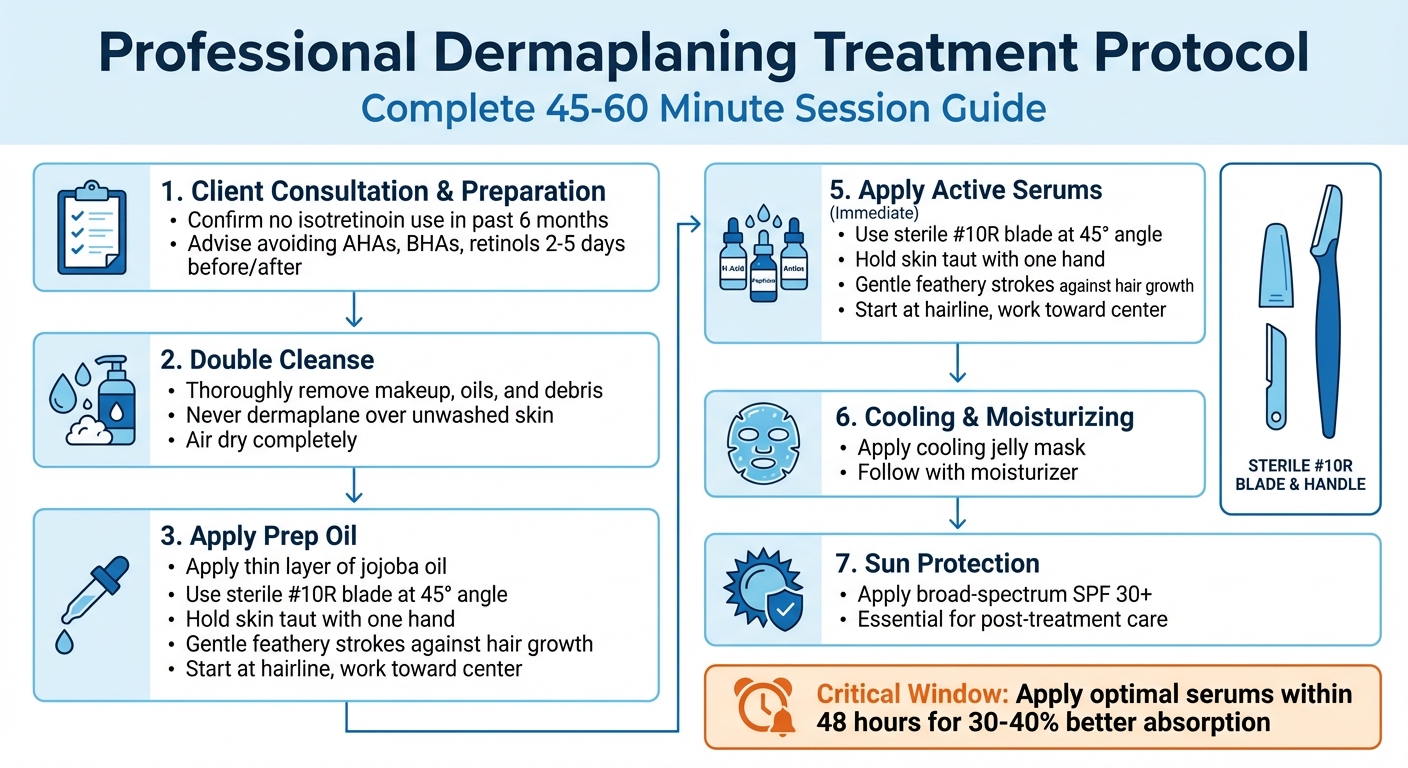
Step-by-Step Dermaplaning Treatment Protocol for Professionals
Professional Dermaplaning Tools and Supplies
For Canadian skincare professionals, having the right tools is non-negotiable when it comes to safe and effective dermaplaning. Medical-grade equipment is essential, starting with sterile surgical-grade blades like the #10R "Butter Blade", which is available for $12.95 CAD from Dermaplaning Supplies Canada. Pair these with stainless steel #3 handles, priced between $10.50 and $11.25 CAD, for precise control during treatments. Other must-haves include safety tools like blade removers ($6.00–$8.50 CAD) and sharps containers, as well as autoclave sterilisation equipment to maintain hygiene. For the treatment itself, gentle cleansers, jojoba oil for prepping the skin, and cooling jelly masks (starting at $1.95 CAD) for post-treatment care are indispensable.
Dermaplaning Supplies Canada, a trusted supplier rated 4.8/5 by 279 Canadian skincare professionals, offers next-business-day shipping for these essentials. Users frequently commend the performance of Swann Morton blades, highlighting their effectiveness in removing dead skin smoothly. These tools are the backbone of a safe and effective dermaplaning protocol, as outlined below.
Step-by-Step Dermaplaning Treatment Protocol
Using the recommended tools and supplies ensures a professional dermaplaning session delivers maximum results, such as improved serum absorption. A typical session lasts 45 to 60 minutes and follows a carefully structured process to protect the client's skin while enhancing its appearance.
Start with a double cleanse to thoroughly remove makeup, oils, and debris. Rachel Lamont, Owner and Holistic Medical Esthetician at The Natural Art of Skin Care, stresses the importance of this step:
You never want to dermaplane over unwashed dirty skin as we are opening up the pores and exposing it, making it easy for dirt to get inside and cause infection and/or acne breakouts.
Once the skin is clean and air-dried, apply a thin layer of prep oil to allow the blade to glide smoothly. Hold the skin taut with one hand and, with the other, use a sterile #10R blade at a 45-degree angle. Move the blade in gentle, feathery strokes against the direction of hair growth, starting at the hairline and working towards the centre of the face.
After the dermaplaning is complete, immediately apply active ingredients like hyaluronic acid, peptides, and antioxidants to the fresh skin. Follow this with a cooling jelly mask, moisturiser, and a broad-spectrum SPF 30+ to protect the skin. Before beginning any treatment, always conduct a detailed client consultation. Confirm that the client has not used isotretinoin in the past six months, and advise them to avoid AHAs, BHAs, and retinols for 2–5 days before and after the procedure. This preparation ensures the skin remains healthy and achieves the best possible results.
Conclusion
Dermaplaning is a standout treatment that prepares the skin for better serum absorption by removing layers of dead skin cells and fine hairs. This process of mechanical exfoliation helps active ingredients - like hyaluronic acid, peptides, and retinoids - penetrate deeper into the skin, where they can work more effectively to stimulate collagen, enhance hydration, and soften fine lines.
By eliminating about 15–20 μm of surface debris, dermaplaning creates a smooth surface that allows serums to sink in rather than sit on the skin. This deeper absorption not only provides an instant glow but also delivers long-term anti-aging benefits, meeting client expectations for visible and lasting results.
For skincare professionals in Canada, incorporating dermaplaning with carefully chosen serums during the critical 48-hour absorption period can elevate treatment outcomes. Using high-quality tools - such as sterile #10R blades and stainless steel handles from Dermaplaning Supplies Canada (https://dermaplaningsupplies.com) - along with proper techniques and post-treatment care, ensures the effectiveness of the service. This approach helps professionals provide results that keep clients coming back, aligning perfectly with the skin’s natural renewal cycle.
FAQs
How often should I schedule dermaplaning to enhance serum absorption?
For the best outcomes, most individuals find that dermaplaning works well when done every 3 to 4 weeks. If you have oily skin, sticking to a 3-week schedule might suit you better. On the other hand, if your skin tends to be dry or sensitive, spacing sessions out to 4 to 6 weeks could be more comfortable. Consistent treatments not only keep your skin smooth but also enhance the absorption of your anti-aging serums, making them work more effectively.
Is it safe to do dermaplaning at home, or should it be done by a professional?
While you can attempt dermaplaning at home using a single-edge razor, professional dermaplaning is carried out by trained specialists using a sterile, surgical-grade scalpel. This approach offers precise control, ensures the correct depth, and maintains a safe and hygienic process. Attempting it without proper training can lead to risks like nicks, irritation, or even infection - especially if you have sensitive skin, active acne, or conditions like rosacea.
For optimal results - particularly if you're looking to boost the absorption of anti-aging serums - it's best to leave dermaplaning to licensed aestheticians or dermatologists. If you do choose to try it yourself, make sure your skin is thoroughly cleansed and dry, use a brand-new razor, and steer clear of the procedure if you have any active skin issues. That said, for consistent outcomes and added peace of mind, professional treatments remain the safest option.
What products should I avoid using on my skin after dermaplaning?
After dermaplaning, it’s a good idea to steer clear of makeup, harsh exfoliants, or active ingredients like retinol, glycolic acid, salicylic acid, and benzoyl peroxide. Your skin is more sensitive after the treatment, and these products can cause irritation.
Instead, stick to soothing and hydrating options. A gentle moisturizer paired with a broad-spectrum sunscreen is perfect for protecting your skin and helping it recover. This simple approach not only supports healing but also helps you hold on to the benefits of your dermaplaning session.