

Switching to zero-waste dermaplaning reduces plastic waste and offers a cost-effective solution for skincare professionals. By replacing disposable plastic tools with reusable metal handles and recyclable steel blades, you can lower landfill contributions while maintaining high treatment quality. Here's what you need to know:
- Why It Matters: Over 370 million disposable dermaplaning tools are discarded annually, with most ending up in landfills. Only 9% of global plastic waste gets recycled.
- Cost Savings: Metal handles cost $39–$80 CAD upfront, and blades are under $1 each. In contrast, plastic heads range from $1.50–$7+ per replacement.
- Eco-Friendly Practices: Use metal handles, store used blades in recycling tins, and opt for paper-based packaging. Tools like sterilization trays and blade removal boxes ensure safety and hygiene.
- Client Appeal: Canadians increasingly prefer services aligned with their environmental values. Zero-waste practices can attract these clients and set your clinic apart.
Switching is simple and impactful. Start with durable tools, proper sterilization, and eco-conscious product choices to reduce waste and costs while meeting client expectations.
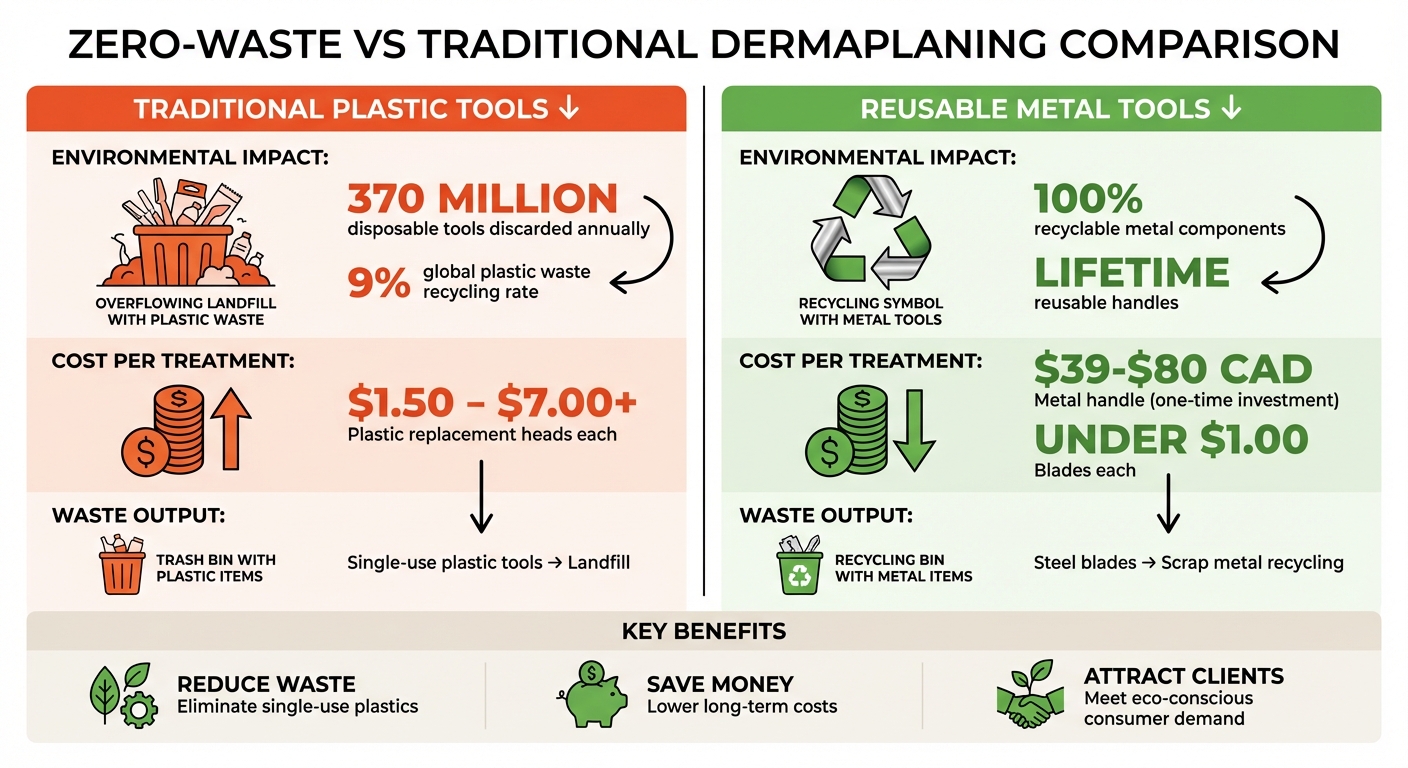
Zero-Waste vs Traditional Dermaplaning: Cost and Environmental Impact Comparison
What Is Zero-Waste Dermaplaning?
Defining Zero-Waste in Dermaplaning
Zero-waste dermaplaning is a refined approach to facial exfoliation and hair removal that prioritizes plastic-free, reusable tools and fully recyclable metal refills. This practice addresses the environmental concerns tied to traditional dermaplaning by replacing disposable plastic tools with durable metal alternatives. These tools typically feature long-lasting metal handles paired with standard steel safety razor blades and blade guards, designed either for indefinite use or recycling.
Instead of discarding plastic tools after each session, this method encourages the use of metal handles that can be reused endlessly. Used blades are safely stored in a recycling tin or metal container, which, once full, can be taken to a local scrap metal recycling facility. This shift not only reduces waste but also introduces a more eco-conscious way to perform dermaplaning.
Core Principles of Zero-Waste Practices
Zero-waste dermaplaning revolves around three essential principles: reduce, reuse, and recycle.
- Reduce: The primary focus is eliminating single-use plastics. By opting for metal tools, skincare professionals can significantly cut down on non-biodegradable waste generated during treatments.
- Reuse: High-quality metal handles are designed for durability and better performance. They often provide improved weight and grip, which enhances precision during treatments. Between sessions, these tools can be cleaned with rubbing alcohol, ensuring they’re ready for repeated use.
- Recycle: Every consumable component, such as steel blades and blade guards, can be recycled as scrap metal rather than ending up in landfills. This principle extends to packaging, with many zero-waste suppliers offering paper-based, curbside-recyclable materials and avoiding plastic in their shipping practices.
"A beauty routine should not harm the environment, so skip disposable wands and invest in [reusable tools] to end plastic dermaplaning for good." - Leaf Staff
sbb-itb-c911f39
Tools and Resources for Zero-Waste Dermaplaning
Reusable Dermaplaning Tools
Switching to reusable tools is a key step in creating a zero-waste dermaplaning practice. A surgical-grade steel handle, such as the No. 3 handle, replaces disposable plastic scalpels and can be sterilized for repeated use. This versatile tool fits standard blade sizes and is a long-term investment. At Dermaplaning Supplies Canada, the premium No. 3 handle is priced at $14.95 CAD, while economy versions start at $6.95 CAD.
For more specific needs, consider these options:
- No. 3L: Designed for extended reach
- Handle 7: Offers greater precision
- Handle B3: Reduces hand fatigue during use
Instead of discarding the entire tool after each client, only the blade is replaced. Popular options include the #10R "butter blade" for sensitive or contoured areas and the #14 blade for larger, flat surfaces. A box of 100 Swann Morton #10R blades costs $109.95 CAD (approximately $1.10 per treatment) and has received glowing reviews, with a 5.0/5.0 rating from 30 professionals. Users praise these blades for being "sharp, durable, and consistent".
"Surgical blades are an essential tool for dermaplaning due to their precision and reliability. They provide a sharper, more consistent edge, ensuring an even exfoliation." – Leigh-Ann Keddie, Marketing Coordinator, SalonServe
Blade removal is another important aspect of zero-waste practices. Tools like the Clicksmart BladeFLASK or universal blade removal boxes make detaching used blades safe and touch-free. These units, which can hold up to 100 blades, cost around $12.95 CAD and reduce the risk of sharps injuries while keeping waste management efficient. For a manual option, stainless steel Kelly forceps, available for about $7.95 CAD, allow precise blade removal.
Once your tools are sorted, focus on eco-friendly storage solutions to maintain your zero-waste workflow.
Eco-Friendly Packaging and Storage
Proper storage and maintenance not only extend the life of reusable tools but also reduce the frequency of replacements. A sterilization tray, priced at approximately $12.95 CAD, is essential for disinfecting handles and forceps with hospital-grade solutions between client appointments.
Disposing of used blades responsibly is equally important. Sharps containers, available in sizes ranging from 1 quart ($6.95 CAD) to larger options up to $14.95 CAD, ensure safe disposal. Once full, the metal components can be recycled at local scrap metal facilities instead of ending up in landfills. Additionally, choosing suppliers that ship products in recyclable paper boxes with plastic-free tape further reduces waste.
Purchasing blades in bulk - like boxes of 100 - minimizes individual packaging waste while ensuring a steady supply of sterile blades for your practice. This approach is both efficient and environmentally conscious.
For a complete range of zero-waste tools, Dermaplaning Supplies Canada offers everything you need.
Sourcing Supplies from Dermaplaning Supplies Canada
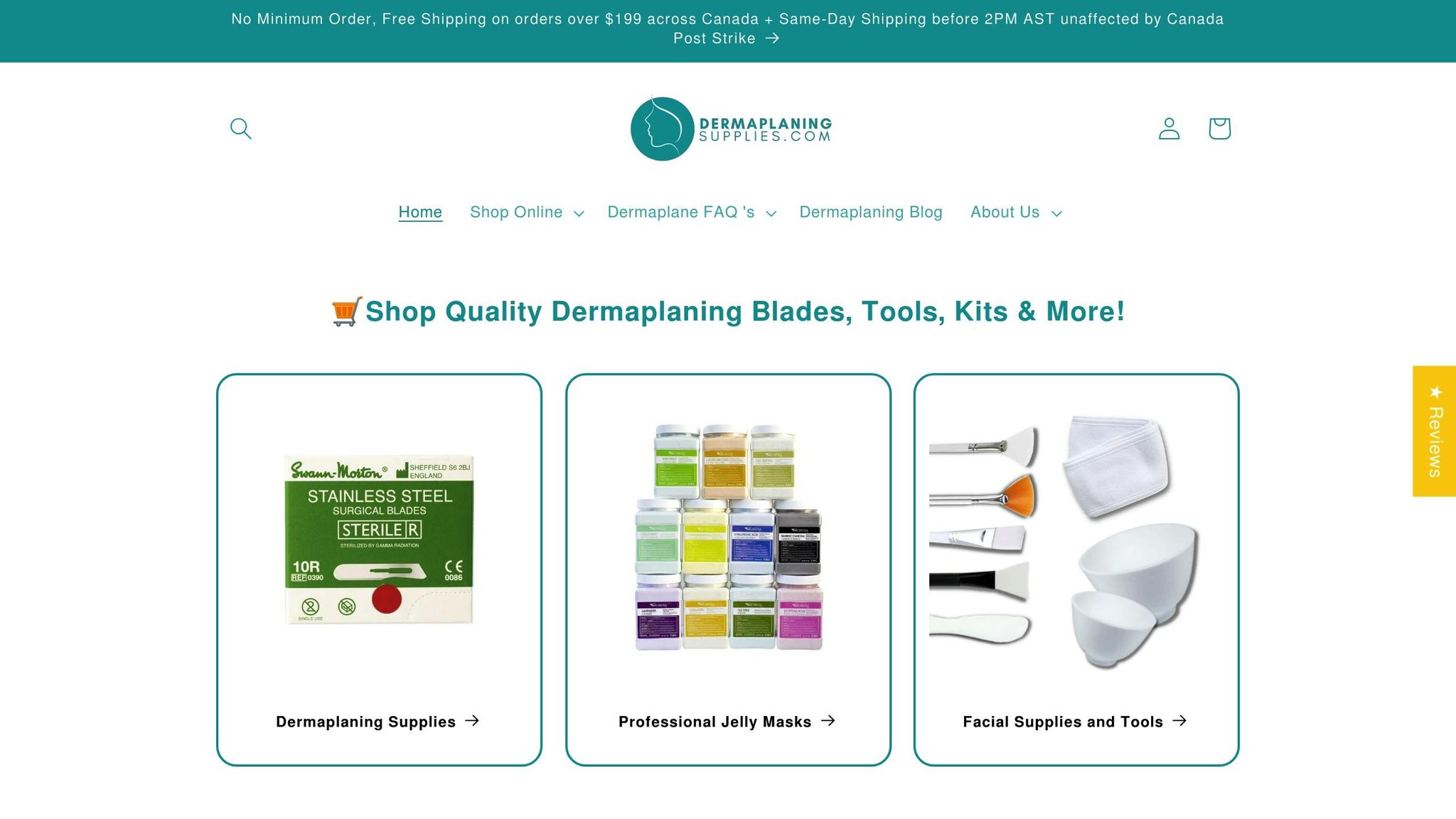
Dermaplaning Supplies Canada is a one-stop shop for sustainable dermaplaning tools and accessories. Their catalogue includes stainless steel handles, sterile Swann Morton blades in multiple sizes, blade removal boxes, sterilization trays, and sharps containers - everything required to replace disposable plastic tools. With a customer rating of 4.8/5 from 281 reviews, they are a trusted source for Canadian skincare professionals.
In addition to tools, they offer professional online training and certification for professional online training and certification for $199.99 CAD99.99 CAD, helping practitioners master the safe use of reusable surgical instruments. Free shipping on orders over $199 CAD across Canada makes it easier to stock up on supplies while saving on costs.
For those new to zero-waste practices, starter kits bundle essential handles, blades, and safety tools, simplifying the transition and ensuring compatibility between components.
How to dermaplane the RIGHT way, no plastic involved
How to Implement Zero-Waste Techniques
Implementing zero-waste practices in dermaplaning involves a mix of proper tool maintenance, thoughtful waste reduction strategies, and eco-conscious product choices. These steps not only support the environment but also elevate the quality and sustainability of your services.
Sterilization and Maintenance of Reusable Tools
Sterilizing reusable tools is a key step in ensuring both client safety and waste reduction. Stainless steel handles, built for lifetime use, significantly reduce reliance on disposable plastic alternatives. After each treatment, clean the handle with alcohol and sterilize it using an autoclave or a hospital-grade disinfectant soak, following provincial guidelines.
"The stainless-steel handle is cleaned after each use with alcohol and disinfected by soaking in hospital-grade disinfectant or sterilized in autoclave based on state regulations." – Lori Vargas, Founder of 360 Wellness Education
Autoclaves are the gold standard for sterilization, ensuring complete pathogen elimination between clients. For blades, stick to single-use, sterile options. These blades are sterilized with gamma radiation at a minimum dose of 25 kGy before packaging.
Dispose of used blades immediately in a sharps container or BladeFLASK to avoid contamination risks. When the container is full, the metal blades can be sent to local scrap metal recycling facilities.
Reducing Waste During Treatments
The treatment setup itself offers plenty of opportunities to cut down on waste. Swap out disposable paper towels for washable microfiber or cotton towels, which can be cleaned and reused. This small change can prevent dozens of paper towels from entering the waste stream each week.
Reusable setups not only reduce plastic waste but also lower per-treatment costs. For example, storing stainless steel handles in a dedicated stand keeps them dry and prevents damage, extending their lifespan.
If you don’t have a dedicated blade recycling container, upcycle an old metal mint tin as a temporary solution. Once it’s full, drop it off at a scrap metal recycling facility. These simple adjustments can make a big difference in reducing the environmental impact of your practice.
Selecting Eco-Friendly Post-Treatment Products
Choosing sustainable post-treatment products is the final piece of the zero-waste puzzle. Opt for biodegradable skincare products in glass or metal containers. Ingredients like hyaluronic acid and aloe vera not only promote skin recovery but also align with environmentally conscious practices. By using "clean" or eco-friendly skincare lines, you reinforce your commitment to reducing waste throughout the entire treatment process.
For instance, Dermaplaning Supplies Canada offers professional skincare products and jelly masks starting at $1.95 CAD. These options allow you to maintain high-quality care while minimizing your environmental footprint. By integrating these products into your routine, you ensure every aspect of your practice contributes to sustainability.
Educating Clients About Zero-Waste Dermaplaning
Helping clients understand zero-waste dermaplaning is key to reinforcing its benefits - both for the planet and for their skincare routine.
Explaining the Environmental Benefits
Clients often don’t realise the environmental cost of traditional dermaplaning. Every year, over 370 million disposable dermaplaners are thrown away. These single-use plastic tools typically end up in landfills, where they contribute to long-term waste problems.
Zero-waste tools offer an alternative. Professional-grade metal tools are made from durable, recyclable materials. Both the blades and blade guards can be recycled as scrap metal, reducing landfill waste. For example, you can show clients how used steel blades are collected in a blade recycling tin or even an upcycled container like a mint tin, ready for local recycling.
Beyond the environmental impact, these tools often deliver better exfoliation. Highlighting this dual benefit can strengthen your message about your zero-waste approach.
Marketing Your Zero-Waste Commitment
Once you’ve embraced zero-waste dermaplaning, make sure your clients know about it. Showcase your plastic-free tools, emphasizing that your surgical steel or aluminium handles are built to last a lifetime. Use visuals and marketing materials to underline your commitment to sustainable practices. Dermaplaning Supplies Canada offers ready-made materials to help you share this message effectively.
Modernize your communication by shifting from paper-based materials to digital notifications, reducing unnecessary paper waste. Social media posts and in-salon workshops can be great ways to educate clients about the switch to reusable tools. You could also offer branded reusable items, like water bottles, as gifts to extend your eco-friendly message beyond the treatment room. Clear and transparent communication ensures clients feel connected to your sustainable practices.
Involving Clients in Your Eco-Friendly Practices
Invite clients to be part of your sustainability efforts. Provide them with a blade recycling tin for collecting used metal refills at home, along with simple instructions for recycling full tins locally. This small step makes it easy for them to contribute to reducing waste.
Encourage creative reuse of product packaging - like turning empty glass jars into makeup brush holders or planters. Suggest multi-use products, such as a moisturiser that doubles as a primer, to cut down on the number of containers they use. Offering refill programmes for skincare products can also reduce waste while encouraging clients to return for more treatments.
Finally, ask for feedback on your eco-friendly initiatives. Find out if clients would support a small premium for sustainable practices. This dialogue not only helps you understand their values but also fosters a sense of shared responsibility for environmental care.
Start Your Zero-Waste Dermaplaning Practice
Ready to take your zero-waste efforts to the next level? Upgrading your tools for dermaplaning can make a big difference. Start by swapping out disposable plastic wands for a stainless steel scalpel handle, like the Swann Morton No. 3. With proper care, this handle can last a lifetime, making it a smart one-time investment.
For blades, choose recyclable metal options such as the #10R "Butter Blades" (priced between $59.95 and $109.95 for a box of 100) or #14 blades (around $99.95 per box). When purchased in bulk, these blades cost less than $1.00 per treatment, making them both cost-effective and eco-friendly.
To ensure safety and efficiency, add a blade remover box (approximately $12.95) and a sharps container (priced between $6.95 and $14.95) to your setup. These tools allow you to safely detach and collect used blades for recycling as scrap metal. A sterilization tray (around $12.95) is also essential for maintaining medical-grade hygiene for your reusable handles. These small investments create a smooth, safe workflow while aligning with your zero-waste goals.
If you're just starting out, consider a professional starter bundle from Dermaplaning Supplies Canada. These kits typically include a #3 stainless steel handle, a sampler pack of #10 and #10R blades, and a blade remover box - everything you need to kick off your zero-waste practice. Plus, you’ll enjoy free shipping on orders over $199 and same-day dispatch for orders placed before 2 PM AST.
Beyond equipment, adopting sustainable products can further reduce waste. For example, using professional-sized natural facial oils, like a 16-oz bottle of grapeseed oil (approximately $19.95), minimizes packaging waste per treatment. Additionally, digitizing client records - such as aftercare instructions and waiver forms - eliminates the need for paper entirely.
Take some time to audit your current waste to see where you can make improvements. Transitioning to reusable, surgical-grade tools not only reduces long-term costs but also cuts down on waste while delivering sharper, more consistent results for your clients.
Starting your zero-waste dermaplaning practice is all about choosing durable, sustainable tools and creating an efficient workflow. Small changes can have a big impact!
FAQs
Do I need an autoclave for zero-waste dermaplaning?
Reusable and recyclable tools make zero-waste dermaplaning possible without needing an autoclave, as long as these tools and blades are thoroughly cleaned and maintained. However, for reusable instruments that penetrate the skin, sterilization with an autoclave is crucial to guarantee proper safety and hygiene.
Where can I recycle used dermaplaning blades in Canada?
In Canada, recycling used dermaplaning blades is possible through programs like TerraCycle, which provides both drop-off and mail-in options for safe disposal. Additionally, some cities, such as Calgary, offer advice on disposing of blades securely using sharps containers. Since most curbside recycling programs don’t accept small or sharp items, it’s a good idea to check with your local waste management or recycling services to ensure the blades are handled properly and responsibly.
Which blade size should I use for different face areas?
For accurate exfoliation and hair removal, the #10 blade is a popular choice. If you're working on more delicate areas, such as the nose or jawline, the #10R blade - featuring a rounded tip - provides a gentler option. For larger surfaces or more detailed tasks, consider using #14 or #15 blades. Always select the blade that aligns with the area you're treating and the desired outcome.